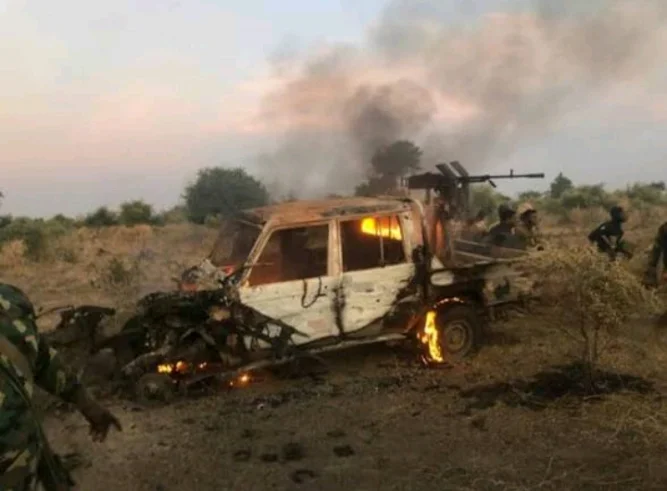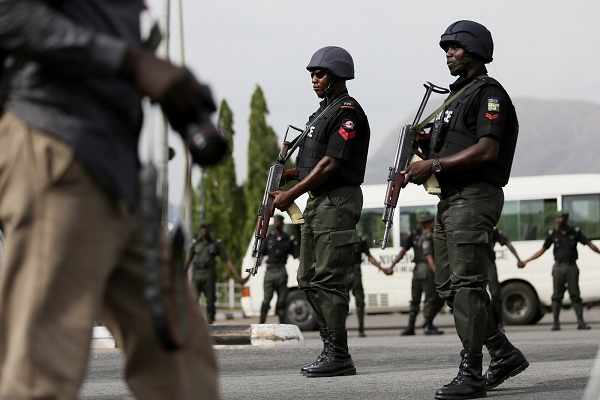

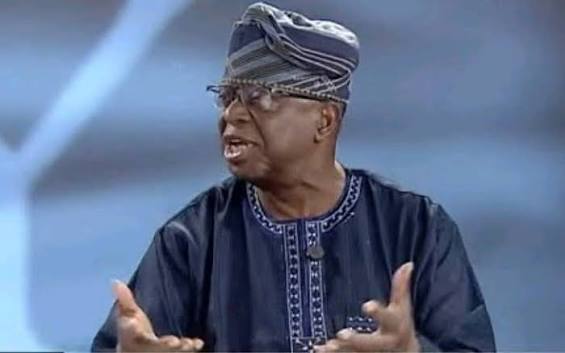
Nigeria’s security situation is worsening due to the increasing internationalisation of terrorism across the Sahel region as armed criminals and insurgents displaced from neighbouring countries are finding their way into Nigeria, a Research Professor at the Nigerian Institute of International Affairs (NIIA), Professor Olufemi Otubanjo, has said.
“Insurgency in Nigeria used to be synonymous with Boko Haram, but the security landscape has shifted to a broader regional concern with armed groups operating across national borders,” the international relations professor explained. “the problem is that insurgency has become so international,” he continued. It was just Boko Haram, now it seems the insurgents are rushing away from many parts of the world including Sudan. “Now we are beginning to hear of Sudanese coming to Nigeria as bandits to kidnapp us.
Prof. Williams Obiozor Inaugural Lecture Series Orlando, Florida CICA-International University & Seminary
Otubanjo, in an exclusive interview on the current affairs programme, Frontline, on Eagle 102.5 FM, Ilese-Ijebu, Ogun State on Thursday, said some of the insurgents fleeing conflicts in other parts of Africa are now taking advantage of Nigeria’s large landmass and poor governance to set up criminal operations.
“There are many places that have no presence of government,” he said. These gaps allow criminal gangs to penetrate towns, launch attacks and withdraw before security authorities can mount an effective response, he added. So everyone may come in and take control for a couple of moments. And then of course at the end of the day, if the government intervenes, those folks will run away,” he said.
“The growing instability in parts of the Sahel is also attributed to the effects of climate change, with environmental degradation, desertification and loss of livelihoods forcing many to migrate in search of survival,” Otunbanjo said.
“We don’t know how much havoc climate change is creating in terms of population and livelihood. A number of folks lost their homes. They lost their jobs. The sand bulls took over their villages and communities. They’re taking over their fields. And they’re coming down,” he continued.
He said many of the migrants moving south are not terrorists but economic victims of insecurity who have been displaced by worsening conditions in northern parts of the region. “A lot of the northerners that we see in Lagos and we think that, oh, maybe they are terrorists, they are economic migrants. They are escaping despair and unemployment in the north. “Because there is no new investment,” he added.
However, the professor insisted that despite the continuous insecurity, the Federal Government and the security agencies were not sleeping. “There is a security challenge in Nigeria, he said. Sure enough. And we have not overcome it but it does not mean government is not doing what is necessary”.
“The government cannot tell you every day that we killed two or three people today, we are ending the insurgency tomorrow. He stressed that the fight against terrorism and banditry is a gradual process that requires sustained military operations, intelligence gathering and regional cooperation instead of expecting instant results. It ain’t finished. “It’s a process. And people are impatient, of course. Yes we do not want to see another kidnapping. We don’t want to see bandits. But it doesn’t work like that. “It’s a process”
“Soldiers are making sacrifices every day to combat terrorism. Many personnel are making the ultimate sacrifice as they seek to re-establish peace across all areas that have been affected,” said the research professor. “Let me just say in summary, I’m not so sure I can vouch for Tinubu’s record on terrorism, but you know they are not laying idle. And they work. Soldiers are getting killed. “So we have to give it to them and hope they will do better and get us out of this mess,” Otubanjo remarked.
Responding to suggestions that Nigeria’s relations with some military-led governments in the Sahel have soured leading to rising insecurity, Otubanjo dismissed the notion, saying countries like Niger, Mali and Burkina Faso are themselves grappling with serious insurgency challenges. “Niger has its own insurgency almost on three fronts. Mali struggles. Burkina Faso has problems of its own. “These are all countries that are fighting insurgency themselves,” he said, insisting that regional governments have continued to collaborate through multinational security arrangements aimed at combating terrorism across the Sahel. “We have a multinational joint task force that is supposed to cooperate among countries in the Sahel to fight insurgency. And it’s working,” he said.
Despite the security concerns, Otubanjo said Nigeria’s diplomatic status is one of its best advantages. “We are not at war with any country and we have very good and cordial relations with almost all countries of the world,” he said.
He said Nigeria’s larger foreign policy view is a reflection of the fact that the country is one of the few states that has amicable relations with the major geopolitical blocs despite the growing rivalry in the world.
“But across the whole foreign policy front, we have peaceful relations with just about everybody. “Nigeria is one of the greatest countries in the world in terms of no enemy, he said.
“Countries do not always agree on everything and occasional disagreements should not be confused with hostility especially when dealing with global powers like the United States, Russia and China,” Otubanjo said.
The relationship between Nigeria and the United States was fundamentally cordial, he said, adding that diplomatic differences were usual in international relations and did not equate to hatred.
“There is no war between enemy states.The United States is our friend.There is a quarrel sometimes even between spouses and husbands. “They have no enemies,” he said.
About the Author