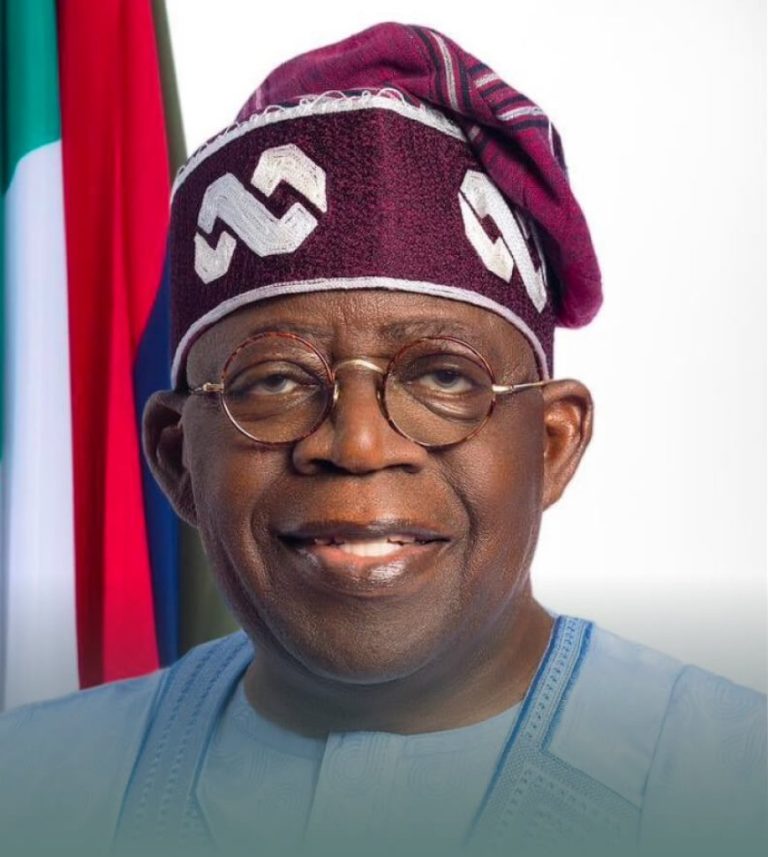

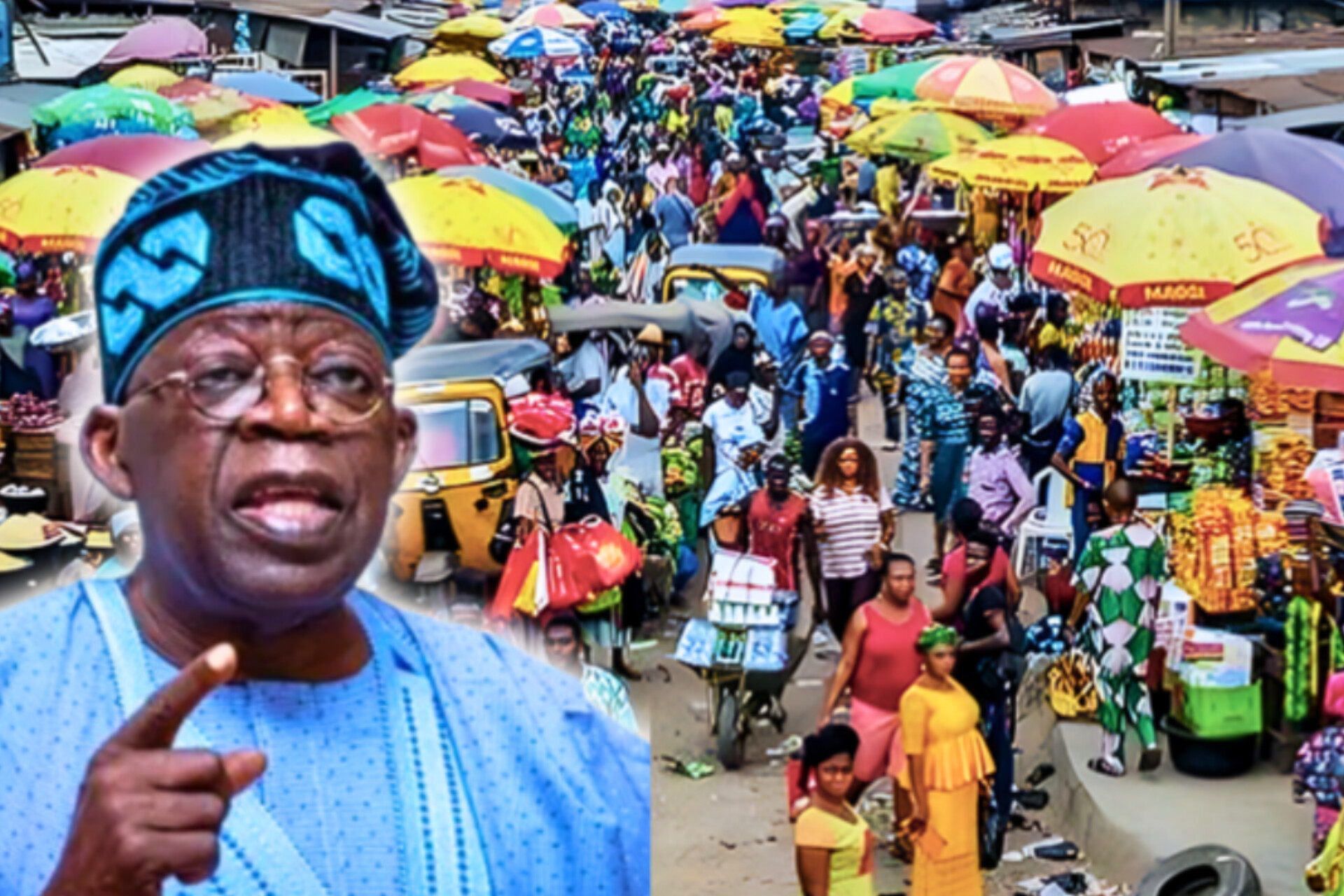
President Bola Tinubu has predicted Nigeria would spend roughly US$11.6 billion on debt servicing in 2026.
Presidential spokesperson Bayo Onanuga said in a statement that Tinubu made the statements yesterday when he led Nigeria’s government, diplomatic and corporate delegation to the Africa Forward Summit at the Kenyatta Convention Centre in Nairobi.
He told Channels TV that the debt to be serviced in the year is close to 50% of the estimated revenue.
Every single dollar that comes out of our treasury to pay punitive interest rates is a dollar that didn’t go into our steel industry, our textile mills, our agro-processing plants, or our digital businesses. It is not a dollar that trained a young Nigerian engineer or provided cheap power for our manufacturing. Our industrial base is starving for the blood it requires – long-term, affordable borrowing – while creditors and rating agencies perceive African sovereigns as perennial high-risk borrowers, irrespective of our fiscal performance.
“So I ask this group, how can an African manufacturer possibly compete with a competitor in Europe, Asia or North America when the cost of borrowing in our countries is five to ten times more? How can we develop cross-border industrial value chains in the African Continental Free Trade Area when our infrastructure projects are subject to a finance vacuum that is magnified by the very institutions that should be filling it? The answer is simple: we can’t. The international financial architecture as it currently stands is a tool for industrial disarmament of Africa.
“Nigeria is not seeking charity. We are demanding a financial system designed to enable Africa to industrialise – to process its own minerals, to refine its own crude oil, to manufacture its own medicines and to compete in global markets on an equal footing. “We will continue to borrow responsibly but we insist that our creditworthiness be assessed on basis of our economic fundamentals and our industrial potential, not by obsolete stereotypes,” he said.
He urged for more economic integration across Africa, highlighting the necessity for policies that focus on the industrial development and prosperity of the continent.
Tinubu said the blue economy of Nigeria was a potential driver of Africa’s development that had been underutilised for a long time due to insecurity and uncertainty.
Today, I pledge: Nigeria will enhance regional cooperation by giving the maritime intelligence infrastructure of our Deep Blue Project as a shared data hub for Gulf of Guinea states who wish to receive it. We need to make interoperable technologies, harmonised legislation and seamless cooperative enforcement a daily reality, not just a goal on paper.
“Let no one be mistaken: maritime sovereignty does not deter investment — it invites it. “Secure sea routes, consistent regulation and effective courts are the preconditions that attract private capital. Governance has de-risked the marine proposition of Nigeria. As we move ahead with climate-aligned port modernisation and the digital transformation of our maritime sector, we welcome partners to build on these advantages.
By backing the Nairobi Declaration Nigeria acknowledges that maritime sovereignty and ocean governance are the non-negotiable cornerstones of Africa’s Blue Economy transformation. We will continue to gain that sovereignty through institutions, through assets, through law, and through ironclad regional solidarity that converts our waterways from a theater of risk into a story of shared resilience.
The oceans are a collective legacy of mankind without duplicate. It is not an option for Africa to move from sea blindness to ocean sovereignty – it is a generational responsibility. ‘We are ready and we are inviting all of you here to join us in that obligation,’ the President said.
Call For Reform Of Global Finances
Tinubu also spoke on the reforms required in the international financial system, noting that Africa must not be bound into exporting raw materials and importing completed commodities.
“Last September, speaking on the podium of the United Nations General Assembly, Nigeria warned that the international system must reform or risk irrelevance. We talked of not just the Security Council but the financial and trade mechanisms that discreetly de-industrialize our countries. The evidence is here before us. Despite decades of independence, Africa’s share of global industrial value added is less than 2 per cent.
We export raw minerals, crude oil and agricultural commodities and import processed items at a premium price. This is not a coincidence. It is a consequence of a global financial architecture that starves our businesses of affordable capital, tolerates large illicit financial flows and imposes policy limits that our competitors never themselves observed when they created their own industrial bases.
“Nigeria does not arrive at this discussion as a supplicant. We come as a country that has taken tough indigenous decisions to put our house in order – abolishing fuel subsidies, unifying our currency rate, recapitalising our banking sector with over US$3.4 billion, and exiting the FATF grey list. They were choices of sovereignty, not external conditions. They have produced a falling debt-to-GDP ratio, now estimated at 32.3 per cent in 2026, improved foreign reserves of $45.5 billion and a revival of investor confidence. But, Your Excellencies, even a reforming nation like Nigeria is being compelled to de-industrialise by a financial system that is set against us,” he said.
Migration & Development
On migration, Tinubu said tackling fundamental causes was key, emphasizing that people would not take perilous voyages if there were opportunities at home.
He said Nigeria had placed migration management in the context of its broader economic reforms including subsidy elimination, banks recapitalisation and agricultural modernisation.
He also urged international partners to ramp up investments in climate adaptation, energy access, digital skills and job-creating industries and to set aside a share of Official Development Assistance (ODA) for alleviating pressures of irregular migration.
Regional And Global Cooperation
Tinubu also advocated for further African collaboration in creating global migration governance, noting existing frameworks such as the Global Compact for Safe, Orderly and Regular Migration were still insufficient because they were not enforceable.
He supported the African Union’s efforts, particularly its Migration Policy Framework, and the Khartoum Process, calling for closer ties between regional and global systems.
Leaders and officials from more than 30 nations attended the Africa Forward Summit, co-hosted by Presidents Emmanuel Macron and William Ruto.
Opening speeches were made by Macron, Ruto, UN Secretary-General António Guterres and African Union Commission Chair Mahamoud Ali Youssouf.
On the sidelines, Tinubu met Madagascar’s President, Michael Randrianirina, and met with CAF President Patrice Motsepe, reaffirming Nigeria’s willingness to host the 2026 CAF Awards.
He was joined by senior government officials including ministers of foreign affairs, finance, agriculture, marine and blue economy, environment, industry, communications and leading private sector figures such as Aliko Dangote, Tony Elumelu, Abdulsamad Rabiu and Aigboje Aig-Imoukhuede.
The summit focused on investment, AI, digitization, agribusiness, creative industries, climate change and how to translate policy talks into industrial development across Africa.
About the Author