
New worries about Nigeria’s deteriorating security problem have come up after militants holding hundreds of kidnapped victims in Borno and Kaduna states made coordinated ransom demands totaling N6bn.
According to The PUNCH, Boko Haram militants in Borno State are asking for N5 billion to free 416 women and children who were taken from the Ngoshe community in Gwoza Local Government Area. They gave mediators a 72-hour deadline to get the money.
In another event in Kaduna State, suspected terrorists who stormed the Ariko hamlet in Kachia Local Government Area on Easter Sunday asked for N1 billion to free numerous kidnapped inhabitants, including some who were weak.
The two events, which have traumatized communities and caused families to suffer, show how widespread and brazen mass kidnappings are becoming in the country. This raises critical considerations about how to respond and if security authorities can handle the threat.
Boko Haram militants asked for N5 billion yesterday to free the 416 victims, who included women and children who were taken from Ngoshe.
The terrorists’ video challenged the Nigerian government to use force to save the 416 victims.
The organization said that their requests have to be met within 72 hours.
Our reporter, who got the footage early yesterday morning, said that the group “welcomes” the Nigerian government to try to rescue the victims by force.
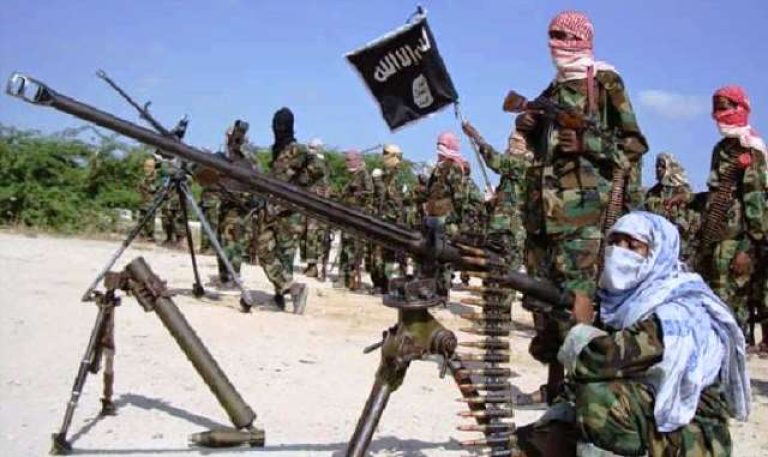
The terrorist organization, which was disguised in military camouflage clothing, declared they were ready for combat if the government chose to use force instead of meeting their demands.
The statement, which is in Hausa and has English subtitles on the screen, says, “We are Jama’atu Ahlis-Sunna Lidwatu Wal-Jihad under Imam Abu.”
“Today is the 19th of April, 2026.” We are sending a new message to the Borno South Youths Alliance and the Nigerian government, which is not our government.
“This is the first and last communication we send. We give you three days. If you don’t meet our requirements. We will send these victims, including women and children, to different places. Yes, every single one of them.
“You’ve made yours, and we’ve made ours.” We are telling you not to add a minute out of fear of Allah.
But the group didn’t say what they wanted in the video.
“And look at them before we do, because you won’t see them again until the end of the world.” If the government thinks you can save them by using force, you can try. The group’s representative said, “We depend on Allah.”
Remember that on April 10, it was reported that a group inside Boko Haram called Jama’atu Ahlis-Sunna Lidda’Awati Wal-Jihad produced a video revealing the plight of victims who were kidnapped during an attack on the community that killed many people and forced many others to leave their homes.
Our correspondent got a video at the time that showed the organization displaying and interviewing the victims, who were largely women and children, with a few adults.
A person from the organization who spoke for them in the six-minute, 43-second video stated that the Borno South Youths Alliance asked for the film to be made. The group confirmed that it has been working as a mediator since the victims were taken hostage.
The Borno South Youths Alliance said in a statement late Sunday night that the terrorist group has made its demands, which must be met within 72 hours in order for the victims to be freed.
Samaila Kaigama, the association’s president, stated that the terrorists sent a video with the demand, which they called a “final warning.”
The statement said, “Borno South Youth Alliance wants to let the public and the world know that on April 19, 2026, Boko Haram reportedly gave a 72-hour ultimatum regarding ongoing mediation efforts for the release of the 416 Ngoshe women and children who are said to be in their custody.”
“During the mediation process led by BOSYA President Samaila Ibrahim Kaigama, we learned that a final warning video was sent after demands were made, including a ransom request of N5bn for the release of the kidnapped women and children.”
It further said that instructions about the releasing process were given.
Samaila said, “Because this humanitarian issue is so important, BOSYA is asking President Bola Ahmed Tinubu, Vice President Kashim Shettima, Governor Babagana Umara Zulum, Concerned Nigerians, and philanthropists like Aliko Dangote, Abdul Samad Rabi’u, and other Northern billionaires to help.”
He went on to say, “We respectfully ask all capable stakeholders to step in right away and use all legal and available means to help free these 416 women and children.”
Remember that on March 4, the terrorist group attacked a military camp in Ngoshe, where they set fire to operational vehicles, scattered security troops, and killed an unknown number of people before taking several others hostage.
Senator Ali Ndume, who represents the Borno South Senatorial District, requested the federal government to do everything it can to get the 416 Nigerians released.
The federal legislator told our reporter in Abuja yesterday that the government at both the state and federal levels must not give in to the urge to negotiate with the terrorists.
“I don’t think we should talk to terrorists to get hostages released.” I am pretty clear about where I stand on that. He remarked, “The government should do everything it can to get the captives free.”
Ndume said that some kind of interaction was still going on and that the government had helped displaced victims by giving them relief supplies.
I’m sure the government is doing something because we are talking to them and aiding them in some way.
“The administration has replied to the news conference by declaring that people in the IDP camps need immediate help.
“The National Emergency Management Agency has responded and is working with other agencies to make sure that they at least get some relief supplies.”
“But we have told the federal authorities about their release, and it is well known to the public that 416 women, children, and elderly people are being held captive.
He also said, “The government should do everything it can to get them out.”
The legislator said, “We are all in Nigeria,” when asked if the troops sent by the United States have been able to lower the threat of terrorism in the country. You will know if the effect is being felt. You will know if it is not being felt.
“Honestly, all I can say about this is that we are in a very bad situation that needs more serious attention.” It is important to make sure that the declaration of a state of emergency for security is followed through on. That is the problem.
“I told them they should have a situation room.” So far, there have been more of these threats popping up here and there. We need to forget about everything else and deal with the problem of residents’ safety and well-being.
People in the Ariko town in Kaduna raised the alarm when they heard that suspected militants had kidnapped many locals and were demanding a ransom of N1bn for their release.
The incident happened on Easter Sunday and killed some people and kidnapped many more. The neighborhood was in mourning and panic.
The Concerned Ariko Youths said in a statement yesterday that the attack was a sad attack on innocent worshippers during a time of reflection.
Linus Audu, the Chairman, and Kefas Likita, the Secretary, signed the statement. It said that the victims were weak members of the community, like two old blind men, women, children, and whole families.
The statement said, “Among those taken are two elderly blind men, two women whose husbands were killed in the attack along with their children, several young children, two women who are very sick, and whole families.”
The young people said that the event had caused a humanitarian catastrophe in the neighborhood, leaving families traumatized and unsure of what would happen to their loved ones.
They further said that the kidnappers had asked for a ransom of N1 billion for the victims, which they called unreasonable and impossible for the rural community to pay.
The group said, “It is neither reasonable nor humane to expect families who have already lost so much and gone through so much trauma to raise that much money.”
The most recent event is part of a worrying trend of insecurity in Southern Kaduna, where armed gangs have repeatedly attacked rural communities, kidnapping and killing people.
The group asked the Kachia Local Government to work with security forces right away and help the families who were affected right away.
They also asked the Kaduna State Government to put in place enough security measures to make sure the victims are rescued safely, and they asked the Federal Government to work more to stop banditry across the country.
“We call for quick, clear, and effective action to free the kidnapped victims without conditions and punish those who did it.”
The statement went on to say, “More delays will only make the suffering of affected families worse and lower public trust.”
As of the time this report was written, security agencies had not yet made an official statement about the occurrence.
Chris Andrew, a retired officer in the Nigerian Army Intelligence Corps, said that the people who did this are not likely to kill a lot of people at once.
He remarked, “The reason they made that video is because you can call it a propaganda video, but they won’t be stupid enough to kill those people.”
Andrew said that these kinds of groups can be violent, but large-scale executions would go against their goals.
“They can kill one, two, or three—it’s not a big deal to them—but they can’t be stupid enough to try to kill more than a hundred,” he said.
He said that the main goal of the gangs was still to make money through ransom, not by random violence.
Andrew added that the scenario was part of an asymmetric conflict and that ransom money was typically not used to keep operations going.
“That fund is not for regrouping or getting back what you lost. They can share that sum and leave. “You won’t fight with everything,” he remarked.
He agreed that hostage situations are complicated and that conversations are likely to happen.
“There will be talks.” He stated, “There’s no way, because it has to do with life,” and that these kinds of deals were commonly made through middlemen.
Experts in security and leaders of civil society, on the other hand, had different ideas on how the government should deal with the growing number of mass kidnappings and ransom demands in some areas of the country. They warned that the scenario makes it hard for the government to make moral and operational decisions.
According to security analyst Chidi Omeje, the circumstance revealed that the government was stuck between two very bad choices.
Omeje said that ignoring the kidnappers’ threats could have terrible effects, and paying the ransom could potentially have long-term effects.
“If you don’t listen to their threats, these are ruthless terrorists who don’t care about you and can follow through on their threats.”
“But if you choose to pay them, you are supporting their terrorist operations. Omeje said, “There is a problem either way.”
He asked for more help from intelligence agencies and the deployment of cutting-edge technology. He also said that working with other countries might be very important in finding kidnappers.
“This is when we need help the most.” There are technology, like drones and intelligence systems, that can help find them no matter where they are.
He went on to say, “If we still have military power and partnerships, now is the time to use them and save the victims.”
Jackson Ojo, another security expert, talked about prior events in Kebbi and Niger states where officials were able to free kidnapped captives without paying a ransom.
They say the government has done it before, in Kebbi State and Niger State. They said they didn’t pay the ransom, but the kids were let go anyhow. He responded, “So I think the government should keep doing that.”
Ojo, on the other hand, presented a contentious approach that involved monitoring ransom distribution as a tactical trap.
“In a normal case, you wouldn’t just put money in a little package to deliver it. You can send it in a way that lets you keep track of it. He said, “You can keep an eye on the money’s movement, which will lead you to their location.”
He did, however, say that paying a ransom could help criminal groups become stronger.
“If you give them the money, you are giving them more power to do things.” Ojo said, “That is very dangerous.”
Amnesty International also spoke out through its Country Director, Sanusi Isa, and called the government to do everything it can to safely and securely rescue those who were kidnapped and bring them back together with their families.
“We learned that while they were with Boko Haram, they were starving, being sexually abused, and other horrible things.
“Because of this, the government must make saving them a top priority right now.
Isa said in response to our correspondent, “This should also be followed by efforts to stop the atrocities by Boko Haram and other armed groups.”
Auwal Musa, the Executive Director of the Civil Society Legislative Advocacy Centre, spoke out about suspected ransom payments in the past and the bigger problems with governance and oversight that come with security financing.
“The government has been paying this money in the past, either directly or indirectly, and it has become another way for some officials to be corrupt.
“Money is shared between criminals and officials at the cost of human lives,” he stated.
Musa said that frequent kidnappings were a sign that the country’s security was getting worse.
He remarked, “If you have more than 400 people kidnapped in less than two weeks and can’t stop it or save them, it means the kidnapping business has gotten out of hand.”
He also said that there wasn’t enough supervision from lawmakers and that security expenditure wasn’t being held accountable.
“The National Assembly needs to take charge. They approve the budget and are meant to make sure it is carried out. He said, “If agencies say they don’t have any money, then something is wrong with the system.”
Musa also said that insecurity hurts regular people more than others and that governmental objectives make it less urgent to respond.
“If the people who were affected were important, the answer would be different. But people don’t pay much attention to it because it’s just regular people. He continued, “This shows that there is little political will to fully address the problem.”
The Nigerian Institute of Public Relations has also remarked that the amount of insecurity in Kaduna State has been blown out of proportion. They also praised the state government’s attempts to deal with security issues.
Chief Yomi Badejo-Okusanya, who is in charge of arranging the 2026 Nigeria Public Relations Week, said this on Monday during a media tour of important government projects in the state.
Okusanya, who led the journalists and officials from the institute on the inspection, commended the creation of the command and control center as a key place for gathering intelligence.
After checking over the center’s facilities, he said that Kaduna, like other states, had security problems, but they weren’t as bad as people thought.
“Yes, it has some problems like every other place, but I believe two things: first, people are trying to fix this problem, and second, it’s not as bad as people think,” he stated.
He said that the institute has been under pressure from various people to move its 2026 Nigeria Public Relations Week from Kaduna because of safety concerns.
He said that these worries were founded on ideas that didn’t adequately reflect what was happening on the ground.
“There were a lot of outside pressures telling us not to hold the event in Kaduna because the state isn’t safe,” he stated.
However, Okusanya encouraged the Kaduna State Government to do a better job of letting both residents and the general public know about its security initiatives.
He also suggested that the command and control center model be used in all 23 local government districts in the state.
The tour also took the group to a number of public places, such as the Badarawa Primary Healthcare Center, Kawo General Hospital, Government Secondary School, Nasarawan Rigachikun, the Institute of Vocational Training and Skills Development, and the Kakuri Southern Terminal, which is still being built.
About the Author