
The federal government’s release of an updated list of 48 people and 12 organizations that are said to be linked to financing terrorism has led to new calls for immediate action from the public. Security experts have warned that not following through could make people trust Nigeria’s counterterrorism efforts even less.
The Nigeria Sanctions Committee issued the list yesterday. It is one of the most detailed disclosures in a long time and targets people who are thought to be funding violent groups that are active across the country.
According to Sunday PUNCH, some of the most well-known people on the list are Simon Ekpa, the factional head of the Indigenous People of Biafra in Finland, and Tukur Mamu, the publisher of Desert Herald.
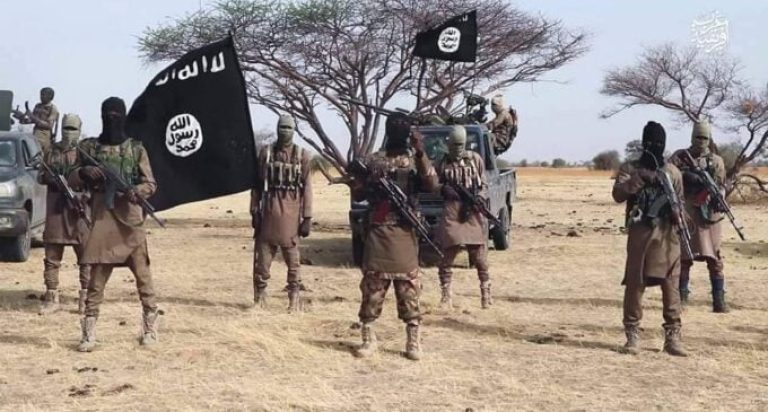
Along with groups like Boko Haram, the Islamic State West Africa Province, and IPOB, the list also includes businesses like West and East Africa General Trading, Settings Bureau De Change Ltd, and the Lakurawa Sect.
The news comes at a time when the government says it has gotten convictions in 386 out of 508 terrorism cases, even though attacks are still happening in Borno, Kebbi, Kwara, and Zamfara.
On the NiGSAC website, you can also find the names Abdulsamat Ohida, Mohammed Sani, Abdurrahaman Abdurrahaman, Fatima Ishaq, Yusuf Ghazali, Muhammad Sani, Abubakar Muhammad, and Sallamudeen Hassan.
Others are Adamu Ishaq, Hassana Isah, Abdulkareem Musa, Umar Abdullahi, Abdurrahaman Ado, Bashir Yusuf, Ibrahim Alhassan, Muhammad Isah, Salihu Adamu, Surajo Mohammad, Fannami Bukar, Muhammed Musa, Sahabi Ismail, Mohammed Buba, Adamu Hassan, Hassan Mohammed, Usman Abubakar, Kubara Salawu, Rabiu Suleiman, Godstime Iyare, Francis Mmaduabuchi, John Onwumere, Chikwuka Eze, Edwin Chukwuedo, Chiwendu Owoh, Ginika Orji, Awo Uchechukwu, Mercy Ali, Ohagwu Juliana, Eze Okpoto, Nwaobi Chimezie, and Ogumu Kewe.
G.Side General Enterprises, Desert Exchange Ventures Limited, Eagle Square General Trading Co. Ltd, Alfa Exchange BDC, Alin Yar Yaya General Enterprises, K. Are Nigeria Limited, Suhailah Bashir General Enterprises, Igwe Ka Ala Enterprises, Seficuvi Global Company, Jama’atu Wal-Jihad, Ansarul Sudan, Islamic Province, Yan Group, and Yan Group NLBDG are some of the other groups that have been named as terrorism sponsors.
In 2024, the federal government also named nine people and six groups that were connected to terror financing, which raised worries about the implementation of the law.
Experts want quick action
Analysts called the new list a “critical step forward,” but many people said that naming suspects without strong enforcement may make the exercise seem like a symbolic gesture.
People who work in security and retired high-ranking police officers told Sunday PUNCH that the following steps need to be quick, well-coordinated, and open.
Salami Abduraheem, a former Assistant Inspector-General of Police, argued that the government’s actions would only be credible if they led to real changes, not only the disclosure of names.
“Putting out a list is just the first step. The real test is what happens next: arrests, trials, and guilty verdicts.
He stated, “If these people are still able to move around freely weeks or months after being named, it sends a dangerous signal that the system doesn’t have the ability or desire to act.”
Abduraheem said that in the past, when terror financing networks were announced, there wasn’t usually a lot of judicial action that followed, which raised concerns about gaps in enforcement.
Abdullahi Adeoye, a former director of a federal security agency, also warned that suspects may try to avoid being caught after they are publicly named.
“Time is really important in situations like this. When identities are released, the suspects are told. He said, “If you don’t act right away, like freezing accounts, limiting movement, and making arrests, you could lose valuable intelligence.”
Adeoye went on to say that coordinated action by financial regulators, intelligence agencies, and law enforcement is necessary to effectively break up networks.
Problems with the law and institutions
Musa Aliyu, a security analyst, said the action was long overdue, but he was worried about Nigeria’s ability to pursue high-level terror funders.
“It shouldn’t just be about giving out the list. They have to go a long distance and make sure that due diligence is done.
“To be honest, the Nigerian legal system isn’t ready to go after people who support terrorism in a way that works.” He remarked, “This is clear in the problems with the criminal justice system.”
Aliyu is worried about the courts’ ability to handle terrorism cases and asked the National Assembly to make the laws stronger.
“The kind of courts we have now aren’t set up to carefully prosecute the kinds of crimes that are connected to terrorism.” He stated, “Now is the time for the National Assembly to give the police the tools they need to make sure that the right punishment is given.”
Aliyu also underlined how important it is to find a balance between transparency and due procedure.
“Justice must be seen to be done for victims, whether they were killed, kidnapped, or forced to pay ransom.” He further said that Nigerians need to know that the war against terrorism is not selective.
Trust in the public, accountability
The revelation of the list is a rare moment of openness in the war against terrorism for a lot of Nigerians.
But civil society groups insist that accountability must go hand in hand with openness.
Shola Muse, a specialist on security governance, said she wasn’t sure the government was serious.
“It’s not about giving out names. What is the value of the law? What is the worth of the executive at the end of the day? If the administration is honest, it needs to show the people that they are ready to make a strong decision this time. He stated, “Otherwise, it turns into a media jamboree.”
Muse asked for cooperation between the three branches of government and security services.
“There needs to be support from the courts, the executive branch, and the political system.” He went on to say, “These steps may not work if people don’t work together and honestly.
Kemi Babatunde, an expert on security governance, said that earlier events had made people less trusting of the government.
“Nigerians have seen lists before.” They want action now, action that can be seen and measured. “It’s not just about safety; it’s about trust,” she remarked.
Babatunde stressed how important it is to communicate clearly and consistently about success.
How people reacted
After the event, a lot of Nigerians went on social media sites like Facebook and X to call for swift action from security officials.
Fyneface Dumnamene, a user, said, “Don’t just list them; go after them if you have proof.”
Frank Okpara, another user, told the government to do more investigations and send out summons.
Salawu Enesi said, “The FG should take legal action right away to bring them to justice.”
David Babawale, a security expert, listed important steps the government needs to take to make sure it works, such as freezing the financial assets of people who are suspected of being involved, quickly arresting and questioning people on the list, and making it easier for intelligence and law enforcement agencies to work together.
He stated, “The government needs to make sure that the named people’s assets are frozen right away, that they are arrested quickly, that security agencies work together more, that communication with the public is open, and that prosecution is sped up through designated courts.”
Babawale said that these steps are very important for breaking up networks that fund terrorism and stopping more attacks.
Legal framework and problems with prosecution
The Terrorism (Prevention and Prohibition) Act is a key feature of Nigeria’s legal system that makes it possible to prosecute people who help fund terrorism.
Taofiq Olateju, a Senior Associate at Yusuf O. Ali & Co, claimed that intelligence findings alone are not enough to win a case.
“You need evidence that can be used in court, like financial documents, witness statements, and digital recordings. He said, “These must be gathered and shown in the right way.”
Olateju also talked on how long the court process might take, saying, “In Nigeria, cases can go on for years.” When you come to judgment, public interest has faded, and the evidence chain can sometimes be broken.
Babatunde Salami, a former Commissioner of Police, said that there are systemic problems such poor cooperation between agencies and political meddling.
“You have the police, the military, the intelligence services, and the financial regulators all working on separate things. He added, “Without a single command structure, efforts can get in each other’s way.”
Salami said that politics could make enforcement more difficult.
“The fight against funding terrorism must not be affected by politics. “People lose faith in the system when they think that selective enforcement is going on,” he said.
386 terrorists found guilty
On Thursday, the Attorney-General of the Federation and Minister of Justice, Lateef Fagbemi, said that the government has gotten hundreds of people convicted in instances related to terrorism.
He remarked told the Federal High Court in Abuja, “We brought about 508 cases in total.” We got 386 convictions, eight discharges, two acquittals, and 112 adjournments out of these.
He also said that the convictions should make other people think twice before doing something similar.
Experts say that the success of Nigeria’s counterterrorism policy will ultimately depend on its capacity to break up funding networks and make sure that those implicated are brought to justice, even though these numbers are high.
About the Author