
If Reform UK wins the next general election, Nigeria, Jamaica, and other African and Caribbean countries may have trouble getting visas to the UK.
The suggested strategy is aimed at countries that officially ask for reparations for slavery.
The Daily Mail reported Wednesday that Home Affairs spokesperson Zia Yusuf justified the plan by saying, “More and more countries are asking Britain for reparations.” They don’t think about how much Britain gave up to be the first great power to make slavery illegal and enforce that rule.
“These countries have gotten 3.8 million visas and £6.6 billion in foreign aid over the last 20 years, which is amazing. “That’s enough.”
A number of African and Caribbean countries, including Nigeria and Jamaica, have asked for their citizens to be able to enter the UK. This might mean that their citizens won’t be able to enter the UK.
Reform UK also talks about Kenya, Haiti, Guyana, Barbados, and The Bahamas.
The announcement comes weeks after a resolution in the United Nations that instructed former colonial countries to make reparations for slavery.
The resolution called the forced relocation of Africans one of the “worst crimes against humanity.” Britain didn’t vote.
Nigel Farage, the leader of Reform UK, said that the UN was urging us to go bankrupt to make up for what individuals did in 1775 or whenever it was. Don’t worry about it. The UN has no right to do anything in our country.
The party has promised to limit foreign aid spending to £1 billion per year, which is a 90% cut from what it is now.
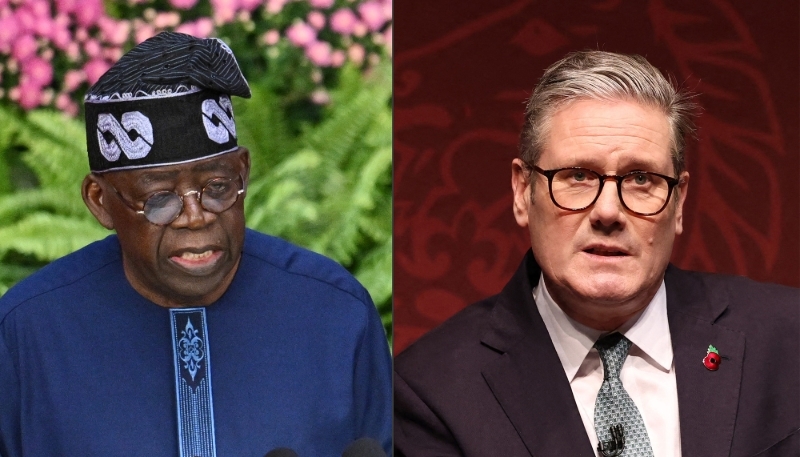
A spokesperson for the Foreign Office said that the UK knows how terrible the slave trade was, but its stance on compensation has not changed. Keir Starmer, the head of the opposition, has also said he won’t apologize or pay, stating, “I want to look at the future rather than spend a lot of time on the past.”
Reparations: A Look at the Past and Present Politics
A long time ago, millions of Africans were taken from their homes, put on ships, and sold as slaves in the Americas and Europe.
Families were torn apart, communities were uprooted, and whole societies were thrown off balance. These horrible things left wounds that lasted for generations and changed societies and individuals long after slavery ended.
Countries that were directly harmed by this history have begun to formally ask for compensation in recent years. Ghana has been a leader in pushing for the United Nations to recognize the transatlantic slave trade as one of the “gravest crimes against humanity.” The African country wants formal apologies, the return of stolen cultural treasures, and reparatory justice to deal with the long-term effects of slavery.
The UN says that it has been more and more active in talks and statements about reparations, notably for slavery and its effects.
In March and April 2026, the UN General Assembly passed a resolution calling the trade of enslaved Africans and racialized chattel slavery the “gravest crime against humanity.”
Ghana advocated for this resolution, which was endorsed by several African and Caribbean countries. It asked for reparations to fix past wrongs, such as apologies, returning cultural objects, and talking about justice.
There were 123 votes in favor, 3 against (the US, Israel, and Argentina), and 52 abstentions.
The UN also said that Ghana, the Caribbean Community (CARICOM) Nations, the African Union, Antigua and Barbuda, Guyana, and Haiti are all demanding for compensation.
About the Author