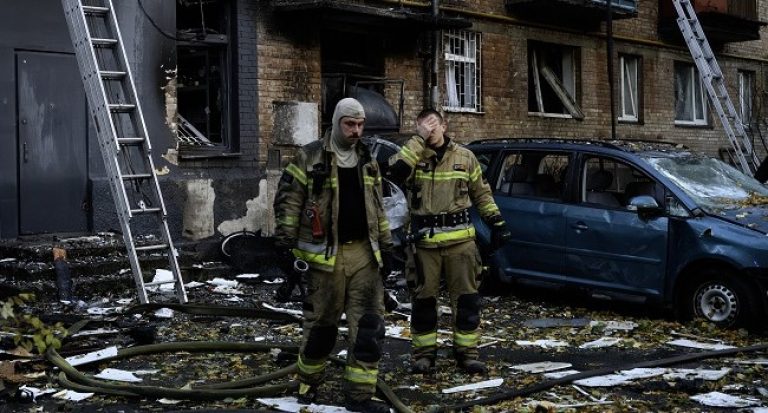

On a hot and humid Wednesday night, February 18, 2026, there was silence in Ahungha Village in Akure North, Ondo State, until shooting broke it.
Reports from Saturday Vanguard said they arrived like ghosts in the dark, armed to the teeth and without mercy.
The people they were after were not a rival gang or a security post. It was a palace, the holy residence of a traditional king.
Oba Kehinde Jacob Faledun, the respected king of Ahungha, was dead by the time the night breathed its last.
The gunmen had broken into his palace to kidnap him. He was slain for not obeying.
Hours later, 34 Muslim worshippers were killed in Kebbi State, just two days into Ramadan. This was meant to show how much pain the whole country was in. Two different terrible things. One thing that everyone can agree on is that human life seems to be getting more and more dangerous in Nigeria today.
FEAR’S GEOGRAPHY
The map of Nigeria is getting more and more violent, from Borno to Zamfara, Niger to Yobe, Ondo to Kwara, and Edo to Kebbi. Communities that used to be known for farming, fishing, and festivals are now known for curfews, mass burials, and negotiations for ransom.
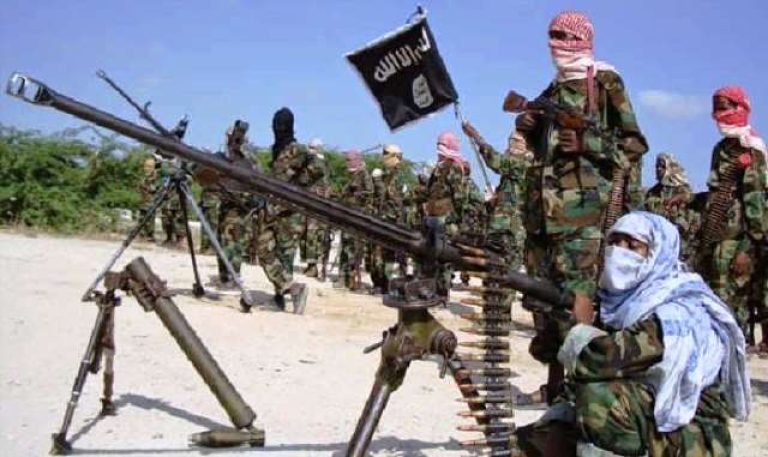
Terrorists act with terrifying boldness. People are pulled out of their homes. People who are praying are taken. People who go along highways that have become hunting grounds go missing.
Some state governors now admit that security services are fighting hard but are facing more and more fronts.
Governor Asks for Help
I asked a sitting governor of one of the impacted states directly, “Your Excellency, isn’t this getting too much?” What is the route out?
He stopped for a moment, then spoke in a quiet voice:
“We need more help.” Our military is working very hard, but they are fighting on several fronts. The number of these groups is expanding, and it’s still worrying how they get their hands on weapons. It suggests that the problem is wider than any one institution if it has been going on for 15 years without any real change.
He said, “It has become a profitable business.” Kidnappers and terrorists now target weak populations and make them pay ransoms. “When the challenge is too big, no one should be afraid to ask for help.”
His statements showed concern, not condemnation, and called for more cooperation between countries and within the country.
THE STRONG CANNOT RETURN HOME
The crisis has made class distinctions less clear. Having money and power no longer means you can’t be arrested.
It was learned that certain lawmakers from northern communities that have been hit hard by terrorism now mostly live in Abuja and Lagos for safety reasons.
Senator Ali Ndume, who represents Borno South, corroborated this in a recent interview on Channels Television. He said that the insurgency has kept him away from his ancestral home.
He remarked, “I haven’t been able to go to my village for 16 years.” “Even with an escort, you don’t take a chance when you travel from Maiduguri.” I can’t just leave like I used to, even if one of my own dies today.
Ndume was happy with the recent help from the United States with intelligence, surveillance, and training.
“The Americans are helping us fight against insurgency.” It’s a good thing that this happened. We searched for it but couldn’t find it.
“If your house is on fire, you take water from your enemy.”
MORALE AND TROOPS
Morale is another issue that goes beyond strategy and diplomacy.
Security specialists say that pay and benefits are still very important for keeping people’s fighting spirit. Ndume pointed out differences in salary, saying that troops who put their lives on the line should be paid fairly.
A soldier who wanted to remain anonymous said:
“This war isn’t just for the military. We are able to do it. We need strong political resolve and concerted support over time.
Another person asked why arrested insurgents were let go, saying,
“We put everything on the line to catch them, and sometimes they come back to the field.” It hurts people’s spirits.”
Risks of infiltration in a new recruitment drive
Retired Brigadier General Mustapha Dogo said that Nigeria’s fresh recruiting push, while vital, had to be done very carefully.
“In a war where intelligence leaks and sleeper cells are common, even one compromised recruit can ruin months of planning,” he said.
He highlighted that thorough vetting and background checks must be the main focus to stop infiltration.
Retired Commodore Samuel Akin also said he was worried that letting jailed insurgents go without full rehabilitation could make things more dangerous.
He remarked, “When you let a terrorist go without fully deradicalizing them, you make things uncertain.” “People like this know how security works and might try to take advantage of recruitment windows.”
Both officers also said that young people are less interested in joining the military because the war has been going on for so long.
Dogo said, “Young Nigerians think carefully about the risks.” “Service must stay honorable, safe, and well-supported.”
A current Staff Sergeant named Eddy said, “The rush to hire could be a good thing or a bad thing.” Screening correctly is very important. The system has to be watertight.
CHANGE IN STRATEGY
The Nigerian Army has changed its plans under the Chief of Army Staff, Lieutenant General Waidi Shaibu, because kidnappings are on the rise from Kaduna to Katsina.
The new plan is to cut off the economic and logistical support that kidnapping gangs rely on while building trust in the community.
Reports say that in the first several weeks of 2026, forces apprehended 131 people they thought were terrorists, killed 57 terrorists, and freed 91 people who had been kidnapped. In Sokoto, police stopped a kidnap cell and found six AK-47 rifles. An illicit weapons-making shop was shut down in Nasarawa.
A high-ranking official said, “These are targeted strikes against the financial and logistical backbone of the kidnapping industry.”
The Army is also working on non-kinetic initiatives, including as schools and clinics, as part of its Civil-Military Cooperation endeavors.
“There is no other way than a dual-track approach,” Lt. Gen. Shaibu remarked in Zamfara. “The Army can’t have the effect it wants without the people.”
A HARD TO FIND ENEMY
But the enemy is still able to change. Camps change. Networks change. There are still holes in intelligence.
A retired high-ranking military commander said:
“If the political leadership gives consistent support and makes sure that agencies work together, this threat can be greatly reduced.”
For now, Nigerians are hoping and praying that the reforms that are still going on and the new promises from the Minister of State for Defense and the Service Chiefs would bring enduring peace.
About the Author