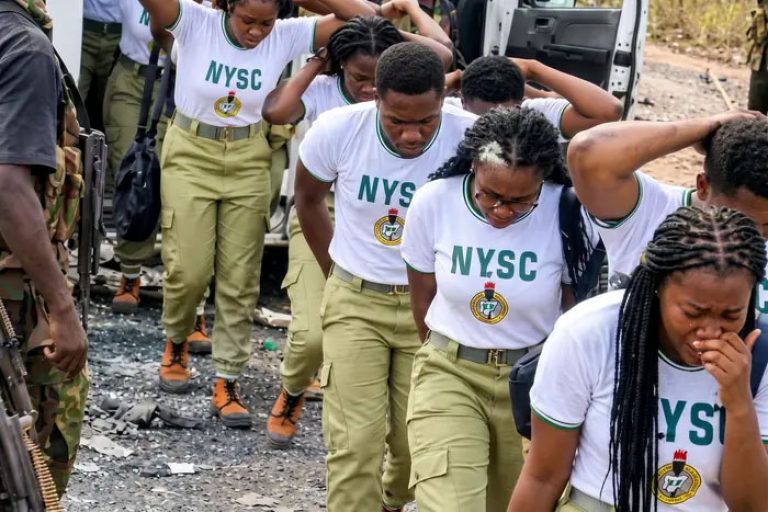

There was a massacre at Woro, a small town in the Kaiama Local Government Area of Kwara State, on Tuesday that killed over 176 people. It was not a random act of violence.
Our correspondent’s findings suggest that the attack was part of a planned expansion of a jihadist front that the country’s security system couldn’t stop, even though it had been warned about it before, according to Saturday PUNCH.
Abubakar Saidu, also known as Sadiku, is the terrorist leader at the center of the violence. His violent path has lasted more than ten years and has taken place in the northern part of the country.
Sadiku was a mysterious figure in the insurgency for a long time.
But investigations show that over the course of 12 years, he went from being a handpicked lieutenant of the late Boko Haram commander Abubakar Shekau in 2014 to what security experts now call the “Shekau of the North-Central” by 2026.
Sadiku moved west as military pressure reduced Boko Haram’s strongholds in the North-East. He settled in the wide forest corridors of Niger and Kwara states.
From there, he ran a campaign that destroyed rural communities, forced families to leave their homes, and ended with one of the bloodiest mass killings ever recorded in Kwara State.
From Shekau’s right-hand man to a brutal kingpin
According to security reports, Boko Haram first sent Sadiku to Niger State as a trusted agent to help the group grow its power outside its usual base in the North-East.
A self-proclaimed counterterrorism analyst on X, MobilisingNigeria, said that Sadiku rose through the ranks of the insurgency because he was close to the late Shekau, who personally chose him to represent Boko Haram’s interests in Niger State.
The analyst said, “Later, he worked with Dogo Gide to expand into the North-Central terrain and also worked with the Darul Islam terrorist group before the police broke it up.”
Sadiku was in a collaboration with the infamous bandit leader Gide for a while. He used the partnership to get weapons, information, and power in the area.
But disputes over ideas finally broke apart the coalition, resulting to deadly fights that killed combatants on both sides.
After the separation, Sadiku went deeper into the woods and set up a base in the Kainji Forest Reserve in July 2025.
People who watched him say that this was a turning moment in his actions because he stopped stealing for money and started a more strict, ideologically driven campaign of terror.
The “new Sambisa” is Kainji Forest.
The Kainji Forest Reserve, which is in Niger and Kwara states, has become an important place for militants from the North-East to connect with bandit groups who are still active in the North-West.
Security analysts call the forest Nigeria’s “new Sambisa” because it provides cover for recruiting new members, moving weapons, and planning attacks on rural villages in Niger, Kwara, Kebbi, and parts of Kaduna states.
Hassan, a security specialist from Kwara, said that Sadiku’s move to the Kainji route meant that Boko Haram-style insurgency was spreading dangerously into the North-Central region.
“For more than ten years, most of the violence by Boko Haram happened in Borno, Yobe, and Adamawa.”
“But splinter groups and allied groups are now using forests, weak security, and porous borders to move west,” he warned.
Who is Sadiku?
MobilisingNigeria said in a different article on X that Sadiku was a factional leader of Boko Haram who moved from the North-East to set up new camps in the North-West and North-Central regions.
“Sadiku is the same as Shekau.” The expert said, “Military pressure in the North-East forced him to move toward the North-West and North-Central as new bases.”
Brandon Phillips, who tracks security in West and East Africa, also said that Sadiku’s group was directly responsible for the Woro slaughter.
Phillips said that the attack happened fewer than four kilometers from Nuku, where rebels from Jama’at Nusrat al-Islam wal-Muslimin, an Al-Qaeda group in the Sahel, claimed their first strike in Nigeria in October 2025.
He says that the closeness shows that JNIM and the Sadiku-led Boko Haram branch are working together, either in an opportunistic way or through a non-aggression pact.
Phillips also said that the Woro massacre was comparable to prior attacks in the Papiri area of Niger State, which shows that Sadiku’s group is still moving south toward areas of the Kainji Reserve that JNIM controls.
In a different post from January 11, he said that between November and December 2025, it became more and more clear that JNIM and the Sadiku-led Jama’atu Ahlis Sunna Lidda’adati wal-Jihad faction were working together.
Sadiku is said to have moved most of his men to areas of Kwara, Niger, and southern Kebbi states that were controlled by JNIM during that time.
Phillips also connected JNIM to the Papiri kidnapping of Catholic children, saying that some of the kidnapped children were kept at a JNIM camp after Sadiku’s group carried out an operation.
He wrote, “These attacks have happened in areas where JNIM is already active, which suggests that the two groups are still working together.”
Raheem Mutiu, another security expert, backed up these claims by saying that JNIM militants were moving around Kaiama, Baruten, Borgu, and nearby places close to the Kainji Forest Reserve.
He went on to say that the Mahmuda group used to govern these areas, but their power quickly faded once their commander was arrested in August 2025.
James Barnett, an expert on African conflict, said that the Woro slaughter was different from the Mahmudawa faction, which had mostly focused on preaching and social issues. Violence had mostly happened in response to military actions.
After the Mahmuda leader was arrested, Barnett said that some men joined Sadiku’s group and others ran away to the Benin Republic. This made Boko Haram splinter control stronger across the Kainji axis.
The warning letter, the death sentence
The results showed that the Woro community was told about the attack weeks before it happened.
Salihu Umar, the chief of the hamlet, said that he got a letter written in Hausa and dated 19 Rajab 1447 (January 8) roughly three weeks before the killing.
The letter, which was signed by JAS, said that the group wanted to meet with community leaders “secretly” to preach and would not hurt anyone.
Umar said he made a copy of the letter and sent it to the Kaiama Emirate. He also sent a soft copy to the Department of State Services office in Kaiama.
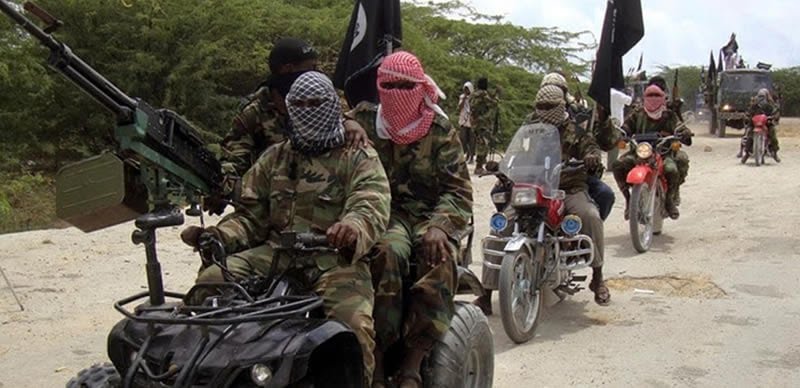
Witnesses said that the gunmen rode motorcycles into Woro at 5 p.m. on the day of the attack, carrying AK-47 weapons and explosives.
They surrounded the area and stopped everyone from leaving.
Around 6 p.m., the attackers broke into the Emir’s palace, pulled out his family, and set the place on fire. At the same time, gunshots broke out in different parts of town.
People in the neighborhood said they saw a white helicopter with markings hovering above for a short time, but it left without anyone doing anything.
The attackers went into what survivors called a “execution phase” between 6:30 and 8:00 p.m. They rounded up men, tied their hands behind their backs, and killed them.
Reports say that a military plane came back about 8 p.m., which made the attackers hide in adjacent woods. Some people came out of hiding at 9 p.m. because they thought the danger was passed.
The attackers regrouped and used the call to prayer as a trick to get people to come out before starting the slaughter again.
The fighting stopped at 2 a.m. when the terrorists went back into the woods with the women and children they had taken.
Survivors tell terrible stories
Survivors of the attack on the Woro hamlet in the Kaiama Local Government Area of Kwara State stated that highly armed terrorists invaded the town in a planned attack that lasted for hours.
ZulQharnain Shero Musa, who is the Special Assistant on Media to the Kaiama Local Government Chairman, said, “The attackers, who are thought to be based in a thick forest area near Kaiama, attacked the community in large numbers.” Most of them came on motorbikes, with two persons on each machine. There were hundreds of them.
He stated, “They were armed to the teeth with advanced weapons like AK-47 rifles, pump-action guns, and bombs.” Sadly, there wasn’t any security in the area right away when they got there.
He said that the attackers surrounded the village and went from house to house, pulling people out and killing them.
“They also went to the emir’s palace, took his wife and kids out, set the building on fire around 6 p.m., and started shooting all over the town.
“People driving on the busy federal route that goes through the hamlet were also stopped and attacked. It was a planned and organized attack.
He said that many people ran into neighboring bushes and farms in a panic, but others were shot while trying to get away.
“A white helicopter with markings flew over the area for a short time but did not stop to help. After it left, the attackers killed more people from about 6 p.m. to 8 p.m.
“Later, a suspected military plane came back, which made the assailants pull back for a short time. But as soon as it left, the attackers regrouped and started attacking again, pretending to be summoning people to pray. He said, “The violence went on until about 2 a.m.”
Musa reported that more than 200 individuals were thought to be dead, and mass burials were still going on.
“About 170 dead were buried between Wednesday and Thursday, and many more were still being looked for. They took women away from their homes and into the woods. People are continuously finding bodies in bushes, rivers, and on farms.
“About 95% of the people who died were Muslims, and about 5% were Christians.”
He said that the situation in Woro and the nearby villages was terrible.
“Almost every place is empty.” People are scared and have left their homes. People have known for a long time that certain forest areas are home to illegal mining and that they are hard to get to. The gang has built homes and boreholes there and made villages. Farmers can’t get to their farms anymore, and business has come to a complete stop.
He said, “As recently as 4:30 a.m. on Thursday, gunshots could be heard from faraway farms, which means the attackers were still active.”
Aliyu Abdul Hamid Jogodo, who is also known as Omo Salka, alleged that the attackers took his friend’s mother.
“They also assassinated my boss’s brother, Dr. Muhammad Yusuf, who was in charge of the Woro Primary Health Care Center. He said, “The pain is too much.”
Jogodo said he got away by rushing into the forest when the gunshots started and staying there till daybreak.
He asked the government for help right away, including sending in troops and supplies for people in need.
Ruqqoyat Solihudeen, a trader, alleged that the attackers pretended to be troops.
“They wore full military gear, and one of them was a woman with bullets,” she claimed. She wore a hijab, which made them look real.
“They walked by our store on their way to Woro from Kaiama.” Until the gunfire started a few moments later, we had no idea what was going on.
She stated she got away by acting like nothing was going on and then escaping to safety.
“My seven-year-old stepsister, who has a long-term illness, was taken when we were at a family function. Another older sister was also taken. We don’t know how they’re doing, and I’m not sure my younger sister can make it in the kidnappers’ den.
She went on to say that a lot of homes and stores were burned down during the raid.
“A woman from the Kishi community who is well-known as Iya Bag lost everything she owned. The attackers thought the family was inside when they set fire to the house, but they got out through the back window.
She begged the administration to act quickly.
Why intelligence agents failed – Security agents
Umar Salihu, the chief of Woro village, told ARISE News on Thursday that calls were made to the police as soon as the attacks started, but soldiers didn’t show up until about 3 a.m., ten hours after the requests for help.
Salihu says that the attackers had already run away by the time the troops got there.
A high-ranking officer from one of the country’s intelligence organizations informed our reporter that the robbers put explosives on the road to the village to stop security officers from becoming involved.
The officer, who knew a lot about the rescue operation, said that a security team was sent to the neighborhoods right away after the distress calls were made.
But the rescue team couldn’t get to the neighborhoods until after the assailants had left.
“The security was told right away, and people were sent right away. But there was information that the bandits had already put explosives on the way to the towns. They moved about strategically, but the bombs hit a truck. That made it harder to save people since you have to be safe first before you can save other people who are in danger.
“The security is stretched too thin. While we were dealing with emergencies in some areas, the bandits would attack in another area. By the time we sent people there, they would have already attacked another area.” “It’s a big problem; we (security personnel) can’t be everywhere,” he remarked.
A police officer in Ilorin, who went to Woro last year, indicated that the places where the incident happened were more than an hour away from Kaiama.
He also said that “from available information,” the bandits put bombs on main highways going to the settlements, which made it hard to help.
If you drive from Ilorin to Kaiama, it will take more than six hours. If you take a bus, it will take eight hours. It takes more than an hour to drive from Kaiama to Woro and Nuku. They are little towns that are extremely close to Niger State and the Benin Republic. The area also connects Oke-Ogun in Oyo State.
“Based on the information we have, the bandits may have come from the Kainji National Park area in Niger. We learned that the bandits rode motorcycles into the towns. For days, they had plotted the attack. They even put bombs in other places to stop security agents from rescuing people.
“At about 5 p.m., they arrived through the woods, set up camp at a school, and started shooting off and on at about 6 p.m. They weren’t trying to kill anyone in particular; they were just killing people. He went on to say that they shot anyone on the road, including drivers and riders.
Kabiru Adamu, a specialist on security, said that terrorist attacks would keep happening unless agencies are held responsible and structural changes are made.
Adamu told our reporter that the cycle of violence is likely to continue since the national security system is still vulnerable, there is inadequate accountability, borders are easy to cross, and security agencies don’t work together very well.
He said that the recent attacks in multiple states were part of a trend, not just random events. He stressed that security risks will stay as long as systemic weaknesses were not fixed.
“I see these attacks continuing,” Adamu added. The best method to stop attacks is to find the security holes and block them. Anyone who knows about security knows this. But we haven’t done enough to fix these problems, so they keep happening virtually every day.
“Our rural areas are still poor, and there aren’t many police officers there. Our borders are still easy to cross, and the police and the courts are still very weak. State governors are not doing a good enough job of keeping people safe, although they do collect security votes every month and run their state’s security councils. To the best of my knowledge, no one has given up that duty, but not much has changed.
“Another issue is that we can’t hold security officials responsible. In the Kwara case, the event happened on the 3rd and today is the 6th. No one has been questioned or issued an administrative warning, even though more than 170 people are said to have died. The similar thing happened in Niger and Kaduna, where churchgoers were kidnapped. No one in the government was held responsible.
“As long as these things stay the same, these kinds of things will keep happening. The main problem is that we haven’t gone after the people who did it. We’re treating them with kid gloves. They keep running, getting money, weapons, motorbikes, and gas. So where is the seriousness?”
The government forms a commission, and 50 survivors are sent to the hospital.
The governor of Kwara State, AbdulRahman AbdulRazaq, has also approved the formation of a seven-member team to work with the Woro community on the humanitarian intervention that the state government announced earlier.
The goal of the move is to help people right away and organize reconstruction efforts in the neighborhood after the recent horrific incident.
Rafiu Ajakaye, the Governor’s Chief Press Secretary, said in a statement yesterday that Ahmed Kiwozi, a former member from the Kaiama Local Government Area, will be in charge of the committee.
There is also a woman on the committee from the Office of the Secretary to the State Government.
The statement says that the committee has four weeks to talk to community leaders, figure out what survivors need, plan the rebuilding of destroyed homes, and deal with other important humanitarian issues.
Sadiq Umar, the senator from Kwara North, stated that more than 50 people who survived the attacks were getting care in hospitals in Ilorin, the state capital.
Sadiq, who went to the hospitals to see the victims yesterday, felt sorry for them and called the situation “heartbreaking.” He also prayed for their quick recovery.
He also told the victims that he would keep helping them until they healed.
The senator said that security activities should continue in Kwara North because the area had been having security problems for a long time.
He told people to stay united, hopeful, and pray, and he promised to work for the health and safety of his constituents. He also prayed for lasting peace in the area. The massacre on Tuesday in Woro, a small town in Kaiama Local Government Area of Kwara State, which killed an estimated 176 people, was not a random act of violence.
According to our correspondent’s findings, the incident was the consequence of a planned growth of a terrorist front that the country’s security system failed to stop despite previous warnings, reported Saturday PUNCH.
Abubakar Saidu, also known as Sadiku, is the terrorist commander at the center of the tragedy. His deadly path has lasted more than ten years and has taken place in the northern part of the country.
Sadiku was a mysterious figure in the insurgency for a long time.
But investigations show that over the course of 12 years, he went from being a handpicked lieutenant of the late Boko Haram commander Abubakar Shekau in 2014 to what security experts now call the “Shekau of the North-Central” by 2026.
Sadiku moved west as military pressure reduced Boko Haram’s strongholds in the North-East. He settled in the wide forest corridors of Niger and Kwara states.
From there, he ran a campaign that destroyed rural communities, forced families to leave their homes, and ended with one of the bloodiest mass killings ever recorded in Kwara State.
From Shekau’s right-hand man to a brutal kingpin
According to security reports, Boko Haram first sent Sadiku to Niger State as a trusted agent to help the group grow its power outside its usual base in the North-East.
A self-proclaimed counterterrorism analyst on X, MobilisingNigeria, said that Sadiku rose through the ranks of the insurgency because he was close to the late Shekau, who personally chose him to represent Boko Haram’s interests in Niger State.
The analyst said, “Later, he worked with Dogo Gide to expand into the North-Central terrain and also worked with the Darul Islam terrorist group before the police broke it up.”
Sadiku was in a collaboration with the infamous bandit leader Gide for a while. He used the partnership to get weapons, information, and power in the area.
But disputes over ideas finally broke apart the coalition, resulting to deadly fights that killed combatants on both sides.
After the separation, Sadiku went deeper into the woods and set up a base in the Kainji Forest Reserve in July 2025.
People who watched him say that this was a turning moment in his actions because he stopped stealing for money and started a more strict, ideologically driven campaign of terror.
The “new Sambisa” is Kainji Forest.
The Kainji Forest Reserve, which is in Niger and Kwara states, has become an important place for militants from the North-East to connect with bandit groups who are still active in the North-West.
Security analysts call the forest Nigeria’s “new Sambisa” because it provides cover for recruiting new members, moving weapons, and planning attacks on rural villages in Niger, Kwara, Kebbi, and parts of Kaduna states.
Hassan, a security specialist from Kwara, said that Sadiku’s move to the Kainji route meant that Boko Haram-style insurgency was spreading dangerously into the North-Central region.
“For more than ten years, most of the violence by Boko Haram happened in Borno, Yobe, and Adamawa.”
“But splinter groups and allied groups are now using forests, weak security, and porous borders to move west,” he warned.
Who is Sadiku?
MobilisingNigeria said in a different article on X that Sadiku was a factional leader of Boko Haram who moved from the North-East to set up new camps in the North-West and North-Central regions.
“Sadiku is the same as Shekau.” The expert said, “Military pressure in the North-East forced him to move toward the North-West and North-Central as new bases.”
Brandon Phillips, who tracks security in West and East Africa, also said that Sadiku’s group was directly responsible for the Woro slaughter.
Phillips said that the attack happened fewer than four kilometers from Nuku, where rebels from Jama’at Nusrat al-Islam wal-Muslimin, an Al-Qaeda group in the Sahel, claimed their first strike in Nigeria in October 2025.
He says that the closeness shows that JNIM and the Sadiku-led Boko Haram branch are working together, either in an opportunistic way or through a non-aggression pact.
Phillips also said that the Woro massacre was comparable to prior attacks in the Papiri area of Niger State, which shows that Sadiku’s group is still moving south toward areas of the Kainji Reserve that JNIM controls.
In a different post from January 11, he said that between November and December 2025, it became more and more clear that JNIM and the Sadiku-led Jama’atu Ahlis Sunna Lidda’adati wal-Jihad faction were working together.
Sadiku is said to have moved most of his men to areas of Kwara, Niger, and southern Kebbi states that were controlled by JNIM during that time.
Phillips also connected JNIM to the Papiri kidnapping of Catholic children, saying that some of the kidnapped children were kept at a JNIM camp after Sadiku’s group carried out an operation.
He wrote, “These attacks have happened in areas where JNIM is already active, which suggests that the two groups are still working together.”
Raheem Mutiu, another security expert, backed up these claims by saying that JNIM militants were moving around Kaiama, Baruten, Borgu, and nearby places close to the Kainji Forest Reserve.
He went on to say that the Mahmuda group used to govern these areas, but their power quickly faded once their commander was arrested in August 2025.
James Barnett, an expert on African conflict, said that the Woro slaughter was different from the Mahmudawa faction, which had mostly focused on preaching and social issues. Violence had mostly happened in response to military actions.
After the Mahmuda leader was arrested, Barnett said that some men joined Sadiku’s group and others ran away to the Benin Republic. This made Boko Haram splinter control stronger across the Kainji axis.
The warning letter, the death sentence
The results showed that the Woro community was told about the attack weeks before it happened.
Salihu Umar, the chief of the hamlet, said that he got a letter written in Hausa and dated 19 Rajab 1447 (January 8) roughly three weeks before the killing.
The letter, which was signed by JAS, said that the group wanted to meet with community leaders “secretly” to preach and would not hurt anyone.
Umar said he made a copy of the letter and sent it to the Kaiama Emirate. He also sent a soft copy to the Department of State Services office in Kaiama.
Witnesses said that the gunmen rode motorcycles into Woro at 5 p.m. on the day of the attack, carrying AK-47 weapons and explosives.
They surrounded the area and stopped everyone from leaving.
Around 6 p.m., the attackers broke into the Emir’s palace, pulled out his family, and set the place on fire. At the same time, gunshots broke out in different parts of town.
People in the neighborhood said they saw a white helicopter with markings hovering above for a short time, but it left without anyone doing anything.
The attackers went into what survivors called a “execution phase” between 6:30 and 8:00 p.m. They rounded up men, tied their hands behind their backs, and killed them.
Reports say that a military plane came back about 8 p.m., which made the attackers hide in adjacent woods. Some people came out of hiding at 9 p.m. because they thought the danger was passed.
The attackers regrouped and used the call to prayer as a trick to get people to come out before starting the slaughter again.
The fighting stopped at 2 a.m. when the terrorists went back into the woods with the women and children they had taken.
Survivors tell terrible stories
Survivors of the attack on the Woro hamlet in the Kaiama Local Government Area of Kwara State stated that highly armed terrorists invaded the town in a planned attack that lasted for hours.
ZulQharnain Shero Musa, who is the Special Assistant on Media to the Kaiama Local Government Chairman, said, “The attackers, who are thought to be based in a thick forest area near Kaiama, attacked the community in large numbers.” Most of them came on motorbikes, with two persons on each machine. There were hundreds of them.
He stated, “They were armed to the teeth with advanced weapons like AK-47 rifles, pump-action guns, and bombs.” Sadly, there wasn’t any security in the area right away when they got there.
He said that the attackers surrounded the village and went from house to house, pulling people out and killing them.
“They also went to the emir’s palace, took his wife and kids out, set the building on fire around 6 p.m., and started shooting all over the town.
“People driving on the busy federal route that goes through the hamlet were also stopped and attacked. It was a planned and organized attack.
He said that many people ran into neighboring bushes and farms in a panic, but others were shot while trying to get away.
“A white helicopter with markings flew over the area for a short time but did not stop to help. After it left, the attackers killed more people from about 6 p.m. to 8 p.m.
“Later, a suspected military plane came back, which made the assailants pull back for a short time. But as soon as it left, the attackers regrouped and started attacking again, pretending to be summoning people to pray. He said, “The violence went on until about 2 a.m.”
Musa reported that more than 200 individuals were thought to be dead, and mass burials were still going on.
“About 170 dead were buried between Wednesday and Thursday, and many more were still being looked for. They took women away from their homes and into the woods. People are continuously finding bodies in bushes, rivers, and on farms.
“About 95% of the people who died were Muslims, and about 5% were Christians.”
He said that the situation in Woro and the nearby villages was terrible.
“Almost every place is empty.” People are scared and have left their homes. People have known for a long time that certain forest areas are home to illegal mining and that they are hard to get to. The gang has built homes and boreholes there and made villages. Farmers can’t get to their farms anymore, and business has come to a complete stop.
He said, “As recently as 4:30 a.m. on Thursday, gunshots could be heard from faraway farms, which means the attackers were still active.”
Aliyu Abdul Hamid Jogodo, who is also known as Omo Salka, alleged that the attackers took his friend’s mother.
“They also assassinated my boss’s brother, Dr. Muhammad Yusuf, who was in charge of the Woro Primary Health Care Center. He said, “The pain is too much.”
Jogodo said he got away by rushing into the forest when the gunshots started and staying there till daybreak.
He asked the government for help right away, including sending in troops and supplies for people in need.
Ruqqoyat Solihudeen, a trader, alleged that the attackers pretended to be troops.
“They wore full military gear, and one of them was a woman with bullets,” she claimed. She wore a hijab, which made them look real.
“They walked by our store on their way to Woro from Kaiama.” Until the gunfire started a few moments later, we had no idea what was going on.
She stated she got away by acting like nothing was going on and then escaping to safety.
“My seven-year-old stepsister, who has a long-term illness, was taken when we were at a family function. Another older sister was also taken. We don’t know how they’re doing, and I’m not sure my younger sister can make it in the kidnappers’ den.
She went on to say that a lot of homes and stores were burned down during the raid.
“A woman from the Kishi community who is well-known as Iya Bag lost everything she owned. The attackers thought the family was inside when they set fire to the house, but they got out through the back window.
She begged the administration to act quickly.
Why intelligence agents failed – Security agents
Umar Salihu, the chief of Woro village, told ARISE News on Thursday that calls were made to the police as soon as the attacks started, but soldiers didn’t show up until about 3 a.m., ten hours after the requests for help.
Salihu says that the attackers had already run away by the time the troops got there.
A high-ranking officer from one of the country’s intelligence organizations informed our reporter that the robbers put explosives on the road to the village to stop security officers from becoming involved.
The officer, who knew a lot about the rescue operation, said that a security team was sent to the neighborhoods right away after the distress calls were made.
But the rescue team couldn’t get to the neighborhoods until after the assailants had left.
“The security was told right away, and people were sent right away. But there was information that the bandits had already put explosives on the way to the towns. They moved about strategically, but the bombs hit a truck. That made it harder to save people since you have to be safe first before you can save other people who are in danger.
“The security is stretched too thin. While we were dealing with emergencies in some areas, the bandits would attack in another area. By the time we sent people there, they would have already attacked another area.” “It’s a big problem; we (security personnel) can’t be everywhere,” he remarked.
A police officer in Ilorin, who went to Woro last year, indicated that the places where the incident happened were more than an hour away from Kaiama.
He also said that “from available information,” the bandits put bombs on main highways going to the settlements, which made it hard to help.
If you drive from Ilorin to Kaiama, it will take more than six hours. If you take a bus, it will take eight hours. It takes more than an hour to drive from Kaiama to Woro and Nuku. They are little towns that are extremely close to Niger State and the Benin Republic. The area also connects Oke-Ogun in Oyo State.
“Based on the information we have, the bandits may have come from the Kainji National Park area in Niger. We learned that the bandits rode motorcycles into the towns. For days, they had plotted the attack. They even put bombs in other places to stop security agents from rescuing people.
“At about 5 p.m., they arrived through the woods, set up camp at a school, and started shooting off and on at about 6 p.m. They weren’t trying to kill anyone in particular; they were just killing people. He went on to say that they shot anyone on the road, including drivers and riders.
Kabiru Adamu, a specialist on security, said that terrorist attacks would keep happening unless agencies are held responsible and structural changes are made.
Adamu told our reporter that the cycle of violence is likely to continue since the national security system is still vulnerable, there is inadequate accountability, borders are easy to cross, and security agencies don’t work together very well.
He said that the recent attacks in multiple states were part of a trend, not just random events. He stressed that security risks will stay as long as systemic weaknesses were not fixed.
“I see these attacks continuing,” Adamu added. The best method to stop attacks is to find the security holes and block them. Anyone who knows about security knows this. But we haven’t done enough to fix these problems, so they keep happening virtually every day.
“Our rural areas are still poor, and there aren’t many police officers there. Our borders are still easy to cross, and the police and the courts are still very weak. State governors are not doing a good enough job of keeping people safe, although they do collect security votes every month and run their state’s security councils. To the best of my knowledge, no one has given up that duty, but not much has changed.
“Another issue is that we can’t hold security officials responsible. In the Kwara case, the event happened on the 3rd and today is the 6th. No one has been questioned or issued an administrative warning, even though more than 170 people are said to have died. The similar thing happened in Niger and Kaduna, where churchgoers were kidnapped. No one in the government was held responsible.
“As long as these things stay the same, these kinds of things will keep happening. The main problem is that we haven’t gone after the people who did it. We’re treating them with kid gloves. They keep running, getting money, weapons, motorbikes, and gas. So where is the seriousness?”
The government forms a commission, and 50 survivors are sent to the hospital.
The governor of Kwara State, AbdulRahman AbdulRazaq, has also approved the formation of a seven-member team to work with the Woro community on the humanitarian intervention that the state government announced earlier.
The goal of the move is to help people right away and organize reconstruction efforts in the neighborhood after the recent horrific incident.
Rafiu Ajakaye, the Governor’s Chief Press Secretary, said in a statement yesterday that Ahmed Kiwozi, a former member from the Kaiama Local Government Area, will be in charge of the committee.
There is also a woman on the committee from the Office of the Secretary to the State Government.
The statement says that the committee has four weeks to talk to community leaders, figure out what survivors need, plan the rebuilding of destroyed homes, and deal with other important humanitarian issues.
Sadiq Umar, the senator from Kwara North, stated that more than 50 people who survived the attacks were getting care in hospitals in Ilorin, the state capital.
Sadiq, who went to the hospitals to see the victims yesterday, felt sorry for them and called the situation “heartbreaking.” He also prayed for their quick recovery.
He also told the victims that he would keep helping them until they healed.
The senator urged for ongoing security operations in Kwara North, saying that the area had continued to have security problems.
He told them to stay together, stay hopeful, and pray, and he promised to keep working for the health and safety of his constituents and for permanent peace in the area.
About the Author