
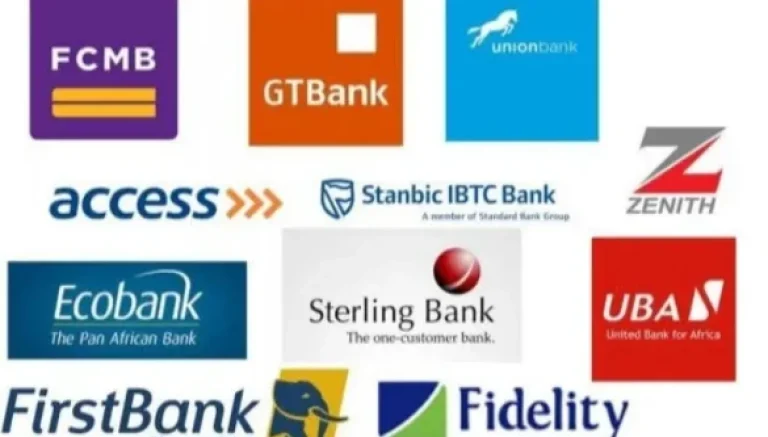
As Nigeria’s banking industry races toward the Central Bank of Nigeria’s (CBN) deadline for recapitalization, four banks—Union Bank, Keystone Bank, Unity Bank, and Polaris Bank—stand out for the wrong reasons.
According to the Daily Independent, Tier-1 banks have mostly protected their capital buffers or found clear ways to meet the requirements. However, these institutions are still in a high-stakes fight against time, legal problems, and investor skepticism.
Market analysts say that the outcome for these banks would not only affect their own fates, but also the structure of Nigeria’s financial sector. This might speed up consolidation, ownership changes, and regulatory intervention.
The CBN’s recapitalization program, which was meant to strengthen balance sheets, make the economy more stable, and restore confidence after years of macroeconomic instability, has turned into a test of governance, investor appeal, and strategic clarity.
Proshare’s Economic and Market Intelligence Unit (EMIU) says that the four banks have different amounts of capital shortage, and they are also dealing with problems like legal conflicts, low profits, and ambiguity over ownership.
Titus Iduma, a banking expert in Lagos, remarked, “Recapitalization is no longer just about getting money.”
“It’s all about credibility: can investors trust these institutions’ governance, earnings outlook, and regulatory alignment?”
Union Bank’s plan to raise more money depends on foreign investment, and there is allegedly a lot of interest from the United Arab Emirates (UAE).
This is good for the bank on paper because offshore capital is still the best way to get a lot of money into the bank right now.
But there is still a legal dispute involving TGI Group, a former main investor, that is making things more complicated.
The disagreement should be settled by the end of January 2026, which gives Union Bank a very short amount of time to finish reorganizing its capital before regulatory deadlines come into effect.
Analysts believe the danger isn’t what investors want, but when they want it.
An investment banking source said, “Union Bank’s fundamentals and franchise are still attractive.” “But international investors are very sensitive to legal ambiguity. Even a small delay after January might put raising money in a legal gray area.
If the bank doesn’t close the purchase quickly, it could face supervisory constraints, lower ratings, or forced strategic options, such as dilution or restructuring under regulatory guidance.
The issue at Keystone Bank is more complicated. There is growing interest from investors, including a local group that wants to be the preferred bidder. This shows that people believe in the franchise, but observers wonder if local investors alone can get the amount of money needed under the CBN’s new limits.
Olusoji Benson, a market expert, said, “There is local demand, but the problem is capacity.” In today’s world, getting recapitalization-grade capital means having a lot of money, being patient for a long time, and having buffers in foreign currency.
Market information shows that overseas investors are also interested, which makes it more likely that a joint acquisition will happen that combines local operational competence with foreign capital strength.
It was learned that this kind of arrangement may speed up the process of getting regulatory approval and make Keystone’s balance sheet look more credible.
However, analysts say that without foreign investment, Keystone could be undercapitalized, face pressure on its credit rating, and have more regulatory scrutiny.
Unity Bank seems to be the closest to a final settlement, and its merger with Providus Bank is still moving forward.
There is already an agreed-upon capital structure, and much of the regulatory alignment has been done.
The last problem is a legal challenge from shareholders that is still going on. Market watchers think it will be settled before the March 2026 deadline, maybe even by the end of January 2026.
Analysts see the Unity–Providus merger as a smart way to deal with the need for more finance.
Sola Ogundipe, a financial industry analyst, remarked, “This is a textbook example of consolidation done right.” Unity Bank gets stronger financially and more stable in terms of governance, while Providus grows in size and reach.
“If finished on time, the merger might keep depositors’ trust and protect shareholder value—things that authorities want to happen first. But any delay could make people wonder again about Unity Bank’s ability to stand on its own.
Market intelligence says that Polaris Bank is expected to either raise money from investors or combine with another Tier-2 bank, with Wema Bank being the most likely partner.
Most analysts agree with this idea, saying that combining Polaris and Wema will make the institution stronger and more competitive while also helping the CBN reach its larger consolidation goals.
Stephen Iloba, a financial expert, says that Polaris Bank has had a lot of ups and downs in the past year.
He remarked, “Polaris Bank’s future is unlikely to be independent because of the work being done behind the scenes.” A merger gives you more scale, lower costs, and a clearer way to satisfy your capital needs.
He noted that this kind of action “would also lower systemic risk by stabilizing a bank that has already been subject to regulatory action in the past.”
Analysts say that a merger is more certain and faster than investor-led recapitalization, even though it is still feasible.
A lot of analysts think that the timeframe for recapitalization doesn’t provide much space for mistakes.
They say that if banks don’t achieve their requirements, they could face: worse credit ratings, limits on dividend payments and asset development, forced mergers or acquisitions, and more regulatory control.
Cyril Amkpa, an economist, said, “The CBN has made it clear that it likes orderly solutions.” But there is a limit to how long you can wait. Banks that don’t meet deadlines could lose control of their future.
Analysts say that the recapitalization process is working toward its goal of imposing tough choices and fixing systemic problems, even though Union, Keystone, Unity, and Polaris Banks are suffering serious problems.
Ogundipe says, “Consolidation is not a failure but an evolution.” What important is that the system gets stronger and protects depositors.
The next several months will be very important for the four banks that are under pressure. Legal decisions, investor commitments, and regulatory clearances all need to happen at the same time.
Success will ensure that you stay alive and important. Failure could put once-famous names in Nigeria’s financial history in the footnotes.
One analyst says it plainly: “Recapitalization is no longer just a theory.” For these banks, it’s life or death.
About the Author