

The federal government praised the US airstrikes on suspected terrorist strongholds in Sokoto State on Christmas Day, December 25, 2025, saying they will help its fight against terrorism.
But Nigeria’s situation has gotten worse in less than four weeks since the foreign bombs fell.
Armed groups have killed and kidnapped a lot of people in places like Kaduna, Zamfara, Niger, Sokoto, Borno, Plateau, and others. This has shown a scary truth: The strike didn’t stop terrorism; it changed it.
The world’s largest black nation is facing not only Boko Haram, robbers, and new groups like Lakurawa, but also a deadly mix of terrorism and organized crime that is expanding faster than she can stop it.
Saturday Vanguard says that the U.S. strikes seem to have caused havoc at home.
The strike that shook Northern Nigeria
On December 25, the U.S. military carried out rare airstrikes on targets in Sokoto state, North-Western Nigeria, that were thought to be connected to the Islamic State.
Washington called the operation a major blow to extremist networks that function outside of the usual Boko Haram area.
From the start, the operation brought up worrying issues. Who were the targets, exactly? How many terrorists or thieves were killed? Did civilians get hurt? Did the strike make terrorists less able to do their jobs or make them want to get back at us?
There weren’t many official responses, but things on the ground started to speak louder than words.
Within 24 hours of the strike, armed attacks increased every day in several states, as if the terrorists are daring the U.S. to launch more airstrikes.
From airstrikes to chaos
The North-West, which was already Nigeria’s most unstable region, became the center of new violence. States in the North-Central and North-East zones were also affected.
Villages in Kaduna, Katsina, Zamfara, Sokoto, and Niger states were attacked between December 26, 2025, and January 21, 2026.
Coordinated attacks on rural areas killed dozens of people, and mass kidnappings took hundreds of people.
Kaduna became the epicenter
On January 18, armed gangs broke into three churches as people were worshiping and took 177 people hostage in one operation. This was one of the most horrific events. On January 21, a Boko Haram suicide bomber drove into a military convoy in the Timbuktu Triangle in Borno State, killing five troops and injuring many others.
Security experts think that bandits took advantage of the chaos after the strike to grow their operations, take over land, and make more money from ransoms.
A security source told Saturday Vanguard, “The strike disrupted some jihadist cells, but it also created a power vacuum.”
“Bandits quickly moved in to fill that space.”
Boko Haram and ISWAP won’t back down in the N-East.
Jihadist organizations in the North-East did not pull back once the U.S. got involved, which was not what was expected. Instead, attacks on military posts were happening, and rural villages were still in danger.
Insurgents were able to move about Borno and the states next to it. As it turned out, bombs from other countries didn’t stop the local rebellion. Instead, Boko Haram and its offshoot groups changed, as they have done for more than ten years.
The Rise of Lakurawa in Sokoto
The growth of Lakurawa, a new armed group that is active along Nigeria’s northwestern border, is probably the most troubling thing that has happened since December 25.
Lakurawa is different from regular bandits since they mix philosophy with crime.
It taxes communities, hires local young people, organizes raids, and establishes control over areas. Security officials are worried that Lakurawa is a link between extremist groups in the Sahel and Nigeria’s criminal economy. If it isn’t stopped, it could turn the North-West into a new insurgency theater like the North-East.
The numbers that shocked
Even while official statistics are still incomplete, information from security reports, humanitarian groups, and the media paints a gloomy picture: at least 183 people have been slain and 366 individuals have been kidnapped between December 25, 2025 and January 21, 2026.
Kaduna, Niger, Zamfara, Katsina, Sokoto, Borno, and Plateau are the states that have been impacted the hardest. These numbers are low since a lot of attacks in rural areas don’t get reported or are underreported. Authorities deny or cover up some reports, including the most recent kidnappings in Kaduna.
Some communities bury their deceased without saying a word.
Before the U.S. airstrikes
For more than 20 years, Nigeria has been a killing ground, and things have gotten worse since 2014.
The National Bureau of Statistics (NBS) says that between May 2023 and April 2024, 614,937 people died and 2,236,954 individuals were kidnapped in Nigeria.
Reports say that kidnappings dropped by 16.3% in 2024, but the terrorists got more deadly in 2025, with at least 6,800 deaths reported in the first part of that year.
In April 2025, there were 570 deaths and 278 kidnappings. In August 2025, there were 545 violent occurrences, 732 deaths, and 435 kidnappings.
A timeline of violence after U.S. strikes
A day after the U.S. airstrikes, armed militia stormed Bokkos/Barking Ladies in Plateau State on December 26 and killed 16 people.
That same day, bandits invaded villages in Nigeria State, killing people and taking 12 people hostage.
On December 27, bandits assaulted towns in Anka LGA, killing five people and taking 20.
In Giwa LGA, Kaduna State, on December 28, bandits killed three people and kidnapped 15.
Four people were slain by Boko Haram/ISWAP terrorists in Gwoza, Borno State, on December 29.
December 30: In Faskari LGA, Katsina, bandits killed two people and took ten others hostage.
On December 31, terrorists from Lakurawa massacred six people in Tangaza LGA, Sokoto State.
January 1: Bandits invaded a market hamlet in Niger State, killing 30 people and taking 15 hostage.
On January 2, bandits killed one person and took eight people hostage in Chukun LGA, Kaduna State.
On January 3, bandits killed seven people in Maru LGA, Zamfara State.
On January 4, bandits attacked a community in Niger State, killing 30 people and taking about 40 others hostage.
On January 5, Boko Haram killed three people in Maiduguri, Borno State.
On January 6, bandits invaded rural areas in Kaduna, killing two people and taking 24 others.
On January 7, bandits killed four people and took nine hostage in Kankara LGA, Katsina State.
January 8: Bandits killed six people in Tsafe LGA, Zamfara State.
On January 9, Lakurawa assaults killed 10 people in Gwadabawa LGA, Sokoto State.
Bandits killed five people and took 18 people hostage at Shiroro LGA, Niger State, on January 10.
Bandits killed three people and kidnapped twelve in Birnin Gwari, Kaduna State, on January 11.
On January 12, ISWAP attacked Marte LGA in Borno State, killing six people.
On January 13, bandits killed two people and took seven people hostage in Danmusa LGA, Katsina State.
January 14: Armed militia killed nine people in Mangu LGA, Plateau State.
On January 15, bandits killed two people and kidnapped six others in Kagarko LGA, Kaduna State.
On January 17 and 18, bandits stormed three churches in Kajuru LGA, Kaduna State, and took 177 people hostage. Three people murdered and ten were taken hostage in a follow-up raid.
On January 19, bandits invaded a village in Rafi LGA, Niger State, killing four people and taking nine people hostage.
On January 21, a Boko Haram suicide bomber drove into a military convoy in the Timbuktu Triangle in Borno State, killing five troops and injuring several more.
War with no frontlines
Nigeria’s security crisis is even more complicated than the Boko Haram conflict of the 2010s. The fight has turned into three layers that overlap:
• Terrorists
Boko Haram, ISWAP, and other jihadist groups are working toward ideological goals.
•Robbers
Criminal gangs that are motivated by ransom, arms trafficking, and controlling territory.
•Mixed Groups
New actors like Lakurawa are combining their beliefs with organized crime. The outcome is a conflict on many fronts with no clear lines of battle. Bombing one group typically makes another stronger.
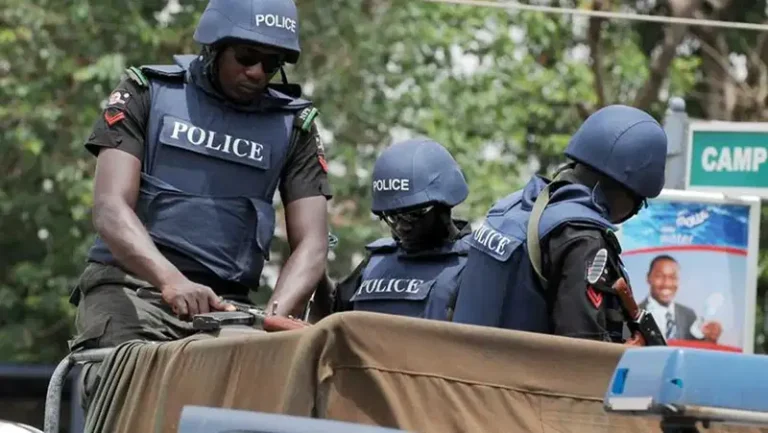
In private, a high-ranking military general said, “We are fighting shadows.” You hit one camp, then three more ones pop up somewhere else.
Kidnapping as a Business
The industrialization of kidnapping may be the most hazardous trend since December 25. Now, thieves work like businesses: intelligence units find targets and strike squads carry out kidnappings.
Negotiators discuss about ransom; logistics networks move victims through forests; and ransom payments buy guns, hire warriors, and keep criminal economies going.
Nigeria is now one of the most dangerous places in the world for kidnappings, which makes people wonder if the U.S. attack was a mistake.
Experts don’t all agree.
Some say the strike was needed to stop the spread of transnational jihadists, while others say it put Nigeria at risk of becoming a new front in the fight against terrorism around the world.
It’s clear that the hit may have crippled certain terrorist cells, but it also sped up the breakup of armed groups, making the battle in Nigeria more spread out and harder to win.
Crossroads that are dangerous
There is a bigger problem than the bombs and bullets. Nigeria is unsafe because the government doesn’t do enough in rural regions, there are a lot of unemployed people, ethnic and religious tensions, land disputes, open borders, armament proliferation, corruption, and bad governance.
Until these systemic problems are fixed, military successes may only last for a short time and be pyrrhic. The country is also at risk of entering a long period of decentralized violence, where robbers, terrorists, and militias fight for land, power, and blood.
About the Author