
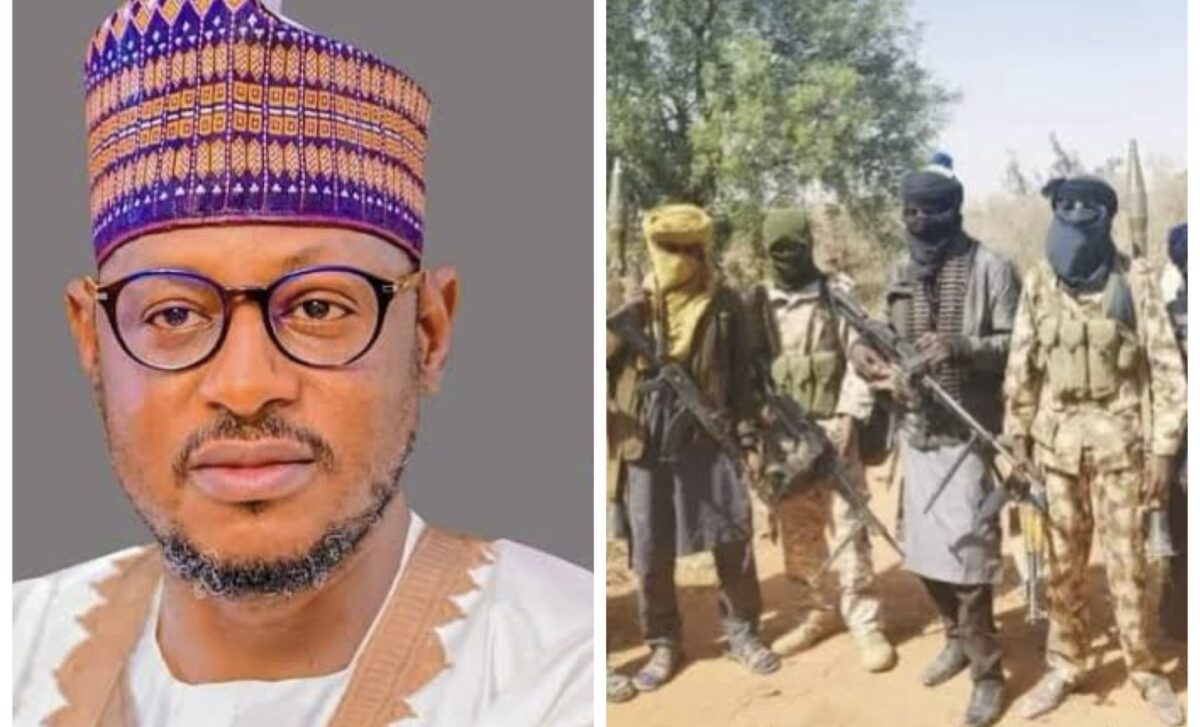
created by photogrid
Many well-known social and political groups, such as Afenifere, the Arewa Consultative Forum, Ohanaeze Ndigbo, the Middle Belt Forum, and others, are angry about the Katsina State Government’s plan to free 70 bandits as part of efforts to fix a broken peace deal with bandit leaders.
The groups told our reporters in separate interviews that the move was foolish and a threat to national security. They asked the federal government to stop the provocative conduct, according to The PUNCH.
Also, religious and community leaders in Katsina State strongly opposed the proposed amnesty for the bandits, calling them a serious threat to the state.
There has been a rise in bandit attacks in Katsina State, and between 2021 and 2025, more than 1,500 citizens were killed. The state government recently agreed to let 70 alleged bandits go free as part of a peace pact with armed organizations. The change has caused a lot of debate, with some saying it makes offenders feel more powerful and makes justice less fair.
It was not possible to confirm yesterday whether the bandits had been freed or not. One of our reporters went to the Katsina State Commissioner for Justice and Attorney-General’s office to check if the bandits were still in custody and to check the authenticity of the documents that were said to have been signed by people who were involved in the release of the suspects.
But ministry officials did not comment on the matter, neither confirming nor denying the claims.
The government’s silence further added to the rumors and public fear, especially in a state that has seen years of violent attacks, kidnappings, and other crimes tied to banditry.
The administration, on the other hand, says that the scheduled release is part of measures to keep the peace and free people who have been kidnapped. More than 1,000 people have been freed in similar talks.
The state Commissioner for Internal Security and Home Affairs said that the release was like trading prisoners during a battle.
Many Nigerians, especially security specialists, spoke out against the action because they were worried about impunity and more assaults.
Christopher Musa, the Minister of Defense, said that talking to bandits simply makes them stronger and makes it harder to keep people safe.
Afenifere kicks
Abagun Omololu, the Organizing Secretary of Afenifere, a pan-Yoruba socio-political group, told our correspondent yesterday that the plan was an unacceptable way to appease violent criminals.
He went on to say that the action was dangerous, illegal, and a serious threat to national security.
The Afenifere Think Tank strongly opposes the Katsina State Government’s proposal to free seventy bandits under the pretense of a “peace arrangement.” He remarked, “This proposal is reckless, irresponsible, and very bad for national security.”
Omololu said that state governments did not have the constitutional power to talk to terrorists, especially if they weren’t fully disarmed, held accountable, and had their cases closed.
“We are very worried that some governors and local government chairmen have taken powers that they don’t have and aren’t allowed to use by the Constitution.” He said, “Negotiating with terrorists, let alone giving them freedom without consequences, encourages crime, weakens the rule of law, and puts innocent Nigerians in great danger.”
“Negotiations with terrorists, when necessary, must be conducted solely by the federal government via the military and properly established security agencies, culminating in the unconditional surrender of arms, verifiable cessation of violence, and lawful reintegration procedures. Omololu said, “Anything less than this is a betrayal of the state’s main duty to protect life and property.”
He warned that problems with security in one state might quickly spread to another.
“Bandits who were liberated in Katsina today could show up again tomorrow in other states or move south, where they will continue their killing spree without fear of punishment. “Omololu remarked, “This is not fostering peace; it is moving instability around.”
He says that the federal government must be the only one to negotiate with armed organizations, and that these negotiations must culminate in unconditional surrender.
He remarked, “Anything less than verifiable disarmament, lawful prosecution, and structured reintegration is a betrayal of the state’s main duty to protect life and property.”
ACF is worried
The Arewa Consultative Forum had similar worries and said that the strategy could make criminal gangs stronger and the state’s power weaker.
Prof. Tukur Muhammad-Baba, the forum’s National Publicity Secretary, spoke in Kaduna and advised people to be careful.
“Banditry is a terrible crime that has terrible effects on communities. He stressed that any choice to let suspected criminals go must put justice for victims first.
Muhammad-Baba said that criminals can get the wrong idea from these kinds of actions.
“The risk is that they might feel invincible and be tempted to go back to crime.” He went on to say, “Government actions must show strength, not weakness.”
He also talked about how this could affect other things.
“There is a chance of a contagion effect, where other states make the same demands.” “It’s important to know if the federal government was properly consulted because security is a federal responsibility,” he said.
What Katsina leaders say
Religious and community leaders in Katsina State also strongly opposed it. Malam Umar Usman, a religious leader in Katsina, asked the administration to think over its choice again.
“How can we, as religious leaders, support this risky move? The law should be as harsh as possible on those who slaughtered and destroyed communities. “We’re not really in favor,” he replied.
Aminu Jafaru, a ward leader in the Modoji district of Katsina, also warned of possible revenge.
“These bandits will go after security forces and people who gave them information if they are set free. This includes village heads, ward heads, and traditional leaders.” He stated, “Our people think they won’t stop their bad deeds.”
A youth leader in Kankara, who asked not to be named, stated that people were getting ready to take legal action.
“These bandits slaughtered, raped, and took millions of dollars from us as ransom. The authorities can’t just let them leave. “We will go to court if this release goes through,” he stated.
An Islamic scholar named Mallam Umar said that the scheme was dangerous but may be good if it was handled correctly.
He stated, “Like many others, I was scared that we have no way of knowing if they have really changed or what they might bring back into our communities.” He went on to say that it is normal to feel angry and betrayed when individuals who have hurt you are forgiven and set free.
He did, however, say that after thinking about it further, he changed his mind, especially because the release came after peace talks in which the bandits’ counterparts had asked for their freedom.
CNG is against the plan
The Coalition of Northern Groups also spoke out against the planned amnesty, calling it a reckless surrender that was being sold as a way to achieve peace.
The coalition, led by its National Coordinator, Jamilu Charanchi, said in a statement that the government’s reasons for letting suspected and convicted bandits walk free were not good enough.
The statement said, “CNG understands the urgent need to stop the bloodshed, kidnappings, and destruction in Katsina State and the wider North-West. However, we believe that peace built on appeasement, judicial compromise, and concessions to violent criminals is neither sustainable nor just.”
The coalition said that comparing the release of bandits to prisoner exchanges during wartime was not fair.
“Nigeria is not fighting a normal war with a known enemy. Bandits are terrorists who kill people, rape women, destroy towns, and move families. CNG added, “Treating them as negotiating partners without first breaking their ability to be violent weakens the power of the state.”
It said that letting suspects go free while they wait for their trial as part of peace talks was a bad sign.
“This method convinces criminals that violence pays, justice can be bought, and the government is weak. The group said, “Communities keep getting attacked even after concessions are made.”
The coalition also complained about what it saw as the government’s reticence on what happened to the victims.
“Thousands of people have lost loved ones, farms, and houses. Letting suspects go without admitting the truth, making amends, or paying damages is a very unfair thing to do. “Peace that ignores justice does not heal; it deepens fear and resentment,” CNG added.
Government of Katsina State
Dr. Nasir Mu’azu Danmusa, the Katsina State Commissioner for Internal Security and Home Affairs, defended the strategy by saying that it was meant to strengthen the peace pact that the community had reached.
“At least 15 local government units signed peace accords, and bandits who have changed their minds have freed nearly 1,000 people who were kidnapped. He added that letting go of the 70 suspects was like exchanging prisoners during a war.
He also said that “repentant bandits” had freed about 1,000 people during the peace pact, and that the release of the 70 people who were being held was like a “prisoner exchange.”
“For instance, they (repentant bandits) freed 36 people in Safana Local Government Area, 42 people in Kurfi, 310 people in Sabuwa, 36 people in Faskari, and 60 people in Danmusa.
“In Malumfashi, they let 36 people go; in Musawa, they let 28 people go; and in Matazu, they let 33 people go. They let 62 people go in Dutsinma, 31 people go in Jibia, and 125 people go in Bakori.
The commissioner went on to say, “Everyone knows that after a war, there are usually prisoner exchanges.” For example, during the Nigerian civil war, numerous captives were freed and traded between the Nigerian side and the Biafran side.
“If you look at the Boko Haram situation, detainees were also freed once an arrangement was made. The Chibok girls who were freed also witnessed some Boko Haram terrorists who were in prison get out.
“Each side has detainees that they let go for the other side. There is no question of whether a crime has been committed or not, as long as there is peace. The problem is that exchanging prisoners is not a new event in the annals of war and peace.
He also said that the Ministry of Justice and the High Court did not break any laws in the country and that anyone who was unhappy could go to court to get what they wanted.
Bala Zango, the State Commissioner for Information and Culture, also wrote a personal opinion piece called “Katsina Community Driven Peace Deal: When People Are Not Victims,” in which he said that criticism often comes from people who have not directly experienced the horrors of banditry.
He said that communities who have been hurt by kidnapping, murder, and displacement are more likely to back unusual solutions if they promise quick relief and protection.
But Abdullahi Kabir, the Katsina State Coordinator of CNG, told our reporter over the phone that bandits are criminals and terrorists. He said that equating their release to a prisoner exchange in battle is wrong.
He went on to say that letting them go before justice is delivered makes the state weaker, glorifies violence, and encourages further attacks.
“CNG supports dialogue and reintegration in principle, but it says that negotiations should only happen after the government has shown that it can defeat and control violent groups. But in Katsina, suspects are being let go while villages are still being attacked, which shows that the peace deals are not working.
“The coalition also says the government is wrong for not helping victims whose families were slain, crops were damaged, and communities were forced to move. He remarked, “Letting bandits go free without truth, justice, compensation, and accountability is a betrayal of these victims.”
Commodore Omatseye Nesiama (retd.), a retired Nigerian Navy officer, noted that talks about what it would mean to let bandits go free while they are on trial need to start with an understanding of the huge mental, emotional, and financial costs that banditry has brought to the country.
He said that the long-lasting violence has greatly hurt the country’s goals and daily life, and that no Nigerian would want things to stay the same.
He said that to tackle the situation, we need strong and long-lasting security measures to take back the initiative and make bandit organizations less determined.
“Such acts should lead to deaths and arrests, including the trial of well-known people or a large number of bandit members. Nesiama added, “This is what makes it possible to negotiate from a position of strength.”
He further said that the Katsina State Government might now be trying to find this hard balance.
He stated, “If that’s the case, then limited trade-offs could be made to get the release of hostages on both sides, especially if innocent civilians are involved.”
Nesiama, on the other hand, stressed that any discussion must be based on the state’s ability to first establish supremacy.
He remarked, “The most important thing is to make sure that negotiations happen in a strong, not weak, environment.”
“FG must step in”
The Middle Belt Forum, on the other hand, said the plan would “encourage banditry” and asked the federal government to step in.
Dr. Bitrus Pogu, the National President of the MBF, said in Jos, “People are killing, hurting, and moving innocent people, and instead of prosecuting them, the government is talking to them.” This is bad and dangerous. The federal government needs to step in because Nigeria can’t keep going this way.
Leaders of Ohanaeze Ndigbo also said that the judgment could have implications all over the country.
Chief Silas Okeke, a former Vice President of the Igbo cultural group Ohanaeze Ndigbo, said, “We strongly condemn this unacceptable decision by the Katsina State Government.” It means bringing in new dangers to security in the country.
“Anything that happens in the North will have an effect on other areas. Some of the criminals can run away to other places after they are let go and keep doing bad things.
“I think the release will make the bandits bolder, which will lead to more terror attacks on farmers, travelers, and communities.” This will give these criminals the confidence to move to other areas with their groups and keep terrorizing people.
The Abia State branch of Ohanaeze Ndigbo, led by Dr. C. C. Okwuonu, also said, “When they let some of them go, they train them and recruit them into the Army and all that, which is useless.” That’s not the appropriate thing to do.
Austin Ozobo, the head of the Ijaw People’s Development Initiative, also spoke out against the action, calling it unsafe and inappropriate.
“We strongly condemn this unacceptable choice made by the Katsina State Government.” He remarked, “It amounts to inviting more security threats to the state.”
He said that the planned release would make public safety even worse and that people couldn’t trust the administration to put citizens’ safety first if the move went through.
“I think the release will make the bandits bolder, which will lead to more terrorist attacks on farmers, travelers, and communities.” Ozobo replied, “This way of making peace will only make things worse.”
“We don’t agree with this move and want the government to put the safety of residents first.” He went on to say that the planned release is a severe threat to peace and security in Katsina State and has to be dealt with right away.
About the Author