
Checks have shown that by the end of this year, the federal government will have spent at least N38.188 billion on the upkeep of previous presidents, vice presidents, and their families over a period of 22 years.
Saturday Vanguard says that the welfare of former leaders and their families has cost Nigeria $144.722 million over the past 22 years, based on official currency values from different years.
The amount of money set aside for benefits for past presidents, vice presidents, or chiefs of general staff has quickly grown from N140 million in 2005 to N2.3 billion since 2013 (see table). The highest point occurred in 2012, when the Dr. Goodluck Jonathan Administration set aside N3.185 billion for the well-being of the former leaders.
The smallest amount was given in 2008, when N24 million was given. The number for 2007 was not made public, however unsubstantiated estimates from the Secretary to the Government of the Federation (SGF) put it at N102 million. The amount was the same at N2.3 billion per year from 2013 to 2025.
In 2017, the Office of the Secretary to the Government of the Federation (OSGF) also set aside N432.193 million to buy cars for the four vice presidents and the seven previous presidents/heads of state of the country.
The federal government has suggested spending N2.3 billion in 2026 to pay benefits and entitlements to Nigeria’s previous presidents, chiefs of state, and their deputies.
The 2026 N58.47 trillion Appropriation Bill has a section called “Entitlements of former Presidents/Heads of State and Vice Presidents/Chief of General Staff” that talks about this.
The allotment includes pensions, allowances, and other required benefits.
The N2.3 billion provision in the budget applies to both civilian and military past leaders of the country.
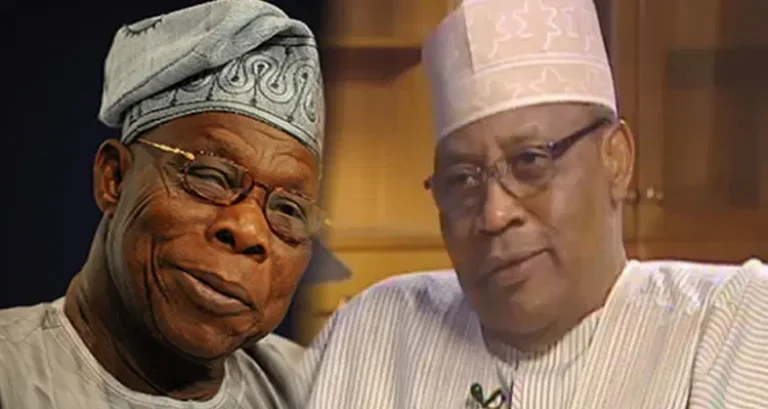
Former presidents Olusegun Obasanjo and Goodluck Jonathan, as well as former military leaders of state General Ibrahim Babangida, General Yakubu Gowon, and General Abdulsalami Abubakar, are among those who will benefit.
The distribution also includes previous vice presidents and other high-ranking military officials. Atiku Abubakar, who was Vice President from 1999 to 2007, Namadi Sambo, who was Vice President from 2010 to 2015, and Yemi Osinbajo, who was Vice President from 2015 to 2023, are all named beneficiaries.
Commodore Ebitu Ukiwe, who was the de facto Vice President from 1985 to 1986 during the Babangida military administration, is also on the list.
Abubakar Tafawa Balewa (prime minister), General Aguiyi-Ironsi, Dr. Nnamdi Azikiwe (ceremonial president), General Murtala Muhammed, General Sani Abacha, and Chief Ernest Shonekan are all dead presidents whose families are supposed to benefit from the money.
Brigadier Tunde Idiagbon, Dr. Alex Ekwueme, and Lt. General Oladipo Doya were all previous vice presidents or chiefs of general staff who have died.
N500,000 for attending a Council of State meeting
In addition to the N38.188 billion welfare package, each of the former leaders, who is automatically a member of the Council of State, gets N500,000 every time they go to a meeting that happens at least twice a year to talk about and make decisions on important issues that affect the country.
Buying a car
The office of the Secretary to the Government of the Federation also set aside N986.19 million between 2016 and 2018 to buy cars for the country’s seven previous presidents/heads of state and four vice presidents.
Where the assistance package came from
Nigeria started giving benefits to previous presidents in 1999 with Decree 32. This was based on the United States of America’s complex welfare system for former rulers.
In 2001, it became the Act on the Pay of Former Presidents, Heads of Federal Legislative Houses, Chief Justices of the Federation, and Other Related Matters.
In 2008 and 2010, the National Assembly made more changes to the Act. The Revenue Mobilisation, Allocation and Fiscal Commission (RMAFC) is responsible for changing the pay of the former leaders from time to time to reflect changes in the economy, especially when the president’s salary goes up.
What RMAFC can do
The Constitution of 1999, Sections 70 and 84 (4), gives this power. The Certain Political Public and Judicial Office Holders (Salaries, Allowances, etc) Act, 2002 and the Amendment Act of 2008 are the laws that give it to them.
The rights
The 1999 Law said that each former President and Head of State should get N350,000 per month, and each former Vice President and Chief of General Staff should get N250,000 per month for their upkeep.
The Act says that all former Presidents and Heads of State of the Federal Republic of Nigeria (called “former Heads of State” in this Act) will get N350,000 per month as an up-keep allowance and the benefits of office listed in Part I of the Schedule to this Act. Vice-Presidents and Chiefs of General Staff of the Federal Republic of Nigeria (called “former Vice-Presidents” in this Act) will get N250,000 per month as an up-keep allowance and the benefits of office listed in Part II of the Schedule to this Act.
There are also rules for domestic workers, security aides, cars, and upkeep money for the families of presidents who have died.
For past presidents
For example, each former president gets an officer who is at least a chief administrative officer, a personal secretary who is at least Grade Level 12, three to four armed policemen, one Department State Service (DSS) officer who is at least Grade Level 10 as an Aide de Camp for life and paid by the State Security Agencies, three vehicles that the Federal Government must buy and replace every four years, and drivers who are paid by the federal government.
They and their immediate families are also entitled to free medical care in Nigeria, as well as treatment abroad when necessary at the Federal Government’s expense. They are also entitled to a well-furnished and equipped office in any location of their choice in Nigeria, a well-furnished five-bedroom house in any location of their choice in Nigeria, and 30 days of vacation each year at home or abroad.
For past vice presidents
For former vice presidents, the entitlements include: an officer not below the rank of a chief administrative officer; a personal secretary not below Grade Level 10; two to three armed policemen; one DSS officer not below Grade Level 8 as an Aide de Camp to be attached for life and paid by the State Security Agencies; two vehicles to be replaced every four years; drivers shall be selected by the former vice president and paid by the federal government; free medical treatment for them and their immediate families within Nigeria; treatment abroad where necessary; 30 days annual vacation within and outside Nigeria at federal government expense; a modestly well-furnished and equipped office in any location of their choice in Nigeria; a well furnished three-bedroom house in any location of their choice in Nigeria.
The 1999 law that has been changed says that the pay of former leaders must be reviewed whenever the pay of the current President or Vice-President goes up. The Federal Government must also set aside money in its annual budget for the pay of former Heads of State and former Vice-Presidents.
If an ex-president died, their family would get N1,000,000 a year, paid in four installments of N250,000. If a former vice president died, their family would get N750,000 a year, paid in four installments of N187,500.
The allowances were used to pay for the spouse’s care and the children’s schooling up to the college level.
If the spouse of a former leader gets married again, she will not be able to get the allowance.
Experience in different countries
The former president of the US makes $205,700 a year.
The past Presidents Act (FPA) gives the General Services Administration (GSA) the job of giving past presidents a pension, personnel, office space, travel money, and the ability to send mail. The FPA was passed in 1958 to “maintain the dignity” of the Office of the President by offering a former President and his or her spouse certain perks so that he or she wouldn’t have to choose jobs that weren’t right for them after leaving office.
Before 1958, former presidents who left office did not get any federal help or a pension. Some past Presidents, like Ulysses S. Grant and Harry S. Truman, had trouble with money after they left office. Andrew Carnegie, a businessman and philanthropist, came up with a scheme in 1912 to provide all future former Presidents and their widows $25,000 a year in pensions. The Carnegie Foundation of New York was going to pay for the pensions. Some members of Congress and the public thought it was wrong for a private firm to provide pensions to former Presidents, which is why the FPA was created.
The Secret Service protects former presidents for the rest of their lives, and their children are protected until they are 16. The pension for former presidents is the same as the annual compensation for senior political leaders at the Executive Level 1 designation, and the current president’s income is the same as theirs. The pension was $205,700 in 2016. Ex-presidents’ widows get $20,000 a year.
President Barack Obama said in 2017 that spending on former presidents should go up by around 18%.
At the moment, all past US presidents get between $3 and $5 million a year.
In South Africa, the former president gets $188,000 a year.
Former presidents in South Africa get all the same pay, benefits, and other perks for the rest of their lives as they did the day before they left office. They will also get all of their medical bills paid for.
The National Assembly also passed a resolution that lets past presidents get compensation raises every year based on what the Remuneration Commission says.
If the ex-president dies, his wife will get 50% of his package.
The South African National Assembly approved in 2017 to raise the President’s pay to R2,716,798 a year, approximately $188,000.
Indian experience, former president gets $13,248 a year
Former prime ministers of India get a lot of benefits, such as free housing for life, medical care, 14 secretarial staff, six domestic executive-class air tickets, unlimited rail travel, office expenses for five years, and automobiles. Former prime ministers are entitled to the same benefits as cabinet ministers, which include 270,000 Rupees, or $3,974.
A former president gets Rs.75,000 ($1,104) a month as a pension when they retire. They also get a furnished, rent-free bungalow, medical care, unlimited travel reimbursement with a companion by train or air, Delhi Police protection, five personal staff members (including two private secretaries, one peon, and one official car), and office maintenance costs of Rs 60,000 ($883) per year.
The UK gives former prime leaders a gold-plated pension of $515,000.
Some of the previous prime ministers in Britain get what has been called a “gold plated pension” that costs UK taxpayers roughly £435,000 or $515,000 a year.
For example, Tony Blair, the former Prime Minister, got the highest Prime Ministerial pension, which was worth roughly £70,000 a year in 2017, plus another £115,000 to help him with his “public duties.” The security crew allowance was thought to cost at least £250,000 a year.
The UK Cabinet Office Annual Report and Accounts say that former prime ministers got £836,345 as a Public Duty Costs Allowance (PDCA) in the fiscal year 2023–2024.
The PDCA is an allowance (reimbursements) for all living former prime ministers to cover the real costs of running an office and a secretariat while they are still doing public obligations after leaving office. This includes contributions to staff pensions.
How FG spent N38.2bn ($144.72m) on former leaders over the course of 22 years
Year / Amount
N140m ($1.06m) in 2005
2006: N105m ($817,121)
2007: N102m ($850m)
2008: N24m ($207,792)
2009: N250m ($1.724m)
2010: N250m ($1.667m)
2011 -N1.2bn ($8m)
2012: N3.185bn ($20.817m)
2013: N2.3bn ($14.375m)
2014: N2.3bn ($14.375m)
2015: N2.3bn ($12.095m)
2016: N2.3bn ($11.666m)
2017 -N2.3bn ($7.541m)
2018: N2.3bn ($7.541m)
2019: N2.3bn ($7.541m)
2020: N2.3bn ($6.389m)
2021 -N2.3bn(6.590m)
2022 -N2.3bn($5.608m)
2023 -N2.3bn ($5.279m)
2024: N2.3 billion ($2.875 million)
2025 -N2.3bn ($1.533m)
2026: N2.3bn ($1.521m)
Cars: N1.418bn ($4.65m)
Total: N38.188n ($144.722m)
About the Author