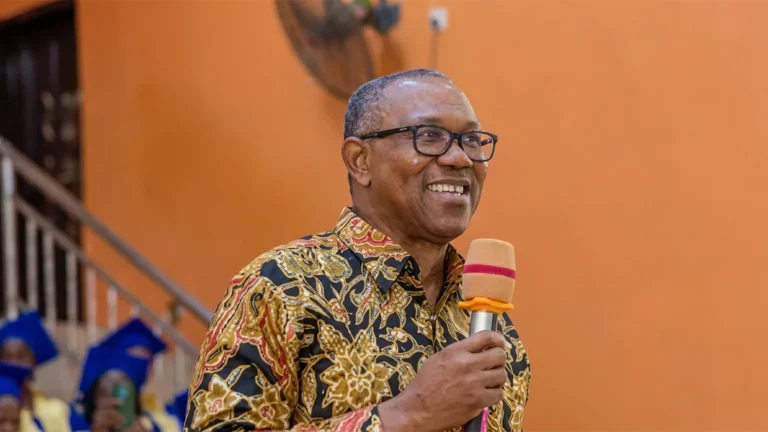

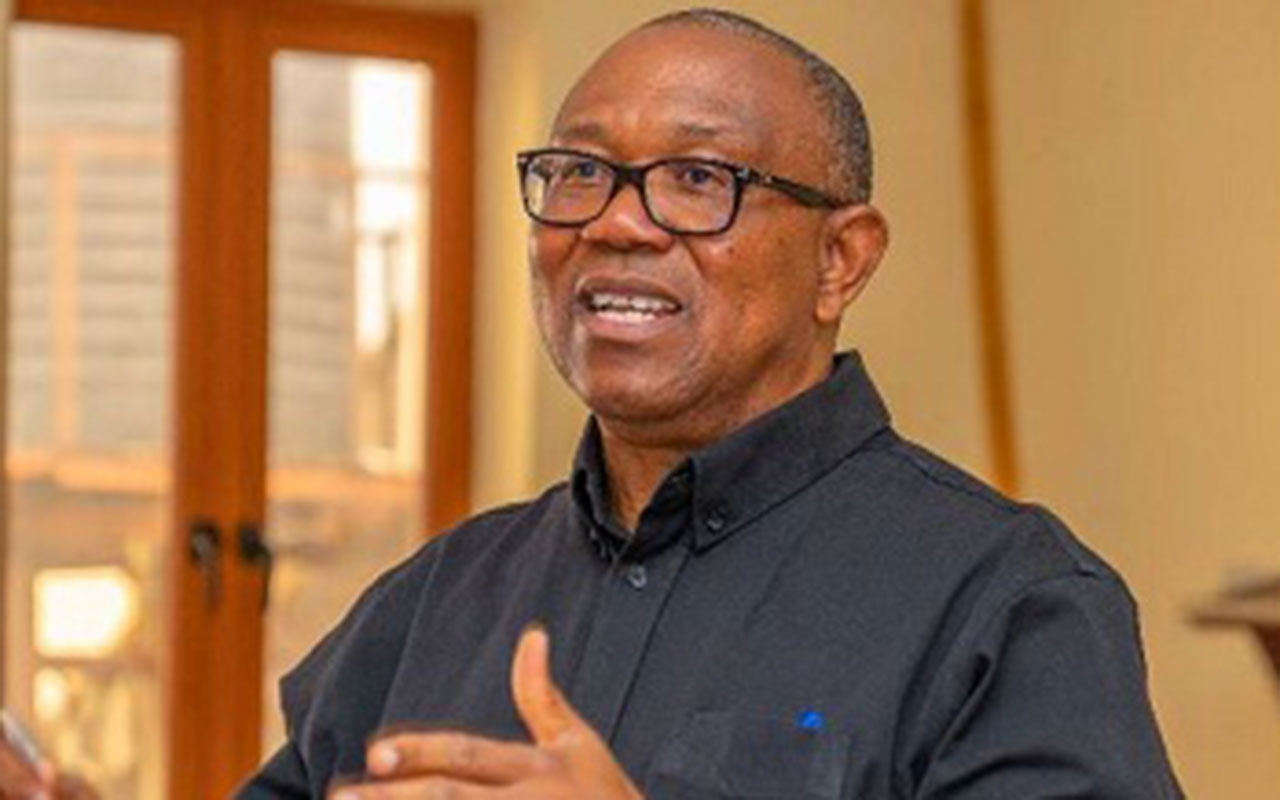
Mr. Peter Obi, the former governor of Anambra State, has raised the alarm about Nigeria’s worsening poverty crisis. He says the country is going backwards because politicians are more focused on power fights and controlling party structures.
Obi stated in a statement yesterday that around 141 million Nigerians, or 62 percent of the population, are currently living in poverty. He called the situation a serious national failure and a threat to the country’s future.
“As we politicians fight for positions and control of party structures, often sharing posts even before the elections are over, a harsh truth faces our nation: a staggering 62 percent of Nigerians, or about 141 million people, are trapped in poverty,” Obi added.
He used World Bank data to indicate that poverty levels have been rising quickly in recent years. For example, the number of Nigerians living in poverty went from 81 million in 2019 to over 139 million in 2025.
He said that things got a lot worse in only one year, with the number of poor people going from 115 million in 2023 to 129 million in 2024, which put 14 million more Nigerians in trouble.
“Predictions for 2026 say that this number would rise to about 141 million, which means that 26 million more Nigerians will become poor between 2023 and 2026.
By 2026, it is predicted that 141 million people, or 62 percent of the population, will be living in poverty.
“Low-income families are especially at danger because food makes up as much as 70% of their overall consumption, which makes them very vulnerable to price shocks and food inflation.
If we don’t see strong job creation, productivity development, and efficient social safety measures, a long-term rise in poverty could ruin public budgets, hurt human capital, and slow down the economy’s recovery.
“While this is going on, Nigeria’s poverty rate has gone up from about 40 percent in 2000 to a shocking 62 percent today.
“By 2025, India and Bangladesh had risen to 0.685 and Indonesia to 0.74, but Nigeria stayed at 0.53, being in the low human development category for 25 years.
“The fact that 141 million Nigerians are living in poverty is not just a failure of the country; it is a clear threat to our future.” Obi stated, “It’s time to stop being complacent.”
Criticizes NFF for not paying Super Eagles players their allowances
Obi has also criticized the failure to pay the Super Eagles, Nigeria’s senior national football team, their match allowances. He called the scenario an embarrassing example of the country’s wrong priorities and lack of sense of duty.
Obi said this in response to claims that the players were still owed agreed-upon match payments even while they were still playing for the country and boosting morale.
“Can we get through a day in this country without bad news?” “Obi asked.”
“At a time when Nigerians need joy and unity, something the national football team, the Super Eagles, has been providing by winning matches and lifting our spirits around the world, these same players are being denied their basic match allowances,” he stated.
Obi said that the scenario was different from what he called the ease with which large amounts of public money are wasted or spent on initiatives that don’t accomplish anything to enhance the lives of everyday Nigerians. He said that the inability to pay players’ allowances shows that the country’s priorities are out of whack.
“A country that writes off trillions of dollars in debts for government agencies and political allies and wastes money on big, self-serving projects now has trouble paying our players the basic match bonuses they are owed.”
“Nigeria deserves a better international image than this continued failure to honor previously agreed-upon allowances before the event.
He remarked, “The Super Eagles don’t deserve this embarrassment or the unnecessary distractions before a very important quarter-final match.”
Obi made it clear that the problem is more than athletics. He said that keeping promises, no matter how modest, is important for the country’s credibility. He said, “Nigeria needs to learn how to keep its promises.”
About the Author