
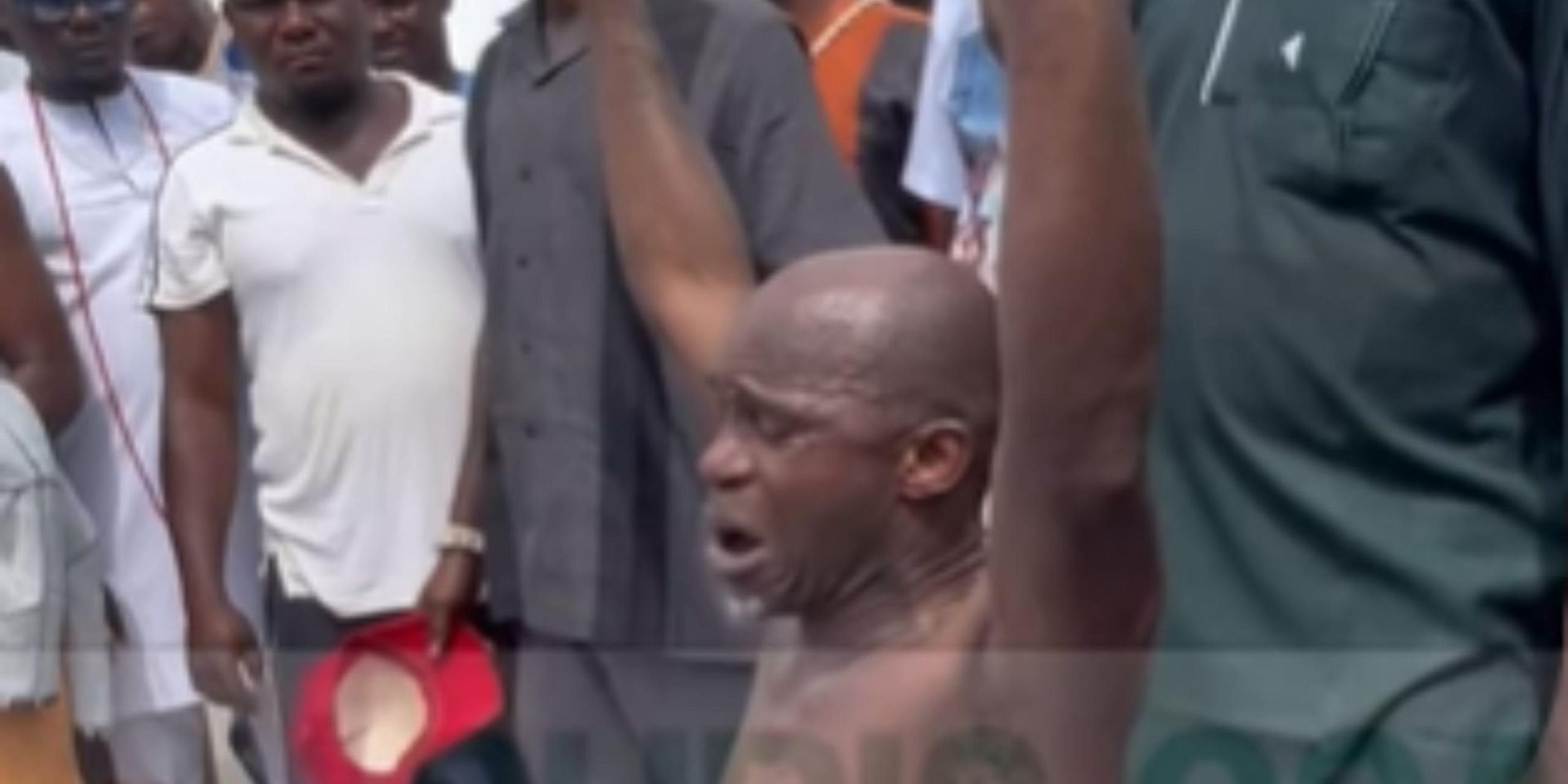
Don Pedro Obaseki, a Nigerian actor, was apprehended, stripped, and beaten by individuals posing as representatives of the Benin Traditional Council. They accused Obaseki of being a “Oghionoba,” which translates to “an enemy of the Oba of Benin, Ewuare II.”
A group of Benin teenagers accused Pedro Obaseki of recent actions and statements that they said were disrespectful to the Oba, and they dragged him to the Benin Kingdom Palace.
According to sources, Pedro Obaseki’s recent presence at a meet-and-greet event in London honoring his cousin, former Edo State Governor Godwin Obaseki, whom they also dubbed “Oghionoba,” was the reason behind the incident.
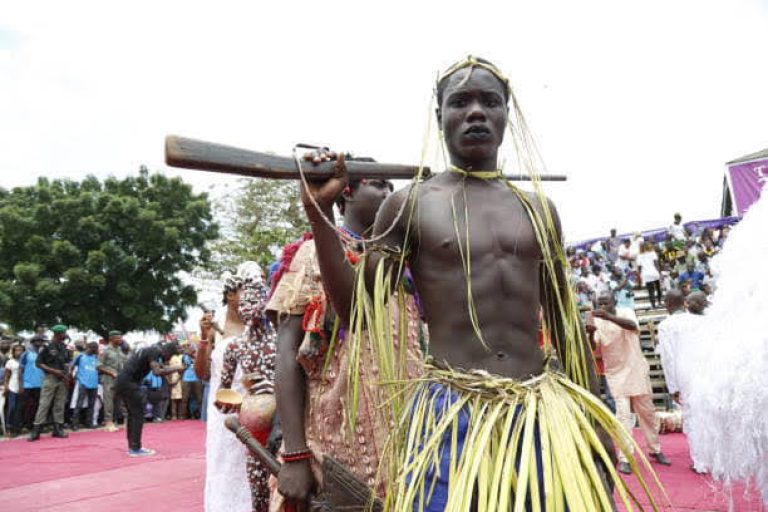
The actor was stripped down to his underwear, told to kneel, and made to walk on his knees inside the palace grounds in a widely shared video that TNT News online saw.
Then he was led before white-clad, beaded men who were suspected of being palace heads or officials, who led him into the palace while the crowd stayed outside.
Context
The conflict between former Governor Obaseki and Oba Ewuare II, the Oba of Benin, is a complicated one that involves administrative authority, cultural legacy, and a long-standing familial rivalry.
Around 2021, the conflict attracted a lot of public attention, and it continued to intensify until Obaseki’s term ended in 2024.
The return of thousands of artifacts (the Benin Bronzes) that British forces had looted in 1897 was the most widely reported flashpoint.
The Oba insisted that the items ought to be returned to the Palace because they were pilfered. He supported the construction of a Benin Royal Museum on the palace grounds.
Nonetheless, the Museum of West African Art (MOWAA), run by the Legacy Restoration Trust, a private organization, was suggested by the then-governor. In order to increase tourism, he saw this as a component of a larger cultural district.
Obaseki’s plot was thwarted in 2023 when the Federal Government of Nigeria intervened and formally acknowledged the Oba of Benin as the legitimate owner and guardian of all repatriated items.
A significant administrative conflict also arose when a number of Edo South’s Enigie (traditional dukes) asked the state government to establish new, autonomous traditional councils.
The Palace believed that Obaseki was using this as a “divide and rule” strategy to “balkanize” the Benin Kingdom and undermine the Oba’s central authority. Some of these dukes were suspended by the Oba for “rebellion,” and they sued the Oba, which many Bini people view as a heinous conduct. The governor’s detractors claimed he was supporting and facilitating these legal actions against the king.
The Palace claimed that Obaseki withheld the Benin Traditional Council’s statutory monthly allocations for seven months after leaving office.
Additionally, it claimed that the state government canceled the Oba Akenzua II Cultural Center’s concession, which the Palace had planned to utilize for the safekeeping of artifacts, and allegedly turned some of it into a motor park.
The Edo State Government’s relationship with the Palace has changed significantly since Monday Okpebholo, the new governor, took office.
The new government has taken steps to restore the Palace’s statutory entitlements and disassociate itself from Obaseki’s museum projects, while the Oba has openly expressed relief at the administration transition.
About the Author