
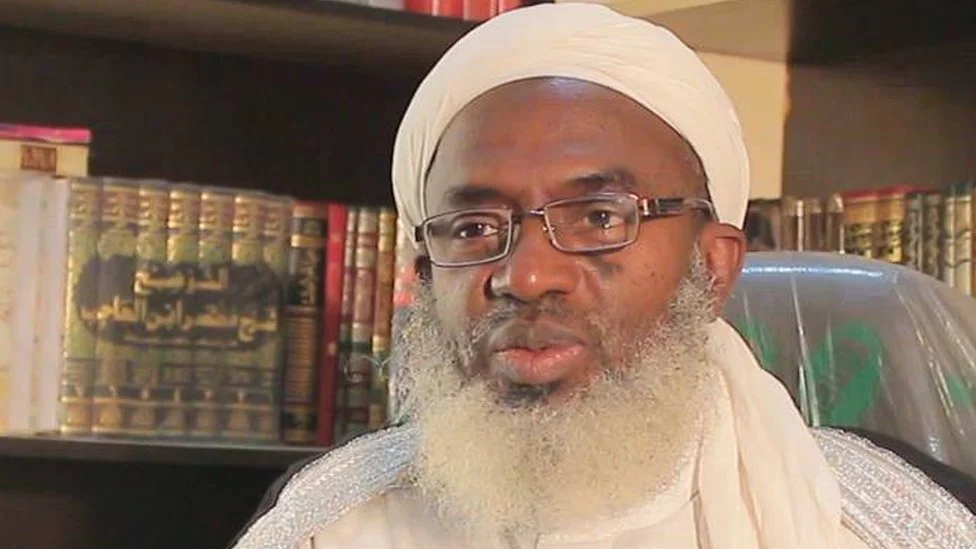
The recent US airstrikes on terrorist camps in northwest Nigeria have drawn criticism from Islamic cleric Sheikh Ahmad Gumi, who warned that the action could weaken Nigeria’s sovereignty, widen religious rifts, and convert the nation into a theater of proxy war.
Gumi’s comments came after U.S. President Donald Trump declared that American forces had executed what he called “many deadly strikes” on terrorists with ties to Islamic State who were active in the northwest of Nigeria. According to Trump, the strikes were intended to defend Christian communities that were purportedly being threatened by terrorist organizations.
The airstrikes were later acknowledged by Nigeria’s Federal Government, which claimed that they were carried out in accordance with an established security and intelligence cooperation structure between Abuja and Washington.
The government stated in a statement released by the Ministry of Foreign Affairs that all counterterrorism operations placed a high priority on protecting civilians and maintaining national unity, and that the partnership included intelligence sharing and strategic coordination in accordance with international law and Nigeria’s sovereignty.
Gumi, however, responded to the U.S. military strike in a Facebook post on Friday, saying that although combating terrorism is a moral and religious duty, foreign forces shouldn’t be in charge of doing it.
He asserts that eliminating terrorists is an Islamic obligation, citing the Prophet Muhammad’s desire to do away with violent radicals. However, he emphasized that such measures should not be carried out by foreign countries with dubious military records, but rather by what he called “clean and holy hands.”
Gumi cautioned that permitting the US to carry out bombings on Nigerian territory might draw anti-American extremist organizations from around the world and worsen rather than alleviate instability.
The cleric stated, “As a principle, no nation should allow its neighbors to become enemies, and no nation should allow its land to be a theater of war.”
Accusing Washington of imperial tendencies and warning that its engagement may polarize Nigeria along religious lines, he asked the Federal Government to immediately stop military collaboration with the United States.
Gumi went on to say that portraying the airstrikes as an effort to “protect Christians” was risky in a multireligious nation like Nigeria and would heighten tensions before the national elections in 2027.
“In the end, the United States’ intervention in Nigeria, justified by the defense of Christians, would polarize our country and violate our sovereignty. Nigerians are too well-educated to be taken advantage of. In 2027, this will be a key campaign topic, he predicted.
The cleric also criticized the strikes’ timing and placement, calling the bombing of parts of Sokoto State, which is primarily a Muslim territory, needless and symbolic.
He questioned why airstrikes were carried out in places he claimed had no immediate terrorist threat while insurgency hotspots like Maiduguri continued to be under siege. He compared the attacks to a “neo-Crusade” against Islam.
“Terrorism cannot be combated by sporadically dropping bombs. If we are serious, Nigeria has enough personnel to engage in serious military action on the ground, which is what is required,” he stated.
In order to maintain accountability and transparency, he also urged communities impacted by the strikes to record and disseminate any footage or images of civilian casualties.
Supporters contend that foreign aid is required to dismantle established terrorist networks, while detractors question the consequences for national sovereignty. The issue over the U.S. airstrikes has continued to spark heated debate throughout Nigeria.
About the Author