

The death sentence will not deter crime nor improve national security, according to key justice and human rights stakeholders who opposed a Senate proposal yesterday that would have amended the Terrorism (Prevention and Prohibition) Act to include the death penalty for abduction.
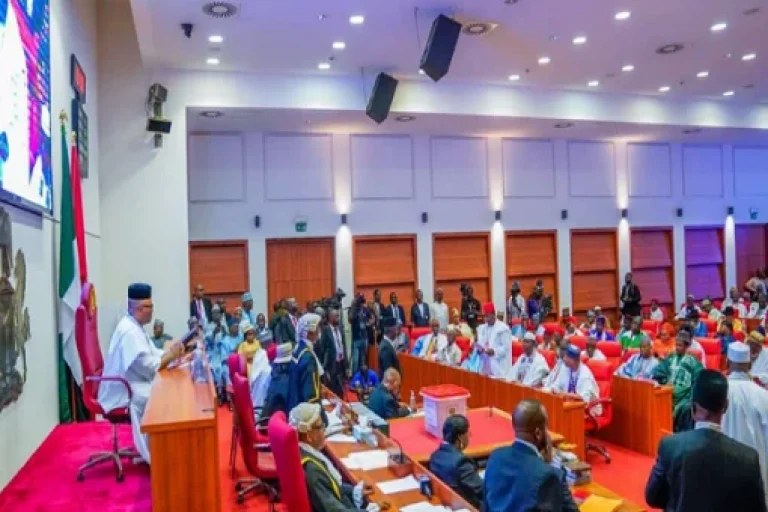
The Senate Joint Committees on Judiciary, Human Rights and Legal Matters, National Security and Intelligence, and Interior convened a one-day public hearing to hear the objections.
In addition to imposing the death penalty without the possibility of a fine or other punishment, the bill aims to designate abduction, hostage-taking, and similar offenses as acts of terrorism.
In addition to the Nigerian Bar Association (NBA), National Human Rights Commission (NHRC), Nigerian Financial Intelligence Unit (NFIU), Nigerian Law Reform Commission, Federation of Women Lawyers (FIDA), Department of State Services (DSS), and other stakeholders, Attorney-General of the Federation and Minister of Justice Lateef Fagbemi (SAN) expressed legal, constitutional, and policy concerns about the proposal.
While the administration shares the legislature’s will to tackle terrorism and violent crime, Fagbemi urged lawmakers to repeal the death penalty clause, pointing out that the proposed punishment would backfire.
The Attorney-General stated that although the death sentence is emotionally fulfilling, it runs the risk of encouraging the “martyrdom” trap.
“State-sanctioned execution may legitimize extremist causes, encourage recruitment, and incite retaliatory violence in ideological conflicts.”
Additionally, he cautioned that the death penalty may erode international cooperation since many nations might choose to repatriate individuals who are facing execution, so giving terror masterminds safe havens abroad.
Fagbemi also cited Nigeria’s long-standing reluctance to carry out executions, which has led to a de facto moratorium, overcrowded jails, and a higher danger of radicalization.
He suggested life in jail without the possibility of release as an alternative, saying, “Our focus should be on the certainty of apprehension and conviction rather than the ultimate severity of punishment.”
The NHRC suggested that before any legislation is passed, it must first pass a human rights impact assessment.
Despite its good intentions, it said that the Bill had “serious legal, constitutional and policy problems” and needed to be in line with both Nigeria’s constitutional protections and international human rights standards.
Expanding the death penalty in a system with investigative flaws increases the likelihood of permanent injustices, the Commission stated, adding that “any proposed legislation must improve the enjoyment of human rights and comply with best practices.”
The NBA recommended that the Senate implement a system of graded and discretionary sentencing.
It suggested restricting the definition of kidnapping as terrorism to situations involving terrorist or organized crime networks, or with the intention of intimidating the public or exerting pressure on the government.
In addition to defining intent, ancillary liability, and defenses like duress precisely, the association urged lawmakers to harmonize the Bill with current state kidnapping laws and replace the mandatory death penalty with discretionary sentencing, such as life in prison or death only in aggravated cases.
During discussions, Senator Ekong Sampson favored a graduated approach to offenses and punishments, emphasizing the necessity of taking into account the severity of the harm, the responsibilities of the offenders, and the results of the offenses.
Prof. Uchenna Emelonye, a professor of human rights law at Bournemouth University and former UN human rights envoy, praised what he called a rare convergence of opinions among Nigeria’s leading legal institutions opposing the death penalty for kidnapping.
According to Emelonye, “the submissions today reaffirm what empirical evidence and global experience show – expanding the death penalty will not stop kidnapping.” “Information-led policing, effective prosecutions, border security, arms control, victim-centered justice, and institutional reforms are all necessary for Nigeria.”
He urged the Senate to refocus legislative efforts on bolstering policing, intelligence coordination, and the prosecution of kidnapping cases, cautioning that expanding the application of the death penalty within a precarious criminal justice system runs the risk of wrongful convictions without producing quantifiable security gains.
As the Senate reviews the proposed change, the committees stated that their report would be informed by the contributions.
About the Author