
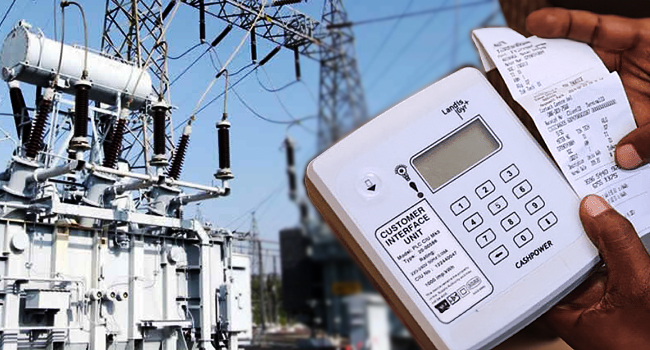
Some Nigerians have voiced their displeasure with the haphazard implementation of the electricity pricing increase for subscribers in the Band A category.
According to Daily Trust, they claimed that clients who weren’t using the services for up to 20 hours had been combined with those who were.
Confusion, demonstrations, and complaints have resulted from the situation, with customers accusing certain distribution companies (DisCos) of purposeful exploitation.
On Wednesday, the Nigerian Electricity Regulatory Commission (NERC) announced a 300% increase in the electricity rate that Band A customers will have to pay.
They now pay N225 per kilowatt-hour instead of N68.
The increase, according to NERC vice chairman Musliu Oseni, who made the announcement, was intended to lessen the strain on the federal government in the wake of the spike in gas prices and the sharp decline in the value of the naira relative to the US dollar, which the Bola Tinubu Administration referred to as “forex unification.”
Nonetheless, a number of electrical users who contacted with Daily Trust on Saturday bemoaned the change that forced them to pay for things they weren’t using.
The Abuja energy Distribution Company (AEDC) provides energy to residents of the Federal Capital City, Abuja, and its satellite cities. Some individuals in the same neighborhood were categorized on various bands, which infuriated them.
A few of the Band A residents stated they might think about moving somewhere else.
According to Madam Aminat Adeola, who resides in a one-bedroom flat under the Bwari Area Council at Plot A7, Shagari Quarters, Dei Dei, the AEDC put her on Band A, while all of her co-tenants were assigned to B and C.
“This is too much for me to handle. I think this is unjust. In this compound, why would they only put me on Band A? We don’t have a consistent power supply in this area. Before deciding what to do, I will first go to their Kubwa office and complain.
“But to be honest, I might have to go and rent a house somewhere else because of this,” she remarked.
Mrs. Iyabo Ganiyu, another local resident who was assigned to Band A while others in her neighborhood were assigned to Band C, claimed to have instructed her husband to go file a complaint at the AEDC’s Kubwa office.
Kubwa resident Obas Emmanuel claimed that after buying a N3,000 electricity token for his meter, he discovered he was in Band A.
“Instead of 40 units, I was handed 12. I didn’t get the Band A (20 hours) electricity, but that’s when I realized I’m on Band A,” he stated.
He went on to say that before the NERC degraded his feeder because they were not receiving coverage, he discovered that his location was in Band A.
Another AEDC customer, Yakubu Lawal, stated that he bought 40 units for N10,000, which would have previously secured him 135 units.
He added that he was shocked to be asked to pay for Band A services after his feeder in Kubwa was demoted to Band B.
He requested a refund from the AEDC and sought the NERC to investigate his situation.
State consumers bemoan
In a conversation with our correspondent, web designer Eze, who resides at Kay Farm Estate in Lagos, stated, “To be honest, I normally enjoy regular electricity in my estate.”
“I was shocked to see that I only received four units when I got up yesterday to recharge N1,000. I can’t even use the air conditioner anymore. Right now, I’m utilizing an electric fan.
He remarked, “I have recharged twice since yesterday, and I don’t think I could handle this new rate.”
Another Ojodu Abiodun, Lagos, resident who recharged on Thursday reported receiving 22 units for N5,000. Despite not knowing his band or category, another local neighbor also complained about receiving 52 units for the same sum.
An Obalende resident who works for the Eko Electricity Distribution Company claimed that she received 20 units for N5,000 rather than 74 units with bonus, and she questioned, “How can this be?”
Goodluck Stores Surulere, the manager, who went by Dubem, bemoaned the fact that his power supply expenses will be impacted by the rise in electricity rates.
“With the recent rise, what they would provide me won’t last a month. Previously, I purchased units for N30,000, which lasted roughly two months. The implication is that we may need to raise our stock prices,” he stated.
According to him, the Eko Distribution Company, which provides energy to his neighborhood, only does so twice a week.
Here, light is scarce. We might run on generators on some days of the week and have two days of steady supply. The light may remain on for four to five hours on average during those two days, but we rely on generators the majority of the time,” he continued.
Officials from a few distribution companies, meanwhile, acknowledged that certain regions experienced system errors that incorrectly classified some consumers as not falling within Band A. They stated that those customers had been located and would receive a refund.
“We are about doing a message and all the customers who were wrongly classified are going to be refunded their excess money,” stated an Eko DisCo official. The communication that we are working on will be sent out today (yesterday).
The official declared, “We have located the clients, removed them from our database, and we will get in touch with each and every one of them.”
In an interview with our correspondent, Kingsley Okotie, the spokesperson for Ikeja Electric, asserted that it was untrue that certain customers were mistakenly categorized under Band A because they had undergone a comprehensive assessment prior to the new cost reflective tariff’s installation.
“I am not aware of such complaints about being incorrectly classified under Band A feeders under the IE network,” he stated. Before classifications under Band A received regulatory approval, the exercise was carefully examined. Regarding the supply hours in accordance with the feeder arrangement, however, I can guarantee our clients that we will meet their expectations.
In order to promptly address issues as they come up, we have also established rapid response teams. To ensure the success of new tariff regime, which is a game-changer that will ultimately result in better service delivery for everyone, we ask our consumers to cooperate as much as possible,” he continued.
Paying will be challenging, say Kebbi locals
In Birnin Kebbi, Kebbi State, some inhabitants of Gesse Phase 1, GRA, and the new communities along the bypass have voiced their displeasure with the recent hike in electricity rates.
According to many who contacted with our correspondent, they were already making large payments prior to the rise.
Alhaji Abubakar Abbas, one of them, informed our correspondent that he and other locals were forced to make enormous monthly payments.
“I paid at least N60,000 every month, and occasionally N70,000,” he claimed, adding that the current hike will make it harder for him to pay his energy bills.
Some local company owners have expressed concern that they could find it difficult to pay the increased rate because the town’s industrial sector, Kalgo, and parts of the bypass are allegedly on Band A.
Due to the current state of the economy, our local businesses are no longer doing well. Suleiman Babagoro, who runs a small rice mill nearby, stated, “I am not sure many of us would be able to pay the new tariff.”
Once a customer, whether a business or an individual, is on Band A, they will be charged according to that specification, according to Abdulazeez Abdullahi, Head of Corporate Communications for the Kaduna Electricity Distribution Company (KAEDCO), which also serves Kebbi State.
The majority will fall on customers, according to Kano tailors.
According to Alhaji Abdulhameed B. Adamu, a tailor in Kano’s Badawa Quarters, “We will have to raise our prices due to the increase in the electricity tariff.” We used to charge between N1,500 and N2,000 for a set of basic, unadorned fabric, but today we charge between N3,500 and N4,000.
“A set of cloth with decoration that we used to charge between N3,000 and N6,000 for sewing will now cost between N7,000 and N8,000, depending on the type of decoration a customer chooses,” he added.
Sharada Industrial Estate ice block producers also called the most recent surge “unprecedented, shocking, and devastating.”
According to Abubakar Abdullahi Umar, the majority of them were perplexed upon learning of the increase.
Before the most recent development, he said, he used to pay roughly N500,000 a month to pay his electrical bills, and he questioned how they would handle it.
We are all perplexed, which is why we are only talking about this growth. Everyone is complaining. How would you explain to a customer a 300+% increase? Without a doubt, we will pass on the expense to customers who purchase our goods,” Umar stated.
Sani Bala, the Head of Corporate Communication at Kano Distribution Company, was unavailable when asked to comment on the inequalities observed in certain regions. However, an official who wishes to remain anonymous due to his lack of speaking authority clarified that the usage of the Band A threshold to charge users on other bands is essentially technical and that it is readily fixable.
There will only be a 1.5 million client impact.
At a news conference yesterday in Abuja, Nigerian Minister of Power Adebayo Adelabu addressed the broad grievances of Nigerians and said that the pricing increase would eventually help the poor.
According to him, just 15% of Nigerian energy users would be impacted by the recent rise from the standpoint of policy making.
According to the most recent data, the sector has just over 12 million clients, but this would only impact roughly 1.5 million of them, he said.
He stated that the government’s 70% subsidy would still be available to the remaining 10.5 million consumers.
The minister went on to say that the federal government was making significant investments in infrastructure, which will eventually result in better services and guarantee that even factories would receive a fair deal in comparison to what they currently spend on diesel to power their gear.
The minister declared, “A journey of thousand miles begins today.” Some Nigerians have voiced their displeasure with the haphazard execution of the hike in energy tariffs for customers within the Band A category of consumers.
According to Daily Trust, they claimed that clients who weren’t using the services for up to 20 hours had been combined with those who were.
Confusion, demonstrations, and complaints have resulted from the situation, with customers accusing certain distribution companies (DisCos) of purposeful exploitation.
On Wednesday, the Nigerian Electricity Regulatory Commission (NERC) announced a 300% increase in the electricity rate that Band A customers will have to pay.
They now pay N225 per kilowatt-hour instead of N68.
The increase, according to NERC vice chairman Musliu Oseni, who made the announcement, was intended to lessen the strain on the federal government in the wake of the spike in gas prices and the sharp decline in the value of the naira relative to the US dollar, which the Bola Tinubu Administration referred to as “forex unification.”
Nonetheless, a number of electrical users who contacted with Daily Trust on Saturday bemoaned the change that forced them to pay for things they weren’t using.
The Abuja energy Distribution Company (AEDC) provides energy to residents of the Federal Capital City, Abuja, and its satellite cities. Some individuals in the same neighborhood were categorized on various bands, which infuriated them.
A few of the Band A residents stated they might think about moving somewhere else.
According to Madam Aminat Adeola, who resides in a one-bedroom flat under the Bwari Area Council at Plot A7, Shagari Quarters, Dei Dei, the AEDC put her on Band A, while all of her co-tenants were assigned to B and C.
“This is too much for me to handle. I think this is unjust. In this compound, why would they only put me on Band A? We don’t have a consistent power supply in this area. Before deciding what to do, I will first go to their Kubwa office and complain.
“But to be honest, I might have to go and rent a house somewhere else because of this,” she remarked.
Mrs. Iyabo Ganiyu, another local resident who was assigned to Band A while others in her neighborhood were assigned to Band C, claimed to have instructed her husband to go file a complaint at the AEDC’s Kubwa office.
Kubwa resident Obas Emmanuel claimed that after buying a N3,000 electricity token for his meter, he discovered he was in Band A.
“Instead of 40 units, I was handed 12. I didn’t get the Band A (20 hours) electricity, but that’s when I realized I’m on Band A,” he stated.
He went on to say that before the NERC degraded his feeder because they were not receiving coverage, he discovered that his location was in Band A.
Another AEDC customer, Yakubu Lawal, stated that he bought 40 units for N10,000, which would have previously secured him 135 units.
He added that he was shocked to be asked to pay for Band A services after his feeder in Kubwa was demoted to Band B.
He requested a refund from the AEDC and sought the NERC to investigate his situation.
State consumers bemoan
In a conversation with our correspondent, web designer Eze, who resides at Kay Farm Estate in Lagos, stated, “To be honest, I normally enjoy regular electricity in my estate.”
“I was shocked to see that I only received four units when I got up yesterday to recharge N1,000. I can’t even use the air conditioner anymore. Right now, I’m utilizing an electric fan.
He remarked, “I have recharged twice since yesterday, and I don’t think I could handle this new rate.”
Another Ojodu Abiodun, Lagos, resident who recharged on Thursday reported receiving 22 units for N5,000. Despite not knowing his band or category, another local neighbor also complained about receiving 52 units for the same sum.
An Obalende resident who works for the Eko Electricity Distribution Company claimed that she received 20 units for N5,000 rather than 74 units with bonus, and she questioned, “How can this be?”
Goodluck Stores Surulere, the manager, who went by Dubem, bemoaned the fact that his power supply expenses will be impacted by the rise in electricity rates.
“With the recent rise, what they would provide me won’t last a month. Previously, I purchased units for N30,000, which lasted roughly two months. The implication is that we may need to raise our stock prices,” he stated.
According to him, the Eko Distribution Company, which provides energy to his neighborhood, only does so twice a week.
Here, light is scarce. We might run on generators on some days of the week and have two days of steady supply. The light may remain on for four to five hours on average during those two days, but we rely on generators the majority of the time,” he continued.
Officials from a few distribution companies, meanwhile, acknowledged that certain regions experienced system errors that incorrectly classified some consumers as not falling within Band A. They stated that those customers had been located and would receive a refund.
“We are about doing a message and all the customers who were wrongly classified are going to be refunded their excess money,” stated an Eko DisCo official. The communication that we are working on will be sent out today (yesterday).
The official declared, “We have located the clients, removed them from our database, and we will get in touch with each and every one of them.”
In an interview with our correspondent, Kingsley Okotie, the spokesperson for Ikeja Electric, asserted that it was untrue that certain customers were mistakenly categorized under Band A because they had undergone a comprehensive assessment prior to the new cost reflective tariff’s installation.
“I am not aware of such complaints about being incorrectly classified under Band A feeders under the IE network,” he stated. Before classifications under Band A received regulatory approval, the exercise was carefully examined. Regarding the supply hours in accordance with the feeder arrangement, however, I can guarantee our clients that we will meet their expectations.
In order to promptly address issues as they come up, we have also established rapid response teams. To ensure the success of new tariff regime, which is a game-changer that will ultimately result in better service delivery for everyone, we ask our consumers to cooperate as much as possible,” he continued.
Paying will be challenging, say Kebbi locals
In Birnin Kebbi, Kebbi State, some inhabitants of Gesse Phase 1, GRA, and the new communities along the bypass have voiced their displeasure with the recent hike in electricity rates.
According to many who contacted with our correspondent, they were already making large payments prior to the rise.
Alhaji Abubakar Abbas, one of them, informed our correspondent that he and other locals were forced to make enormous monthly payments.
“I paid at least N60,000 every month, and occasionally N70,000,” he claimed, adding that the current hike will make it harder for him to pay his energy bills.
Some local company owners have expressed concern that they could find it difficult to pay the increased rate because the town’s industrial sector, Kalgo, and parts of the bypass are allegedly on Band A.
Due to the current state of the economy, our local businesses are no longer doing well. Suleiman Babagoro, who runs a small rice mill nearby, stated, “I am not sure many of us would be able to pay the new tariff.”
Once a customer, whether a business or an individual, is on Band A, they will be charged according to that specification, according to Abdulazeez Abdullahi, Head of Corporate Communications for the Kaduna Electricity Distribution Company (KAEDCO), which also serves Kebbi State.
The majority will fall on customers, according to Kano tailors.
According to Alhaji Abdulhameed B. Adamu, a tailor in Kano’s Badawa Quarters, “We will have to raise our prices due to the increase in the electricity tariff.” We used to charge between N1,500 and N2,000 for a set of basic, unadorned fabric, but today we charge between N3,500 and N4,000.
“A set of cloth with decoration that we used to charge between N3,000 and N6,000 for sewing will now cost between N7,000 and N8,000, depending on the type of decoration a customer chooses,” he added.
Sharada Industrial Estate ice block producers also called the most recent surge “unprecedented, shocking, and devastating.”
According to Abubakar Abdullahi Umar, the majority of them were perplexed upon learning of the increase.
Before the most recent development, he said, he used to pay roughly N500,000 a month to pay his electrical bills, and he questioned how they would handle it.
We are all perplexed, which is why we are only talking about this growth. Everyone is complaining. How would you explain to a customer a 300+% increase? Without a doubt, we will pass on the expense to customers who purchase our goods,” Umar stated.
Sani Bala, the Head of Corporate Communication at Kano Distribution Company, was unavailable when asked to comment on the inequalities observed in certain regions. However, an official who wishes to remain anonymous due to his lack of speaking authority clarified that the usage of the Band A threshold to charge users on other bands is essentially technical and that it is readily fixable.
There will only be a 1.5 million client impact.
At a news conference yesterday in Abuja, Nigerian Minister of Power Adebayo Adelabu addressed the broad grievances of Nigerians and said that the pricing increase would eventually help the poor.
According to him, just 15% of Nigerian energy users would be impacted by the recent rise from the standpoint of policy making.
According to the most recent data, the sector has just over 12 million clients, but this would only impact roughly 1.5 million of them, he said.
He stated that the government’s 70% subsidy would still be available to the remaining 10.5 million consumers.
The minister went on to say that the federal government was making significant investments in infrastructure, which will eventually result in better services and guarantee that even factories would receive a fair deal in comparison to what they currently spend on diesel to power their gear.
The minister declared, “A journey of thousand miles begins today.”
About the Author