
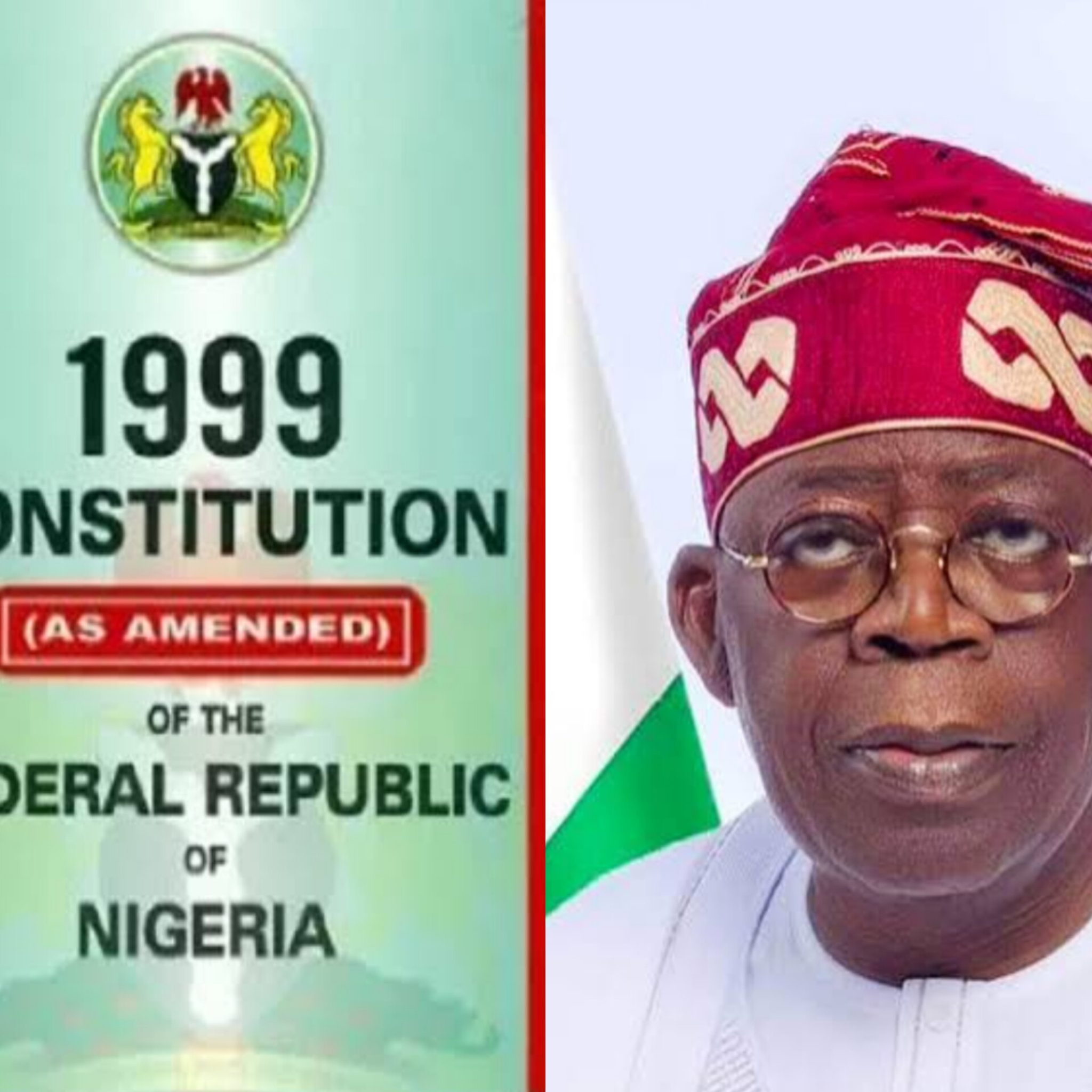
During the National Public Hearing on the revision of the 1999 Constitution organized by the House of Representatives, Nigerians from all walks of life spoke out against what they deemed an outdated Constitution.
The Guardian says that citizens, including civil society groups, traditional leaders, security agencies, and professional groups, urged for more inclusiveness, security, and electoral reforms, as well as recognition of women, youth, people with disabilities, and practical economic federalism.
There are 87 amendment bills in the Constitutional Review, and some of the more important ones are causing a lot of debate. These topics included State and Community policing, reserved seats for women and people with disabilities, changes to the electoral system, and the creation of new states.
President Bola Tinubu spoke at the occasion and said that his government is still committed to constitutional changes that will make Nigeria’s institutions stronger, promote justice, and protect basic rights.
He also asked Nigerians to take part in the ongoing review of the constitution, saying it is a once-in-a-lifetime chance to promote good governance, inclusiveness, and long-term growth.
Senator George Akume, who is the Secretary to the Government of the Federation (SGF), spoke for Tinubu at the National Public Hearing on the Review of the 1999 Constitution (as amended). He said that the exercise was a great chance to promote democracy and grow the nation.
“The Constitution is the highest law in the land.” “It’s not set in stone; it’s a living document that must always respond to the needs, hopes, and problems of our people,” Tinubu added.
He made it clear that the review should focus on strengthening federalism, fairness, and accountability, as well as giving Nigerians better democratic institutions that protect their rights.
Benjamin Kalu, the Deputy Speaker and head of the House Committee on Constitution Review, said that this is Nigeria’s most inclusive constitutional review ever. He said that the results should reflect the voices of the people, not the political elite.
Kalu stressed that the new changes will only be valid if Nigerians accept them.
He said that the present step in the process was the result of months of public consultations in the six geographical zones. During these consultations, residents, civil society groups, traditional leaders, security agencies, and professional bodies sent in memoranda and testimonials.
Hundreds of women had demonstrated before the hearing to advocate for a law that would add seats just for women in the Senate and House of Representatives.
A caravan of buses, vans, and a truck, all playing loud Afrobeats, made its way through the downtown streets. The women who were demonstrating were leading the way and calling for representation.
After that, they gave their memoranda, suggesting that the only way to make governance better in the country was to make it more inclusive.
A representative of the Nigerian Armed Forces asked for an explanation of why a proposed law to review the Armed Forces Act was left out of the presented compendium. They said that including it is important for a strong legal framework to improve national security and unity.
“The Armed Forces especially asks for clarity and a rationale for the omission so they may better grasp the status of the submission and what to do next. He said, “It would be right for us to know why this was left out.”
Yahaya Abubakar, the Etsu of Nupe and a member of the National Council of Traditional Rulers, spoke out against the 1999 Constitution’s abolition of traditional authorities’ roles.
He urged for the formal acknowledgment of traditional rulers, saying that they are a bridge between the people and the government. He told the governors that the measure was not meant to take away their authority as the state’s chief executive officers.
“We ask this committee to make sure that our roles are included in the Constitution so that we can keep mediating, administering, and keeping the peace well.”
Lois Auta-Udonkanta, president of the Network of Women with Disabilities, said that people with disabilities are not included in government at all.
“We are not included. We don’t have enough people in every field. There is a woman in Kenya who is a senator in the country’s senate who is blind. What is Nigeria up to? As a group, we need to stop excluding people and start including them, then stop including them and start participating, and then stop participating and start representing. “We also need to move from policy to practice,” she said.
Chief Frank Nweke Jnr, who used to be the Minister for Information, said that the government has to let those living abroad vote and run for office on their own in order to make democracy more accessible.
Nweke talked on how the Nigerian diaspora contributes to the economy, with remittances expected to reach over $20 billion in 2024. He also said that Nigerians living abroad should have the right to vote.
In the same way, a representative of the Alaafin of Oyo suggested that more local government areas be created in Oyo State, saying that these changes would make the administration work better and give everyone a fair chance to be heard.
Dr. Ahmed Abubakar Audi, who was the Commandant General of the Nigeria Security and Civil Defence Corps (NSCDC), asked for the corps’ mandate and authority to be recognized in the Constitution.
He asked for changes to Sections Two and Four of the Constitution to make their role official. He said that the corps was responsible for important tasks like protecting government buildings, fighting illegal mining, making sure schools were safe, and keeping an eye on private security companies.
A member of the Peoples Democratic Party (PDP) said that before the 2027 elections, there has to be changes to the rules that govern elections, specifically the ability to send results electronically.
He said this step might make things more open and make sure that elections are free and fair. He stated that future elections must use methods that let people feel confident that their votes are counted correctly.
Abbas Tajudeen, the Speaker of the House, said earlier that the hearing was an important step in Nigeria’s road toward democracy.
He welcomed the high level of engagement by women and said he still supports plans that would set aside parliamentary and ministry seats for women.
About the Author