
September 17, 2025, in Abuja The Presidential Fertilizer Initiative (PFI), which is a key part of Nigeria’s food security policy, is working to make sure that Nigerian farmers always have access to a steady supply of fertilizer. This is in keeping with President Bola Ahmed Tinubu’s vision for food sovereignty.
As it moves into a new phase, PFI 3.0 is setting up a stable supply of raw materials to blending plants. The long-term goal is for Nigeria to be able to grow all the crops it needs for both food and industrial uses. More raw materials have already been supplied or ordered than were supplied in all of 2024, and fertilizer raw material firms have made more deals to stock warehouses around the country. Blenders will be able to get as much material as they can handle. This is backed up by reliable statistics and the PFI’s track record, which gives farmers and other agricultural stakeholders more trust.
New statistics from the Ministry of Finance Incorporated (MOFI) shows that things are moving forward steadily. Under the PFI, 48 different ships have brought important raw ingredients for making fertilizer from 2022 till now, in 2025. Ten ships have already unloaded goods in 2025, and more are likely to do so. This means that Nigerian ports have received more than 560,000 metric tonnes of inputs. This constant flow is building the base for strong production and making sure that Nigeria’s fertilizer value chain stays stable and continues to supply.

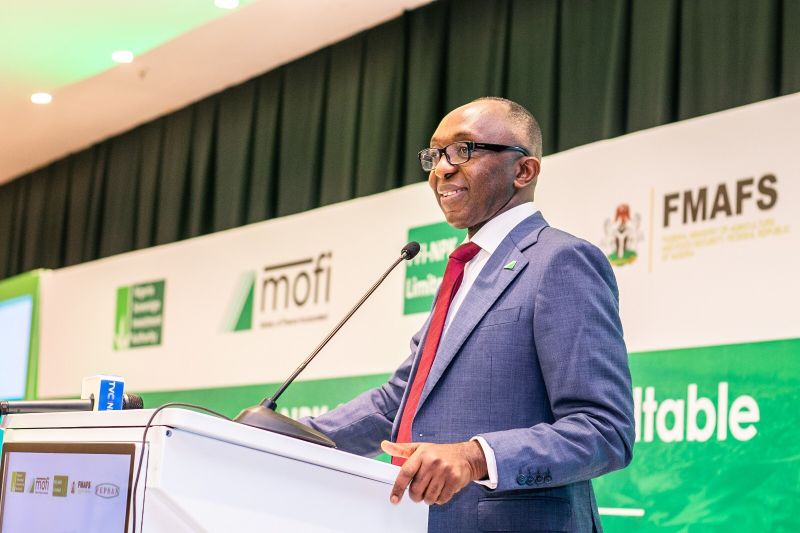
Dr. Armstrong Ume Takang, the Managing Director and Chief Executive Officer of MOFI, noted that PFI’s goal goes beyond only the amount of money.
“We are carefully putting together a system that will protect farmers from shocks in the global market and give them the confidence they need to plan for the long term.” We think the PFI is a great example of how the public and private sectors can work together to tackle difficult problems in the country. Its future shows that Nigeria can make strategic changes.
This strategic input has made it possible for local production to keep going, with more than 4.5 million MT of finished fertilizer made between 2021 and 2024. Since it started, the PFI has helped make more than 128 million bags of fertilizer, which have been sent directly to farmers all around the country.
The Fertilizer Producers and Suppliers Association of Nigeria (FEPSAN) said that a developing network of blending plants is important for keeping this level of production going. Alhaji Sadiq Kassim, President of FEPSAN, remarked, “Since the PFI started, we have seen a big increase in productive capacity.”
There are already more than 90 blending units in operation around the country, which gives us a total blending capacity of up to 13 million metric tons. This capacity is very important for making sure that our farmers always have access to fertilizer. It makes it easier for them to get it and lowers transportation expenses.
Even while the supply is strong, industry executives understand farmers’ worries about prices going higher in recent seasons. They make it clear that these pressures are not caused by a lack of resources in the area, but by changes in the value of foreign currencies and the cost of raw materials around the world. The PFI is getting ready for its third phase, PFI 3.0, which was approved at the Stakeholder Roundtable in Abuja in August 2025. This is to deal with these outside challenges.
By November 2025, MOFI will be in charge of operations instead of the Nigeria Sovereign Investment Authority (NSIA). This change should make governance stronger and make it easier for the program to go into its next, more ambitious phase. The major goal of the PFI is still to give Nigerian farmers quick, cheap, and reliable access to fertilizer. The system is now more durable and stable, which gives farmers confidence that they will always have access to it.
PFI 3.0 under MOFI will build on this foundation by introducing strategic changes that focus on making the product available all year round across the country, making it more cost-effective, and improving traceability to stop hoarding and diversion. One of the most important goals is to speed up local sourcing, with a clear drive to raise the percentage of inputs made in the country over the next few years. This change would make Nigeria’s agro-industrial base stronger and less dependent on imports that aren’t always reliable.
About the PFI, or Presidential Fertilizer Initiative
The Federal Government of Nigeria’s PFI is a flagship program that aims to give farmers easy and cheap access to high-quality fertilizer. Since it started in 2016, the PFI has brought back local blending capacity, created jobs along the agricultural value chain, and made a big difference in making the country’s food supply more secure.
About the Author