
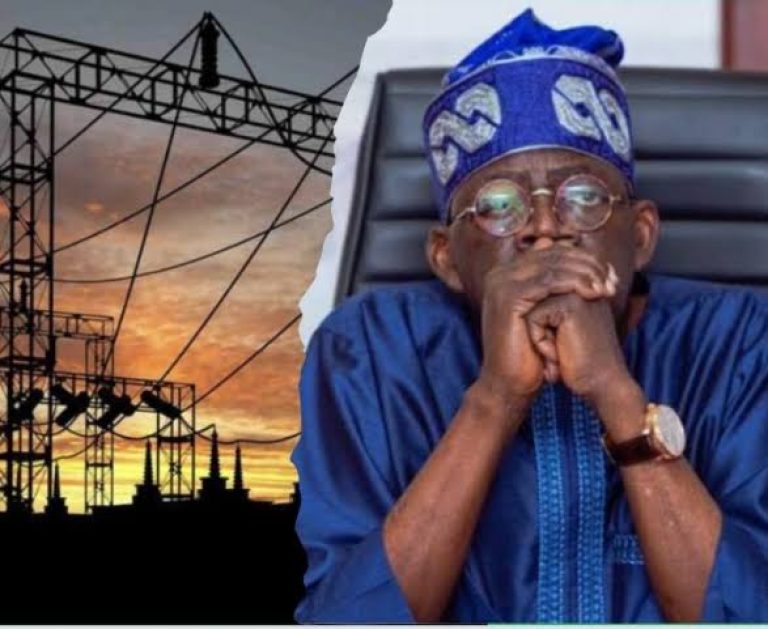
Two years after its assent, President Bola Tinubu’s Electricity Act is facing major tests, sparking crises between state regulators and operators, reports The PUNCH.
When President Bola Tinubu signed the Electricity Act into law in 2023, the purpose was to decentralise power by removing it from the exclusive legislative list. This was also intended to give sub-national entities the power to generate, transmit and distribute electricity.
The states would also have the authority to regulate their electricity markets, granting licences to power generators, distributors and others in the value chain within their jurisdictions.
Aside from decentralisation, the Act also introduced amendments to existing laws governing the Nigerian electricity supply industry. The Nigerian Electricity Regulatory Commission wasted no time in implementing the Act, issuing various orders and regulations aimed at transforming the sector and attracting investors.
The Act has been described by stakeholders as a milestone for the power sector.
Many have argued that it could end the nation’s electricity woes. Tinubu and his supporters have also rated the Electricity Act as a major achievement of the current administration — though it did not originate the bill.
However, recent developments have created apprehension in the sector. Stakeholders fear that the Act could spell doom if not well-managed or properly harnessed.
It appears the Electricity Act is undergoing a test of its viability in the power sector, especially as states become autonomous in regulating their electricity markets.
Within two years of its enactment, the law is now up for a second amendment in the Senate, facing stiff resistance from the 36 state governors and organised labour.
According to a NERC report, the commission has transferred regulatory oversight over intra-state electricity markets to Edo, Ekiti, Enugu, Imo, Kogi, Lagos, Niger, Ogun, Ondo and Oyo, through regulatory institutions established by those states, pursuant to the provisions for the orderly transfer of regulatory oversight specified in Section 230 of the Electricity Act. It stated that full regulatory oversight would be transferred to Plateau on September 12, while preparatory transfer readiness notices have been received from Abia and Delta states.
Tariff crisis
The recent tariff adjustment by the Enugu Electricity Regulatory Commission sparked major controversy in the sector, and the dust has yet to settle. The EERC had issued a tariff order to MainPower Electricity Distribution Limited, revising the electricity cost for Band A customers from N209 per kilowatt-hour to N160/kWh, effective August 1, 2025.
MainPower, the utility that succeeded the Enugu Electricity Distribution Company after the state received NERC approval to manage its electricity market, was asked to reduce the Band A tariff to reflect the peculiarities of Enugu State.
The commission said its decision was cost-reflective, insisting that “the tariff must reflect the power generation subsidy by the Federal Government for the benefit of electricity consumers.”
The EERC Chairman Chijioke Okonkwo said the reduction in tariff became imperative following the commission’s review of MainPower’s tariff and licence applications.
“We reviewed their entire costs, using our Tariff Methodology Regulations 2024 and the supporting Distribution Tariff Model, to get an average price of N94. The price is low because the federal government has been subsidising electricity generation costs, which cover only N45 out of the actual cost of N112. That was how we arrived at the average tariff of N94 as a cost-reflective tariff at our level as a sub-national electricity market.
“Breaking this across the various tariff bands means that Band A will be paying N160, while other Bands B, C, D and E are frozen. Band A, at N160, will help MainPower to manage the rate shock, and if the subsidy is removed, the savings will assist them in stabilising the tariff over a defined period. Nevertheless, at all times, the tariff will be cost-reflective and will not require any state subsidy,” Okonkwo stated.
He noted, however, that the N160 Band A tariff could be difficult to sustain should the Federal Government remove the generation tariff subsidy currently enjoyed by electricity consumers across the country, as tariffs would likely rise beyond these new rates.
But the Enugu tariff cut triggered disagreements. Power generation companies responded swiftly, accusing Enugu of plans to deepen the sector’s indebtedness by relying on federal government subsidies.
The distribution companies argued that the state should be prepared to pay the shortfall if it wanted to reduce the Band A tariff below actual cost. This same position was echoed by the Minister of Power, Adebayo Adelabu.
The Chief Executive Officer of the Association of Power Generation Companies, Joy Ogaji, warned that the Enugu’s decision relied on questionable subsidy assumptions and posed serious risks to the country’s fragile power sector.
She said the tariff revision set a precedent for other states and failed to reflect the true cost of electricity generation.
Ogaji stated that there is no existing government policy on subsidies, only growing debt, questioning why the Enugu State Government was placing more burden on generation companies, who already bear the brunt of unpaid subsidies.
“The N45 per kWh being covered leaves a 60 per cent cost gap that the EERC assumed would be filled by the Federal Government, despite no official or cash-backed subsidies in place. This tariff issued by the EERC has set a precedent for all other states. From their tariff order, only N45 is captured for the generation cost out of N112. This portends a bigger issue in the decentralisation of electricity to the states.
“Does this position mean the EERC expects the Federal Government to continue subsidising its electricity? How does the EERC account for its share of accumulated sector debt — or is it assuming assets without liabilities? Shouldn’t the EERC be designing its tariffs to eliminate dependence on the federal government and make its market attractive to investors?” she queried.
Ogaji recalled that power generators are collectively owed over N4tn — including another N1.2tn in the first half of 2025 — and warned against further debt accumulation.
Similarly, the CEO of the Association of Nigerian Electricity Distributors, Sunday Oduntan, told Enugu and other states planning tariff cuts to be prepared to cover the shortfall. NERC also reminded the EERC that it does not have jurisdiction over generation and transmission, as those remain under the purview of the Federal Government.
The battle continues as the EERC insists on its new tariff. The Special Adviser to the Enugu State Governor on Power, Joe Aneke, responded to NERC on Saturday, saying the state did not tamper with the cost of generation and transmission.
He said the EERC only reviewed MainPower’s distribution costs before reducing the tariff. Notably, other states like Lagos, Ondo and Plateau are also working towards cutting tariffs.
State vs Senate
Before the tariff crisis, the Forum of Commissioners of Power and Energy in Nigeria had opposed a bill in the Senate seeking to amend the Electricity Act. The forum expressed surprise and concern regarding the proposed Electricity Act (Amendment) Bill, 2025, describing the move as premature.
According to the forum, more than 16 states have passed their own electricity laws since the enactment of the Electricity Act in 2023. They criticised the lack of consultation with state governments or their respective electricity regulators during the drafting and presentation of the amendment bill in the Senate.
“This oversight is particularly concerning given the significant strides made in decentralising Nigeria’s electricity sector. The Electricity Act 2023 stands as a signature achievement of President Bola Tinubu’s administration. Its enactment followed the groundbreaking fifth alteration to the 1999 Constitution, which decisively removed ambiguities regarding the ability of states to legislate and regulate electricity markets within their territories.
This transformative legislation has since catalysed a wave of reforms, empowering sub-national governments to drive electricity development, attract investment and address their citizens’ unique power needs.
“It is therefore surprising that within two years of its passage, the Electricity Act 2023 is now subject to sweeping amendments to key provisions, without any consultation whatsoever with state governments or their regulatory institutions,” the commissioners said.
The states described the bill as a “backdoor amendment” to the 1999 Constitution, arguing that it seeks to reintroduce constraints that were explicitly removed. They said several provisions of the bill violate constitutional federalism and could derail progress in decentralising the power sector.
“If passed, the amendment bill will create constitutional conflict between the Federal Government and the states, as well as legal and regulatory clashes between federal and state regulators. It undermines the principle of cooperative federalism and invites judicial challenges,” they warned.
They further argued that the amendment “surprisingly seeks to entrench a subsidy regime in the power sector,” despite a sector debt burden of over N5tn.
Just like Enugu, the forum maintained that NERC does not have overriding regulatory authority over electricity distribution and tariff setting, noting that the fifth constitutional alteration and the 2023 Act give states exclusive jurisdiction over electricity distribution, whether connected to the national grid or not.
The forum stated, “We firmly believe that this is not the right time for an amendment to the Electricity Act 2023, as the Act is still in its early implementation phase. Several states have only just begun operationalising their laws to build viable electricity markets. We therefore call on the National Assembly to suspend further consideration of the bill.”
Separately, Lagos State Commissioner for Energy and Mineral Resources, Biodun Ogunleye, alleged that the bill was sponsored by the Discos to frustrate state efforts.
“You know we are battling with our Discos; they are not in agreement with anything we are doing. The Discos are the ones behind this amendment bill that is in the Senate,” he said.
Labour unions kick
Amid the tariff crisis, organised labour raised the alarm about plans to bar trade unions in the power sector from embarking on strikes or picketing without a formally negotiated Minimum Service Agreement. The Nigeria Labour Congress, Trade Union Congress and National Union of Electricity Employees on Thursday resisted the proposed strike ban contained in the Electricity Act (Amendment) Bill, 2025.
A draft of the bill declares the generation, transmission and distribution of electricity in Nigeria as essential services, thereby placing restrictions on industrial action by sector workers.
The amendment states that no employee or trade union in the Nigerian electricity supply industry shall embark on any strike, lockout, picketing or other industrial action that would disrupt or halt generation, transmission, system operations or the supply of electricity, except as provided for under a duly negotiated and approved Minimum Service Agreement.
“Any person who contravenes the provisions of subsection (1) of this section commits an offence and shall, upon conviction, be liable to a fine of N2m or imprisonment for up to five years, or both,” the draft reads.
Reacting, NLC Chairman Joe Ajaero fumed:
“Banning workers from acting entirely is akin to beating a child and telling them not to cry. It’s unrealistic. If passed, this law will be violated immediately because it is unjust and unworkable. You can’t expect employees to remain silent if their wages are withheld or their conditions worsen. That’s a human rights issue.
“The 2023 Electricity Act was about deregulating the power sector, allowing states to set up their own electricity markets and promoting renewable energy integration. That’s its purpose — not labour control. Lawmakers must understand that the Electricity Act is not a labour law.”
As the Electricity Act encounters multiple tests and challenges, stakeholders have called on regulators, operators, and labour leaders to come together at a roundtable for the overall benefit of the nation. Individuals and groups must drop selfish interests and chart a new course for the struggling power sector. Only then can Nigerians truly reap the benefits of the Electricity Act.
The growing tensions between states, federal regulators, market operators and labour unions reveal deep cracks in Nigeria’s push for power sector reform. What was once hailed as a revolutionary policy is now caught in legal, regulatory and political crossfire. With the much-desired decentralisation already underway, stakeholders said only genuine collaboration, clarity of roles and respect for the constitution can prevent Tinubu’s Electricity Act from becoming another chapter in Nigeria’s long list of failed power sector interventions.
About the Author