
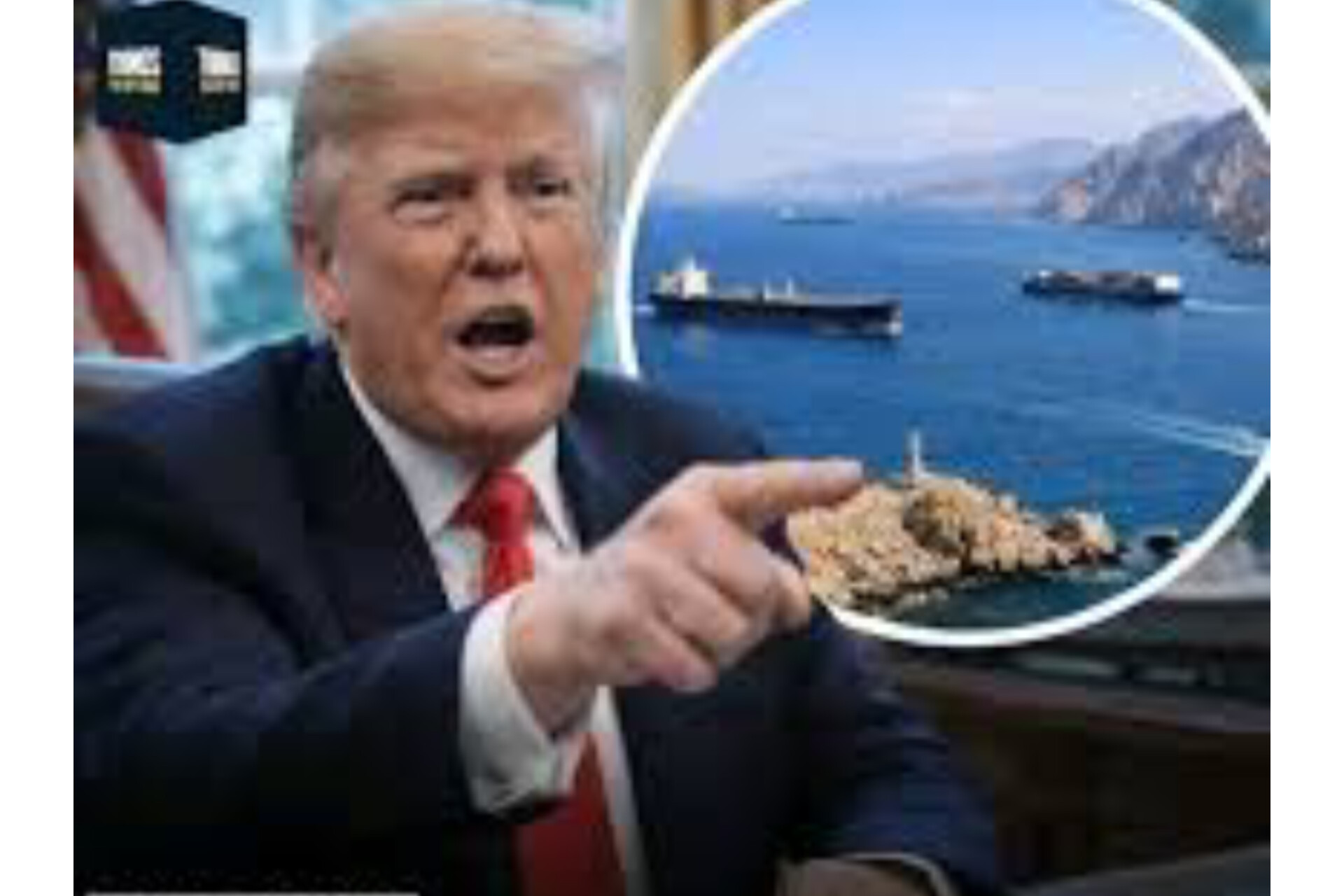
President Donald Trump told the US Navy yesterday to block the Strait of Hormuz, a critical Gulf sea passage. He was angry that Iran wouldn’t give up its nuclear goals after peace talks broke down without an accord.
Iran’s Revolutionary Guards warned that they have full control over commerce in the crucial waterway and would trap any enemy who sought to oppose it “in a deadly vortex in the Strait if it makes the wrong move.”
Trump said on his social media platform that his ultimate goal was to clear the strait of mines and reopen it to all shipping. However, he also warned that Iran should not be allowed to profit from its control of the waterway in the interim, according to AFP.
“Effective immediately, the United States Navy, the best in the world, will start BLOCKADING any and all ships trying to enter or leave the Strait of Hormuz,” Trump stated.
“Anyone in Iran who shoots at us or at peaceful ships will be BLOWN TO HELL!”
Iran has been limiting traffic via the strait, which is an important route for oil, gas, and fertilizer exports from the Gulf to the world market. However, ships that are thought to be working for friendly countries, like China, are allowed to pass. There have been allegations that Tehran intended to levy tolls, although these are not proven.
Trump remarked, “THIS IS WORLD EXTORTION.”
“I’ve also told our Navy to look for and stop every ship in international waters that has paid a toll to Iran.” No one who pays an unlawful toll will be able to safely cross the ocean. We will also start taking out the mines that the Iranians put in the Straits.
“Act of extortion”
Later, in an interview with Fox News, Trump said that if China tries to help the Iranian military, he will put a 50 percent tariff on Chinese goods. He also said, “I could take out Iran in one day.” I could have all of their energy, all of their plants, and all of their electric generating plants, which is a tremendous deal.
The president’s latest ultimatum seems to have come about because high-level American and Iranian delegations couldn’t reach a deal in Islamabad to end the war that started six weeks ago when the US and Israel bombed Tehran and killed Iran’s supreme leader, Ali Khamenei.
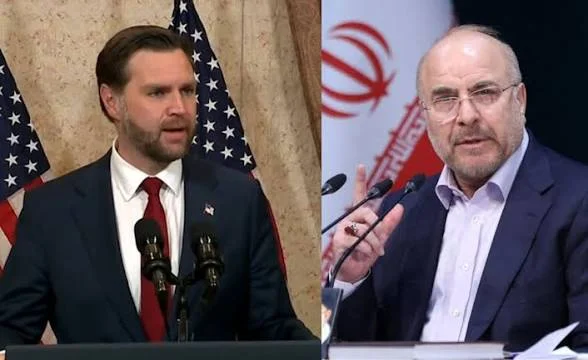
Iran’s refusal to give up its right to a nuclear program, which Tehran says is for peaceful civilian purposes but Western capitals think is a cover for a bomb quest, made the US delegation, led by Vice President JD Vance, White House envoy Steve Witkoff, and Trump’s son-in-law Jared Kuchner, angry.
Trump added, “I have always said, right from the start, and many years ago, IRAN WILL NEVER HAVE A NUCLEAR WEAPON!”
“The Blockade will start soon. This blockade will involve other countries. This illegal act of extortion will not let Iran make money.
Trump didn’t say which other countries he thinks will join the US Navy cordon. Before his post, several world capitals had asked for the temporary truce in the Gulf to stay in place while Washington and Tehran look for a diplomatic solution.
After the talks, which were the highest-level encounter between the two sides since the 1979 Islamic revolution, Vance left Pakistan. He warned that Washington had made Tehran its “final and best offer” for a settlement and said, “We’ll see if the Iranians accept it.”
Mohammad Bagher Ghalibaf, Iran’s parliamentary speaker and head of the country’s negotiating team, said that the other side had “put forward constructive initiatives but ultimately the Iranian delegation was unable to trust them in this round of negotiations.”
People in the Gulf were worried that air strikes could start up again with no political resolution in sight, and the failure of the discussions will heighten concerns that a return to conflict could drive up world energy costs and further damage maritime and oil and gas facilities.
“We feel hopeless and hopeless.” We are sick of not knowing what will happen, said Nahid, a 60-year-old housewife in Tehran who our reporter spoke with.
Pakistan, which sponsored the talks and brought the two sides together, said it will keep helping them talk and urged both countries to remain honoring the temporary ceasefire.
Foreign Minister Ishaq Dar remarked, “It is important that the parties keep their promise to stop fighting.”
Uranium stockpile
Keir Starmer, the Prime Minister of the UK, contacted Haitham bin Tariq, the Sultan of Oman. Both leaders agreed that “it was vital there was a continuation of the ceasefire, and that all parties avoided any further escalation.”
A representative for the EU said that diplomacy would be “essential” to getting peace, and he praised Pakistan’s attempts to mediate. Russia’s President Vladimir Putin also called Iran’s President Masoud Pezeshkian to offer his help with the diplomatic effort.
The Kremlin claimed in a statement that “Vladimir Putin stressed his willingness to further facilitate the search for a political and diplomatic settlement to the conflict and to mediate efforts to achieve a just and lasting peace in the Middle East.”
About the Author