
If condemning violence could stop the killings in the country, the outcry and promise of action that followed the horrible attack in Plateau State on Palm Sunday last week would have stopped the “Bloody Easter” that happened to Christians in Kaduna, Benue, and Borno States yesterday.
Reports from The Guardian said that the attacks yesterday happened just a week after gunmen raided Angwan Rukuba in Plateau and massacred innocent people on Palm Sunday.
After the government and security agencies reacted strongly and announced that security personnel would be sent to many of the country’s hotspots to make sure that Easter was free of attacks, nothing could stop the bloodshed as more Nigerians died in insurgent attacks.
At least 17 individuals are said to have died in an attack on Mbalom in the Gwer East Local Government Area of Benue State. This is the most recent act of violence to hit the state’s rural communities.
The attack happened on Sunday, during Easter celebrations. Residents told how the gunmen invaded the community and shot at inhabitants. The attack in the Mbalom community was verified by Benue’s Bureau for Homeland Security Director-General, Air Commodore Jacob Gbamwuan (rtd).
Local sources who didn’t want their names used for safety reasons reported that the attackers also set houses on fire, forcing many people to leave their homes. Many people are still missing as search efforts continue.
“This is very sad. People were not ready for it. A resident claimed, “Many are still missing.”
Witnesses said that the attackers came out of nowhere and started shooting, forcing families to run into the woods as the rounds rang out.
The most recent murders have raised concerns about the ongoing violence in some regions of Benue, where armed groups have repeatedly attacked farming villages.
Governor Hyacinth Alia called the attack “heinous” and unacceptable in a statement released Wednesday.
Tersoo Kula, the governor’s Chief Press Secretary, signed the statement. It said that the governor felt sorry for the families who were harmed and promised that the government would find those guilty.
Alia also talked about what he called a pattern of “calculated and selective attacks” in some sections of the state and promised to make security stronger to stop more carnage. He praised the security forces for their quick response and told them to step up their efforts to catch the criminals.
Udeme Edet, a police spokesperson in Benue, told reporters yesterday that the event happened. Edet added that investigations are still going on and that further information will be released after it is collected.
Reports said that a security alert was sent out because approximately 50 armed herders in black overalls were traveling from Nyiti, Makurdi LGA, to Atondiir in Gwer West, where Easter celebrations were planned to take place.
On Holy Saturday, suspected terrorists raided the Mbalom-Mbatsada-Agana community in the Gwer Local Government Area of the state.
Timothy Adi, the head of the Gwer local government council, which includes Mbalom, told our reporter that the bodies of nine victims had been uncovered. He claimed that the tenth victim was not dead but in very bad shape. Adi stated he had just left the hospital where the victim was getting care.
Philip, who lives in Mbalom, informed our reporter that the attackers assaulted the village early on Saturday morning, but the young people fought back and forced them to leave. They came back that night and successfully carried out the attack.
Philip added that the community had heard about the intended attack at least four days before it happened and had told all the right people.
He said that the town, which had been attacked like this before, had reported seeing unusual armed men a few days before the attack.
He added that only men were hurt because they had previously moved the ladies and children out of the area before the strike.
In the same way, terrorists assaulted the Ariko hamlet in Kaduna State’s Kachia Local Government Area, attacking two Christian worship centers during Easter celebrations. They killed at least seven people and kidnapped numerous more.
Mark Bawa, the councillor for Awon Ward, which includes Ariko District, told reporters that the attack happened. He said that the churches that were hurt are First ECWA Church and St. Augustine Catholic Church, both of which are in Ariko.
Bawa also said that the terrorists came in huge numbers, worked for about an hour, and then ran into the woods with their victims.
He said that the attackers might have been able to attack their victims without anyone noticing right away because the area doesn’t have good phone service.
“The attackers came in big groups. They surrounded the location and started shooting at people who were praying. He said, “A lot of people died, and a lot more were taken into the bush.”
People in the area stated the attackers were able to do what they wanted for a long time without any problems, which makes rural communities in the state even more worried about how easy it is for them to be attacked.
The most recent attack happened just two months after a similar one in the Kurmin Wali community, also in Kachia LGA. In February 2026, a lot of people were kidnapped during a church service.
That event caused a lot of anger and calls for more police presence in Southern Kaduna.
When we got in touch with the Kaduna State Police Public Relations Officer, DSP Mansir Hassan, he said he will give us further information on the sad event.
People who watched said that the repeated attacks show how difficult it is for rural people in Southern Kaduna to stay safe, especially during religious gatherings and holidays.
The Nigerian Army, on the other hand, said its troops stopped a terrorist attack and freed 31 civilians who had been taken hostage during an Easter church service in Ariko village, Kachia LGA of Kaduna state, on Sunday.
The army claimed in a statement last night that the military got a plea for help saying that congregants had been taken from an ECWA Church in Ariko hamlet during the Easter service.
“The troops quickly moved to the scene after getting the news. The statement says, “With the help and advice of people from the Ariko community, they moved forward to catch the terrorists who were running away and fought them in a fierce firefight, using their superior firepower to defeat them.”
“The advancing troops put so much pressure on the terrorists that they had to let go of 31 hostages, one of whom was hurt and is now getting medical help.”
The army also said that the forces found the bodies of five people who had already been killed by the terrorists before they ran away into the woods.
“Troops have since stepped up their efforts to track down the fleeing elements to their hideouts, and they are still working to free any remaining captives and make sure the criminals are brought to justice.” To protect the gains made, more troops have been sent to the area to support current operations, improve security, and stop any more threats to life and property.
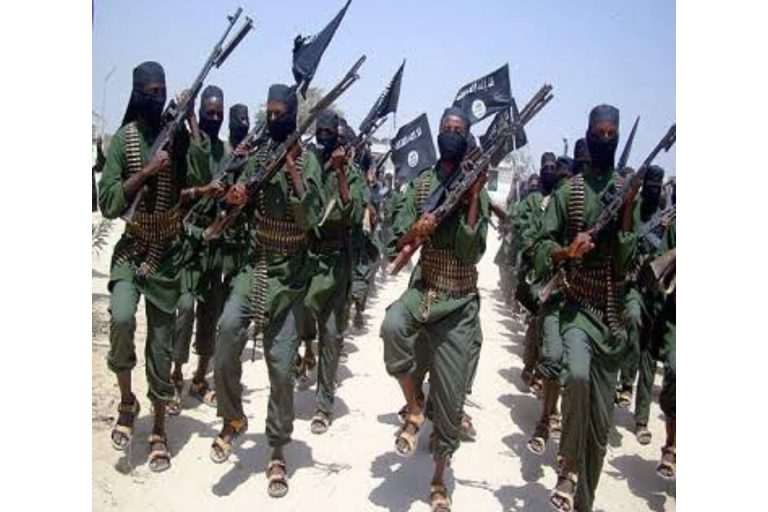
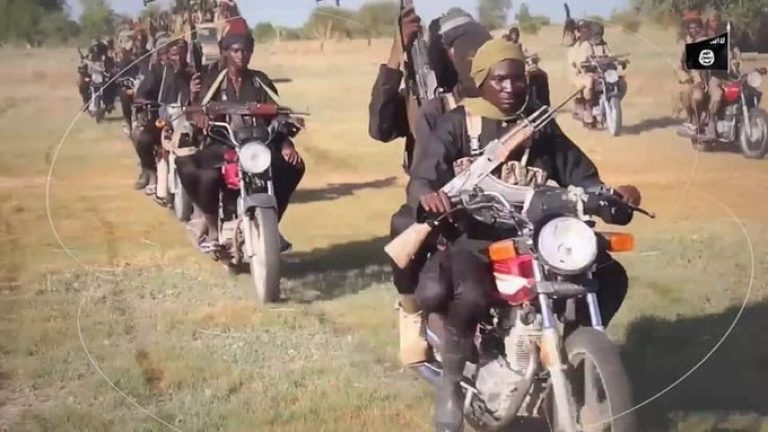
As expected, Boko Haram militants assaulted Awapul, a village in the Chibok Local Government Area of Borno State, yesterday. People say that the assailants came to the town in large groups about 1:30 a.m. and shot at random before destroying important buildings like residences and stores. ASP Nahum Daso, the Borno State Police Command’s spokesperson, confirmed the event and reported that no one died.
“At about 1:30 a.m., there was an attack this morning. in the community of Awapul in the Chibok Local Government. People who are thought to be Boko Haram did the attack. No deaths. He said, “It was a destruction of properties.”
People who talked to reporters reported that the attackers rode motorcycles and worked for more than an hour. One local, who asked not to be named, stated that several of the victims of the attack have left the area in search of safer places to live.
“They set fire to homes and small stores. The insider claimed, “Some owners have gone to the main town of Chibok to find safety.”
The resident asked the government to act right away to keep the community safe.
“Please don’t give us food or clothes.” The person went on to say, “We need protection so we can go about our daily lives.”
The attack happened less than 24 hours after suspected Boko Haram terrorists attacked the Nganzai Divisional Police Headquarters and an Internally Displaced Persons (IDP) Camp in Damasak. They set fire to an unserviceable Armoured Personnel Carrier and killed four police officers and one hunter.
The Borno State Police Command claimed in a statement on Saturday that the assailants used Rocket-Propelled Grenades and other advanced weapons to try to take over the towns, but security agents stopped them.
The attackers utilized Rocket-Propelled Grenades (RPGs) and other advanced weapons to damage part of the station and set fire to an Armoured Personnel Carrier (APC) that was not working. “Sadly, four police officers lost their lives while on duty,” stated ASP Daso.
He added that on April 4, 2026, at about 2:40 a.m., terrorists assaulted the Mallam Fatori IDP Camp in Damasak, aiming for a CJTF/Hunters duty position at the entrance of the camp.
He went on to say, “One member of the Hunters Group, Atom Abua (40 years), died during the attack, and about twenty thatched houses and other property were destroyed.”
Matthew Kukah, the Catholic Bishop of Sokoto Diocese, has warned that Nigeria is drifting dangerously amid what he calls “endless turbulence.” He says that if urgent steps are not taken to restore trust, security, and good governance, the country could slide into a deeper crisis.
Kukah’s Easter sermon for 2026, which came out yesterday and was called “Faith and Hope in Times of Turbulence,” portrayed a dark image of a country struggling with insecurity, economic problems, and problems with its government.
The cleric said that Nigeria’s last name is “Turbulence,” and he described the country as being stuck in a cycle of instability that was made worse by what he called “self-generated turbulence by the local elites.” He said that the worsening security situation had turned into a humanitarian crisis, with thousands dead, millions displaced, and several communities destroyed by violence.
He remarked, “After more than 20 years and more than 20,000 bodies, the grim harvester still roams freely across the country.” “For now, our country has turned into what the late Pope Francis called a field hospital.”
Kukah said that people were becoming more and more suspicious of the military and other government institutions, which was forcing them to make perilous partnerships, even with criminals.
He claimed, “Years of exhaustion have led ordinary people into the dangerous arms of bandits.” He also said that some people are now acting as informants, “trading the future of their families and communities.”
Kukah talked about governance problems and said that Nigeria’s political class had broken their campaign pledges, leaving millions of people in poverty and many young people without hope for a better future.
He said, “The Nigerian landscape is still full of unredeemed promissory notes.”
He said that short-term relief efforts were a sign of underlying problems with governance and planning.
He remarked, “Just giving out food shows that our country has failed to come up with strong and aggressive agricultural plans that can end hunger.”
Kukah told Nigerians, especially Christians, not to give up hope even though things looked bad. Instead, they should stay strong in their religion and moral duty. Using images from the Bible, the preacher said he was hopeful that Nigeria could get past its current problems by working together, having faith, and being united.
Godswill Akpabio, the President of the Senate, has also told Nigerians that the country’s ongoing problems with safety will soon be over and that he is hopeful that the current problems will not last.
Akpabio talked on the terrible grief and losses that people all over the country have experienced during an Easter service at the Field Major Convention of The Apostolic Church in Ikot Ekpene, Akwa Ibom State.
“Many families in our country are going through times of pain and loss. “Some have lost loved ones in the line of duty, while others have lost fathers, mothers, children, and friends in homes, markets, places of worship, and farms,” he stated.
He told the victims of violence that the whole country was with them and that their sacrifices would not be forgotten.
“To families like yours, we all feel your anguish. “We are sad with you, we pray for you, and we honor those whose lives were cut short,” he said.
Akpabio used the symbolism of Easter to say that he was sure Nigeria would eventually get through its problems. “Just as the resurrection means winning over death, I think Nigeria will win over fear, evil, and insecurity. He added, “That is the hope that Easter gives us.”
The #FixPolitics Initiative, on the other hand, has criticized the federal government’s response to the massacre of citizens in Jos, Plateau State, on Palm Sunday, calling it delayed and not enough.
Anthony Ubani, the Executive Director of #FixPolitics Africa, said in a statement over the weekend that the day, which is usually marked by calm, reflection, and hope, was instead marred by bloodshed, as armed attackers reportedly assaulted towns and killed men, women, and children.
Ubani noted that the episode is part of a worrying and ongoing pattern of violence in Nigeria. He warned that people are becoming more susceptible when attacks happen.
The organization said, “This is unacceptable,” and added that the government’s response has become “predictable and insufficient.” They highlighted that it is the government’s principal job to protect lives and property.
The organization was worried about what they called President Bola Tinubu’s slow response. They pointed out that it took three days for an official statement to be made. It also criticized the President’s visit of condolence, claiming it didn’t go beyond the Jos airport.
The group said that explanations that cited schedule and logistical issues were not persuasive. It said, “A condolence visit should mean something in both words and actions.”
#FixPolitics also said that leadership during a crisis needs to be quick, clear, and decisive. They warned that delays and limited involvement send the wrong messages to both victims and perpetrators.
“following the crime, condemning it and putting curfews in place following fatalities are not enough. Words that don’t have any consequences aren’t adequate. The statement said, “Nigeria is slowly normalizing mass violence, and that is a dangerous path.”
About the Author