

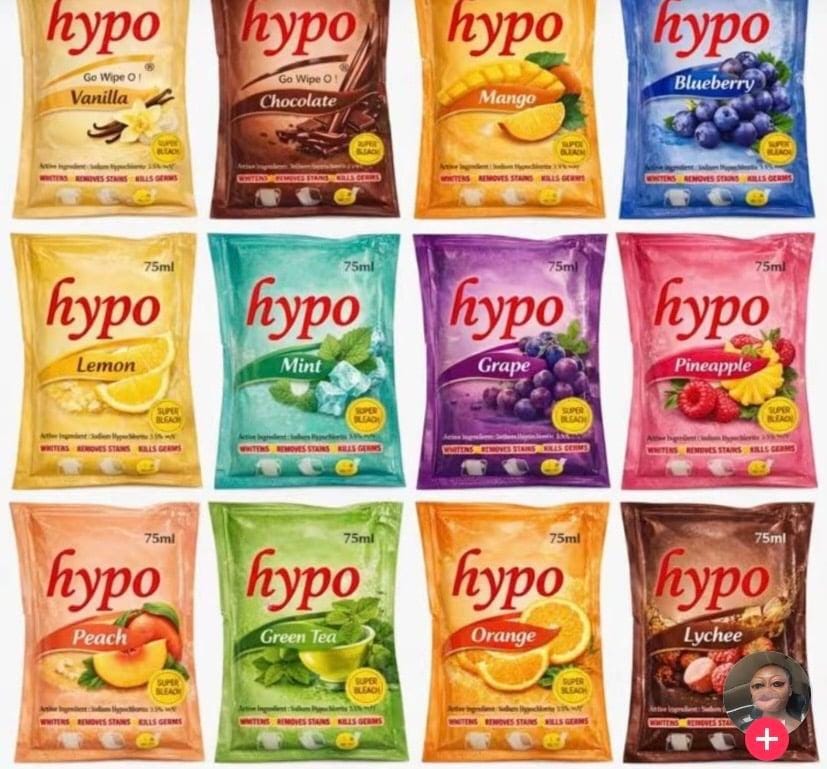
In the past few days, Nigerian social media has once again demonstrated its peculiar ability to transform almost anything into entertainment. What began as a controversial moment involving influencers and a sachet of Hypo bleach quickly spiralled into a viral trend. Videos appeared across TikTok, Instagram, and X showing people joking about “drinking Hypo”, staging mock suicide scenes, or narrating exaggerated life problems while holding up sachets of the popular household bleach.
For many viewers, the videos were obviously meant as satire. Nigerian humour has always leaned toward exaggeration and dramatic storytelling. But as the trend spread, what started as a spectacle gradually revealed deeper issues about social media culture, entertainment hunger, and the thin line between comedy and irresponsibility.
The irony of the moment is striking. A product designed for cleaning bathrooms and disinfecting clothes suddenly became a prop for online skits. Content creators, eager to catch the wave of virality, began reproducing similar scenarios: someone lamenting their life, someone threatening to “drink Hypo”, and someone dramatically opening a sachet into the mouth in front of a camera.
Within hours, thousands of people were reposting, remixing, and reacting. In typical Nigerian internet fashion, the jokes multiplied faster than the explanations. The Hypo brand even took on the form of a nutritious drink in various appealing packaging.
But beneath the laughter, the situation exposes something uncomfortable about the psychology of online crowds. Nigerians, like people everywhere, live under immense social and economic pressure. In such an atmosphere, humour becomes a coping mechanism. Dark humour especially has long been part of Nigerian expression. Jokes about suffering, survival, and extreme frustration are common ways of diffusing stress. Social media simply amplifies this instinct.
When a dramatic moment appears online, it quickly becomes raw material for content creation. Influencers see an opportunity for engagement. Viewers see an opportunity for humour. Algorithms reward the most outrageous and emotionally charged content. And before anyone pauses to ask whether something is appropriate, the spectacle has already become a trend.
Yet the Hypo saga also reveals a deeper contradiction, what might be called hypocrasy. On one hand, many Nigerians condemn dangerous behaviour online. On the other hand, the same audiences eagerly consume the very content they criticise. Outrage fuels views. Concern fuels engagement. In the end, the cycle of attention continues.
Another lesson emerging from this episode is the increasing desperation for entertainment in the digital age. Social media platforms have created a constant demand for novelty. Every day must produce a new joke, a new drama, a new viral moment. Content creators feel pressured to remain relevant, while audiences scroll endlessly in search of something that will break the monotony of everyday life. In that environment, the boundary between creativity and recklessness can easily disappear.
The Hypo trend also highlights the role of influence in modern society. When prominent figures stage dramatic acts, even if meant as jokes, their actions can quickly ripple outward. Younger viewers, impressionable audiences, or those unable to distinguish satire from reality may imitate what they see. This is why public reactions have included warnings from health experts, brand owners, and authorities. Household chemicals are not props for performance. What appears humorous in a thirty-second video could be catastrophic if copied without caution.
Perhaps the most important lesson here is not simply about one trend or one product. It is about awareness. Social media has turned every smartphone owner into a broadcaster. A joke can travel across the country within minutes. A stunt can influence thousands of people who have never met the person performing it. With such power comes a responsibility that many users are still learning to understand.
At the same time, the episode reminds us that Nigerians possess a remarkable cultural instinct for storytelling. Even in moments of controversy, creativity flourishes. Memes are born. Skits emerge. Conversations explode across platforms. The digital public square becomes a theatre of humour, criticism, and commentary all at once. The challenge is learning when the theatre should pause. Because in the end, laughter should never come at the cost of life, health, or collective wisdom.
The Hypo trend will eventually fade, like many viral moments before it. But the question it leaves behind remains relevant: in an age where attention is currency and virality is reward, how do we balance humour with responsibility?
Until that question is answered, the cycle of spectacle, and hypocrasy, will likely continue.
Victor Negro
Writer based in Lagos.
About the Author