
As Nigeria gets closer to the 2027 general elections, people are once again questioning the fairness of the political process. More and more, national conversations are focused on issues like when funding will be available, how reliable election technology is, how dysfunctional political parties are, and how honest the collation process is.
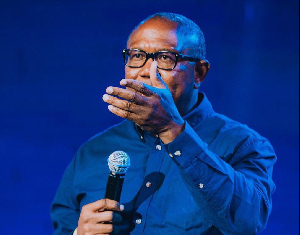
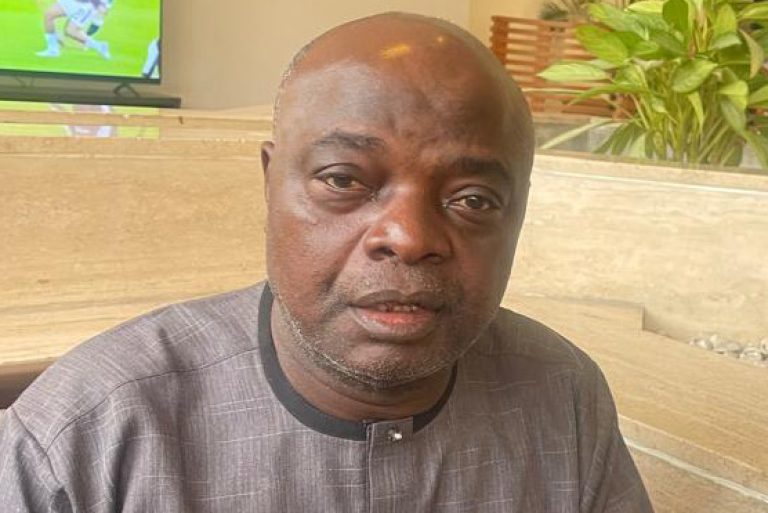
Prof. Sam Egwu, the Resident Electoral Commissioner (REC) of the Independent National Electoral Commission (INEC) who is now working in Benue State, gives a rare look at how Nigeria’s electoral authority works in this long interview.
The commissioner has been watching Nigeria’s democratic progress for almost forty years. He started his academic career as an Assistant Lecturer in 1986 and then went on to work in election administration.
He talks honestly about how ready INEC is for 2027, the problems caused by the new funding timeframe under the Electoral Act, how technology may help make elections better, and the ongoing problem of result manipulation during collation.
He also gives a harsh criticism of Nigeria’s political culture, saying that many members of the political elite don’t have the democratic spirit needed to make the country’s election system stronger.
He says that Nigeria’s elections have gotten a lot better since the controversial 2007 general elections, but he says that more changes are needed, especially in the collation process, which he calls the most vulnerable part of the election process, according to Sunday Independent.
Parts:
As a Resident Electoral Commissioner, you are actively involved in Nigeria’s elections. How ready do you think INEC is right now, with the elections coming up in 2027?
Elections don’t happen on just one day. There are a lot of steps in the procedure, and each one must be done carefully before the actual voting day. There are actually roughly 14 important steps that need to be taken in order when getting ready for elections.
Each one has its own schedule and rules on how to work.
Continuous Voter Registration (CVR) is one of the most crucial things to do. August 2025 was the commencement of that process. The first phase completed in December 2025, while the second phase started in January of this year. It will go until April 17. The last step will last until about August. Cleaning up the voter registration is another crucial thing we are doing.
Over time, voter rolls can get bigger because some people who are registered to vote may have died or moved to a different state.
INEC is looking into things like voter revalidation to make sure that the register is reliable enough to hold an open election. The commission has also put forth the election timetable and schedule of activities, which lists the most important events that will happen before the 2027 elections. Political parties have already started their ward, local government, and state congresses. These are important phases for getting their internal structures ready for primaries.
By April, political parties should start holding primaries to choose their candidates. Along with these tasks, INEC is also working on stakeholder consultations, voter education campaigns, and procurement processes to make sure that citizens and political actors know the regulations for the approaching elections. So, things are already well on their way to being ready.
The funding timeline could make preparations more difficult.
The Electoral Act currently says that money for elections should be released 180 days before the election. Do you think this is enough?
I think 180 days is too short for the size of elections we have in Nigeria.
There is a lot of buying that goes into running an election. You need to get ballot papers, ballot boxes, voting booths, tech tools, logistics supplies, and transportation set up for thousands of polling places all throughout the country. You can’t get these things right away.
In Nigeria, the truth is that election money is almost never given out all at once. Instead, they are frequently released in groups, based on the government’s budget cycle and how much money comes in. That means that INEC usually gets money in small amounts over time instead of all at once. When money is given out in little amounts, it is hard for the commission to plan how to buy things. You might need to put off some contracts or logistics plans. It would be best if election monies were distributed considerably earlier so that preparations for buying things and getting them to the polls can go smoothly.
I think the earlier timeline that was in place before the amendment would have been more useful.
What do you think will be different about the elections in 2027 compared to past ones?
To address that question, we need to first look at Nigeria’s elections in the bigger picture of democracy around the world.
Democracy is having a lot of trouble around the world right now. other countries are going backwards in terms of democracy, and in other parts of Africa, military coups have even come back to power. In spite of all of this, Nigeria’s democracy has survived, though not without problems. In 2007, Nigeria had what many people said were the worst elections since the country became a democracy again in 1999.
After Professor Attahiru Jega was named chairman of INEC in 2010, nonetheless, big changes started to happen. Since then, the commission has made a number of changes that have slowly made the election process better. INEC now puts a lot of emphasis on talking to stakeholders, which means that the commission talks to political parties, civil society groups, and the public on a regular basis.
We also use five-year strategic plans to assist us see how far we’ve come and where we need to improve. These changes have made the commission’s institutions stronger.
How has technology made elections in Nigeria better?
Technology has been very important. INEC once used the Smart Card Reader to check the chip in the Permanent Voter Card. We now use the Bimodal Voter Accreditation System (BVAS). BVAS checks voters’ identities by scanning their fingerprints or faces. This makes it much less likely that someone will steal their identity or vote more than once.
The voter registration itself is also based on biometrics, which makes it more reliable for identifying voters. Using BVAS has made the accrediting process much more reliable.
COLLATION IS STILL THE WEAKEST LINK
Even with these changes, a lot of Nigerians still don’t believe the election results. What do you believe is the real issue?
The hardest part is still putting together the results of the election. The polling unit is where the first results of an election are announced. After that, the results must travel through many levels of collation, starting with the polling unit and ending with the state level. This is when differences sometimes happen. That is to say, the numbers that are written down at the polling place may alter while they are being counted.
This has made people less sure about elections. INEC is looking for methods to use technology to make the collation process more secure.
For instance, the BVAS device can now give results that match the certification data that is already in the system. The system will find the mistake when you upload the votes if the number of votes recorded does not match the number of accredited voters. A lot of Nigerians don’t know about this new idea yet.
Infrastructure still limits real-time transmission.
There has been a lot of arguing regarding whether or not election results should be sent in real time. What do you think about this?
Real-time broadcasting is a good thing, but it needs to be understood in light of Nigeria’s limited infrastructure. A lot of Nigeria still doesn’t have good coverage for telecommunications networks. It is impossible to send results right away if a polling device does not have network access. You can’t use the infrastructure of another country to hold elections in Nigeria.
We have to make do with the infrastructure that is already in place in Nigeria. INEC doesn’t have the money to create polling places or telecommunications networks across the country. We depend a lot on public infrastructure, like schools, which are typically utilized as polling places.
Even when public facilities aren’t the best, they can nevertheless be used to house temporary staff. When talking about technological changes to the political process, we need to keep these limits in mind.
Some experts say that Nigeria’s election difficulties are caused by religion and ethnicity. Do you agree?
It’s true that race and religion affect our politics, but the bigger problem is our political culture. A lot of Nigeria’s political elite just don’t have the right attitude for democracy.
Democracy needs people to be patient and follow the rules. But in Nigeria, a lot of politicians will do anything to win. They are typically eager to cheat because they think they can settle their differences in court later if they win.
Our elections will keep having problems unless we learn to cherish and believe in democracy more.
POLITICAL PARTIES ARE NOT STRONG
What part do political parties play in this?
Political parties are supposed to be self-governing institutions, but in Nigeria they face serious structural problems. To begin with, many parties don’t have democracy inside.
Second, they don’t have a social base. In a lot of places, political parties are made up of social groupings like workers, farmers, or organizations with certain beliefs. In Nigeria, nevertheless, parties are generally groups of powerful people who come together mostly to get power. Parties often have internal conflicts and defections because they don’t have strong ideological foundations.
In states like Benue, it’s becoming easier to see the differences inside political parties. Do you think it’s feasible to make peace?
Politics is based on enlightened self-interest. If politicians know that fighting will hurt their chances of winning elections, they may find methods to work together.
But patronage networks have a big effect on Nigerian politics. People often choose sides based on which side gives them the most political power.
The people in these groups are not crazy. They are logical people who are looking out for their own interests. Whether they get back together will depend on whether unity is good for them.
About the Author