
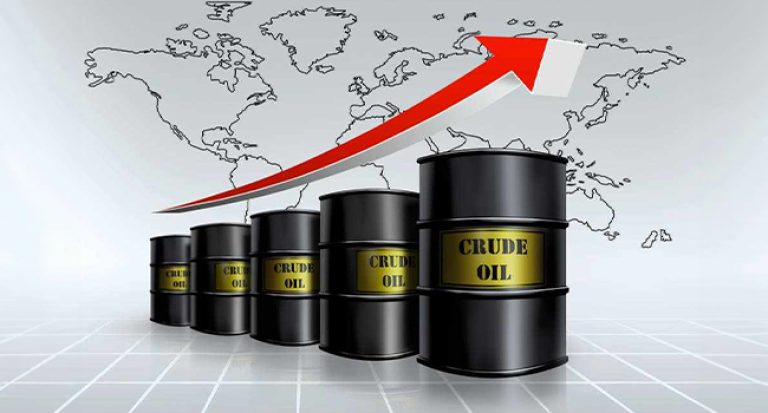
There is worry that Nigerians may have to pay more for Premium Motor Spirit (PMS), which is also called petrol, and Automotive Gas Oil (diesel) because the price of crude oil went over $100 per barrel yesterday.
Many Nigerians were looking forward to lower fuel costs after they dropped to $92 on Wednesday. However, crude oil prices went up after the US and Israel’s war on Iran got worse and Iran’s new supreme leader, Ayatollah Mojtaba Khamenei, said that the important Straits of Hormuz would stay mostly closed as a way to pressure the US and Israel.
On Tuesday and Wednesday, both Dangote Petroleum Refinery and Nigerian National Petroleum Company, NNPC, Limited, said they would lower the price of gasoline. Nigerians hoped the price would go down even more, but with the price of crude oil going up on the international market, those hopes may not last long, according to Vanguard.
On Wednesday, the price of oil dropped from $110 per barrel to $88 per barrel. This was because the International Energy Agency (IEA) said that all 32 of its member countries had agreed to release 400 million barrels of oil from their reserves to help with the shock to oil supply caused by the closure of the Straits of Hormuz.
Prices started to rise, meanwhile, as Khamenei took a tough stance and threatened to keep the ban going.
According to our reporters, the price of crude oil went up to between $96 and $117 a barrel, depending on the grade.
As of yesterday, the price of gas across the country is still high, at N1,200 per liter and higher.
Depot owners and marketers keep the price at N1,200 and N1,300 per liter.
In Lagos, Matrix, Menj, NIPCO, Pinnacle, and Rainoil sold the product for N1,200, N1,180, N1,175, and N1,200 per litre, respectively.
The checks showed that in Warri, depot owners such Danmarna, Matrix, Parker, Prudent, and Zamson sold it for N1,200, N1,205, N1,200, N1,204, and N1,200 per liter, respectively.
In Port Harcourt, Bulk Strategic, Liquid Bulk, Masters, Matrix, and Sigmund sold it for N1,200, N1,150, N1,215, N1,220, and N1,215 per liter, respectively.
In Calabar, depot owners Dozzy, Fynefield, Matrix, NorthWest, and Wabeco also sold at N1,195, N1,200, N1,205, N1,200, and N195 per liter, respectively.
Transporters, commuters, and others are upset about increasing gas prices.
Many transporters and commuters, who asked to remain anonymous, told our correspondent about their problems and asked the Nigerian Midstream and Downstream Petroleum Regulatory Authority (NMDPRA) to step in and force oil marketers to lower pump prices right away.
One of them added, “The operators, especially depot owners, are always quick to raise prices in their favor.” But they constantly have trouble lowering prices for customers.
NNPC lowers the price of gasoline to N1,130 in Lagos and N1,165 in Abuja.
Even though the price of crude oil has gone up, NNPC Limited has lowered the price of petrol at its stores in Lagos to N1,130 per liter and in Abuja to N1,165 per liter.
The reduction, which took effect on Wednesday, represents a drop of N100 from the previous price of N1,230 per litre in Lagos and N95 from N1,260 per litre in Abuja.
People saw the new price at NNPC filling stations along Isheri Oshun Road, Apple Junction, and Ago Palace Way in Lagos.
In Abuja, the national oil company also changed the price of gas at its retail stores in Jabi and Wuse to N1,165 per liter.
The price cut comes because oil marketers haven’t yet passed on the recent drop in the wholesale price of gasoline from the Dangote Petroleum Refinery.
Our reporters found that the corporation made the choice before the most recent surge in crude oil prices and other changes in the global market that will affect the domestic market.
Prof. Wumi says that the downstream is going through a fundamental change.
In a phone interview with our correspondent, Prof. Wumi Iledare, a Petroleum Economist, stated, “What we are seeing in Nigeria today is not just a simple rise in petrol prices; it is a sign of price volatility that is typical of a market that is going through structural change.” Nigeria is going from a lengthy time of controlled prices and a large reliance on imports to a downstream petroleum sector that is more driven by the market.
“In this kind of context, pricing is affected not just by the current supply situation but also by what people think the cost of replacing something would be in the future. Marketers and depot operators commonly use what economists call “adaptive expectations.” This means that changes in prices, exchange rates, and expected supply conditions affect their pricing decisions.
“Even with the crude-for-naira supply deal and the rise of domestic refining capacity like the Dangote Refinery, the market is still not in a stable balance between domestic supply and imports.” Short-term changes in pump prices are not surprising as long as there is uncertainty about the supply of crude oil to refineries, logistics, foreign exchange rates, and replacement costs.
“Ultimately, the most important thing is market stability, not short-term price changes.” We can expect volatility to go down over time as Nigeria improves its domestic refining, makes sure that local refineries get a steady supply of crude oil, and keeps prices clear and predictable.
“In terms of economics, stability happens when there is clear market information and supply certainty. When domestic refining becomes consistently reliable and market players have confidence in supply continuity, price behavior will gradually line more closely with underlying fundamentals rather than expectations.
“So, what we are seeing today is mostly a transition phase in Nigeria’s changing downstream petroleum market. The main goal of policy should be to make the conditions that allow that market to stabilize and work well even better.”
“Yes, the fact that petrol prices are changing so much right now shows that the market is changing from relying on imports and administrative pricing to refining oil in the country and finding new markets.”
Iran’s Supreme Leader insists that the Straits of Hormuz will stay blocked.
Mojtaba Khamenei, Iran’s new supreme leader, said in a statement that Tehran wants to be friends with its neighbors. However, he also said that Iran will keep attacking US bases in those countries if they don’t close down.
Mojtaba Khamenei remarked in his initial message, “We only targeted these military bases (and) we will continue, we will have to continue and do so.”
The supreme commander emphasized that the US and Israel must pay for what they did, and he just called the two countries “the enemy.”
Khamenei also thanked Iran’s allies and proxies in the region, which he called the “Resistance Front.” He specifically mentioned the Houthi rebels in Yemen, Hezbollah in Lebanon, and the pro-Iranian Iraqi resistance movement, saying that Iran sees them as its “best friends.” He told the groups to keep fighting.
Khamenei used part of his lecture to honor his father and predecessor, Ayatollah Ali Khamenei.
“I was lucky enough to see his body after he died as a martyr. He remarked, “What I saw was a mountain of strength.”
He talked about the attack on the Shajareh Tayyiba school in Minab, which state media stated killed at least 168 kids and 14 teachers. He remarked, “We will be especially sensitive about the blood of our children,” and promised to get back at them.
This is true even though Iranian state-linked news organizations like Fars News Agency and Nournews have disputed rumors that the widow of Iran’s late supreme leader, Ayatollah Ali Khamenei, died from injuries she got when the US and Israel attacked Iran.
CNN said that Nournews, which is linked to Iran’s Supreme National Security Council, said that “the wife of the martyred revolutionary leader is alive, and the first news reports about her martyrdom were wrong.”
CNN says that the publications didn’t give any further information about her condition or explain why it was different from past reporting.
Attacks against infrastructure
Prices of crude oil are also going up because of a new wave of Iranian attacks on energy facilities in the Gulf.
The International Energy Agency (IEA) said Wednesday that the war “is causing the biggest supply disruption in the history of the global oil market.”
Attacks with missiles and drones in response to attacks have practically stopped shipping through the Straits of Hormuz. Attacks have also happened on energy infrastructure all around the region.
Bahrain said that an airstrike from Iran hit fuel tanks in Muharraq, and drones hit fuel tanks at Oman’s Salalah port. Saudi Arabia announced it has stopped two drones from getting to its Shaybah oil field.
Meanwhile, oil companies in the Gulf have forced to cut back on output since they don’t have enough storage space.
Markets were also shaken by the possibility of a long-term conflict.
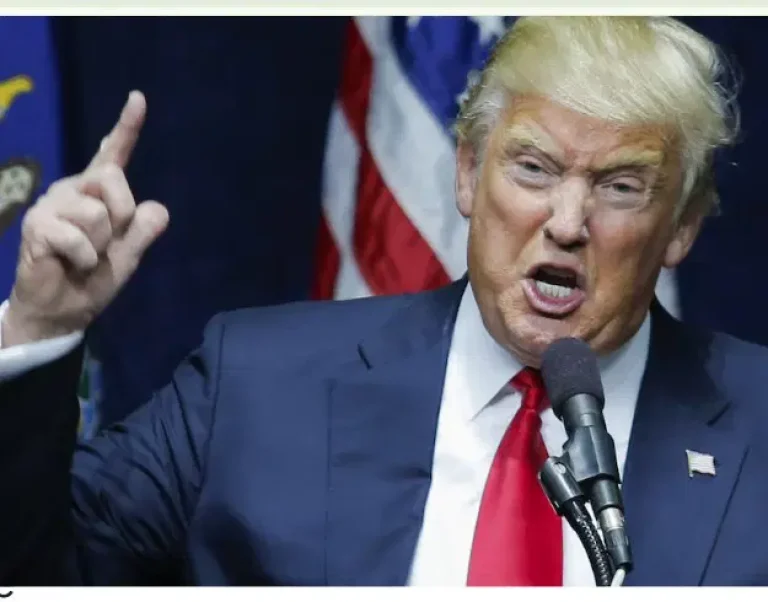
President Donald Trump of the United States has suggested that the war might end soon. However, Iran has said that it could go on for a long time and hurt the international economy.
Jim Reid, an analyst at Deutsche Bank, said, “From a market point of view, the problem is that investors are increasingly pricing in a longer conflict that causes a lot of damage to the economy.”
The IEA said that there were “no signs of a de-escalation in hostilities or a clear timeline for a recovery in flows through the Strait.”
Why the 400 million barrel oil release hasn’t helped oil markets
On Wednesday, the countries who are members of the International Energy Agency agreed to release 400 million barrels of oil from their reserves. This is the most oil they have ever released.
The IEA’s action was meant to lessen the immediate effects of the Middle East war on energy markets.
The US, which is both the biggest consumer and producer of crude oil, will slowly give out 172 million barrels over three months, which is 40% of its present stocks.
But experts say that the step was too minor to make up for the problems caused by the attacks on Iran by the US and Israel on February 28.
The release is “far short of the supply losses we are seeing from the Persian Gulf,” said ING bank’s commodities experts.
The IEA says that daily worldwide crude production is down by at least 8.0 million barrels. An extra 2.0 million barrels are attributable to petroleum products that have been switched off.
Neil Wilson, a strategist at Saxo UK investor, stated, “It doesn’t seem likely that the flow of reserves can make up for the lost flow of production.”
“This is a short-term and limited solution; the key is to reopen the Strait of Hormuz,” which is next to Iran and normally lets roughly one-fifth of the world’s crude oil flow through.
OPEC says that output falls to 1.315 million bpd.
According to the Organization of Petroleum Exporting Countries (OPEC), Nigeria’s oil production, not including condensate, fell from 1.459 million barrels per day in January 2026 to 1.314 million bpd in February 2026.
OPEC said in its March 2026 Monthly Oil Market Report, which came out yesterday, that the output was based on information gathered through direct conversation.
OPEC said that the country’s output was 1.460 million bpd, which is a small reduction from the 1.488 million bpd produced in January 2026. This was based on data from secondary sources.
The statistics also showed that Nigeria did not fulfill its OPEC and budget 2026 goals of 1.5 million bpd and 1.84 million bpd, respectively, despite though the price had gone up more than $64.85 per barrel.
A source who asked to remain anonymous said, “From all indications, the Federal Government would likely make more money based on the current high price and low volumes exported to the global market. However, Nigerians would suffer because they would have to keep paying high prices for petrol and other petroleum products.”
6 ships targeted while there are accusations of Iranian drone boats and sea mines
Reports say that Iranian boats loaded with explosives attacked two petroleum tankers in Iraqi waters, setting them on fire and killing one crew member. This happened after rockets hit four ships in Gulf waters.
Two Iraqi port authorities informed the Reuters news agency that the ships that were attacked late at night on Wednesday in the Gulf near Iraq were the Marshall Islands-flagged Safesea Vishnu and the Zefyros, which had loaded petroleum in Iraq. One source in Iraqi port security reported that the Zefyros was flying the Maltese flag.
One port security officer stated, “We found the body of a foreign crew member in the water,” while Iraqi rescue crews kept looking for missing sailors.
Farhan al-Fartousi, director general of the state-run General Company for Ports of Iraq, told Reuters that “a boat belonging to the Iraqi Ports Company rescued 25 crew members from the two vessels, and the fires are still burning on both ships.”
An Indian crew member on a US-owned crude oil tanker was killed when it was assaulted near Basra, Iraq, on Wednesday, India’s embassy in Baghdad reported yesterday.
Nigeria should take advantage of rising oil prices around the world by increasing production and protecting pipelines. It should also save extra money in fiscal buffers. At the same time, the government needs to safeguard people from inflation by improving refining and providing targeted social security.
To protect the economy from outside geopolitical shocks, it has to be more stable in the long run by diversifying away from oil.
-Rotn. Adeleke Olubanwo, the publisher
As a previous president of CRAN, I encourage the federal government to take steps to protect people from the effects of the U.S.–Israel–Iran confrontation. Prices for oil that go up and down quickly cause inflation and higher living expenditures. The government needs to help pay for food and transportation and increase crude oil production by stopping theft and damage. To make sure that Nigerians profit from rising prices around the world instead of suffering from them, we need to take action.
-Odita Sunday, Editor-in-Chief
The Nigerian government needs to act quickly to deal with the rising prices of food, basic goods, and oil products. To keep the public safe, it is important to use subsidies and rigorous rules to keep prices from going up randomly. A government’s main job is to protect its most vulnerable citizens from the effects of economic instability.
-Ifueko Oviasu, Business Owner
The Nigerian government has to focus on energy independence, foreign reserves, and domestic modular refineries in order to keep things stable. They also need to cut imports by 80% and bring back subsidies. Like a car’s shock absorber, a government is there to protect its citizens from economic shocks. Its job is to make sure that every bump doesn’t hurt the passengers.
– Erhahi Emmanuel, a business owner
The president should talk to the country to show that he understands how hard things are for people and to explain what is causing the situation. To keep fuel prices and other important costs stable, an interim subsidy is needed. At the same time, sending more crude oil to the Dangote Refinery will lower the cost of production and the need to import goods. In the end, cheaper fuel means that goods and services are cheaper.
-Ukhun E. Anthony, Businessman
The dispute between the U.S., Israel, and Iran makes economies around the world less stable, but Nigeria is still reacting. Right now, 40% of the crude oil that is supposed to go to local refineries is sold to foreign companies, who then sell it to Dangote in dollars. The government needs to restore the refineries and make selling crude oil to Dangote a top priority. Stop giving money to coastal roadways that don’t make money and instead work to make life easier for Nigerians who are struggling to make ends meet.
—Iyke Newman, EUN’s National PRO
About the Author