

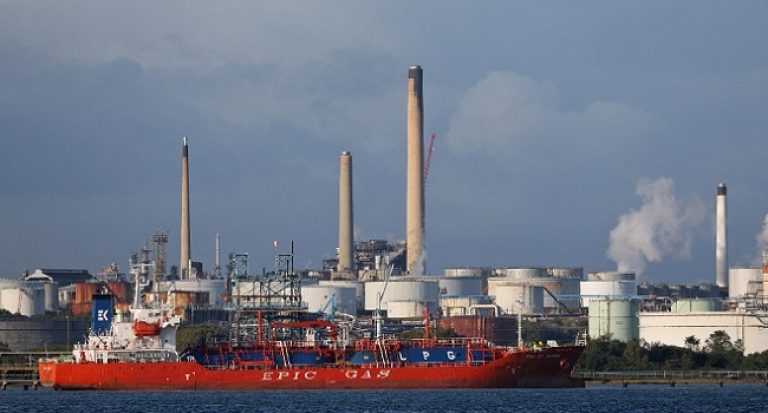
A shipment of liquefied natural gas (LNG) from Nigeria has been sent to Asia instead of Europe. This is because Asia is looking for goods to replace those that have been cut off by the war in the Middle East.
According to AFP, this is the second detour that has happened between Monday and today.
The fighting that started on February 28 with U.S. and Israeli attacks on Iran has stopped traffic through the Strait of Hormuz. This has stopped supplies from Qatar, which is the second-largest LNG exporter behind the U.S., and made customers compete for spare cargoes.
According to shiptracking data from the analytics company Kpler, the Pan Americas, which loaded at Bonny LNG in Nigeria, was heading to Croatia before changing course and heading to Asia through the Cape of Good Hope.
Exports from Qatar stopped suddenly, causing natural gas prices to rise by 50% across Europe and Asia compared to a year ago. On Monday, European gas prices rose by as much as 30% because of the war in the Middle East, which caused energy markets to go crazy and made people worry about long-term supply problems.
People that are scared are now looking for new cargoes.
On Monday, the LNG tanker BW Brussels, which had picked up a load at the Nigeria LNG Bonny Island Terminal on February 27, first signaled that it was heading west toward Europe. The cargo, on the other hand, changed its course and went south through the Cape of Good Hope to Asia.
The Dutch TTF natural gas contract, which is seen as the European standard, rose to 69.50 euros before dropping back a little.
S&P Global Platts says that the benchmark Japan-Korea Marker for spot LNG cargoes rose by 68.52% to $25.393 per million British thermal units for April delivery on Tuesday. This was the highest level in three years.
In contrast, spot LNG prices for supplies to northwest Europe went up by roughly 57% to $15.479 per mmBtu for April. This shows a robust rise, but Asia is still the better place for flexible cargoes.
According to Kpler data, Qatar is one of the biggest exporters of LNG in the world, and more than 80% of its shipments go to Asia.
The production problems there have made supply tighter and caused fierce competition between the Atlantic and Pacific basins for available cargoes.
The change shows how important global price signals are in deciding where LNG cargoes go in the very flexible market.
The country’s gas export revenue hit $2.7 billion in the first quarter of 2025, up 27% from the previous quarter and 86% from the same quarter last year. This was due to more LNG output.
The federal government wants to reach $10 billion in exports each year. They think that US demand and the planned Train 7 project, which is 80% done, would help improve earnings.
About the Author