

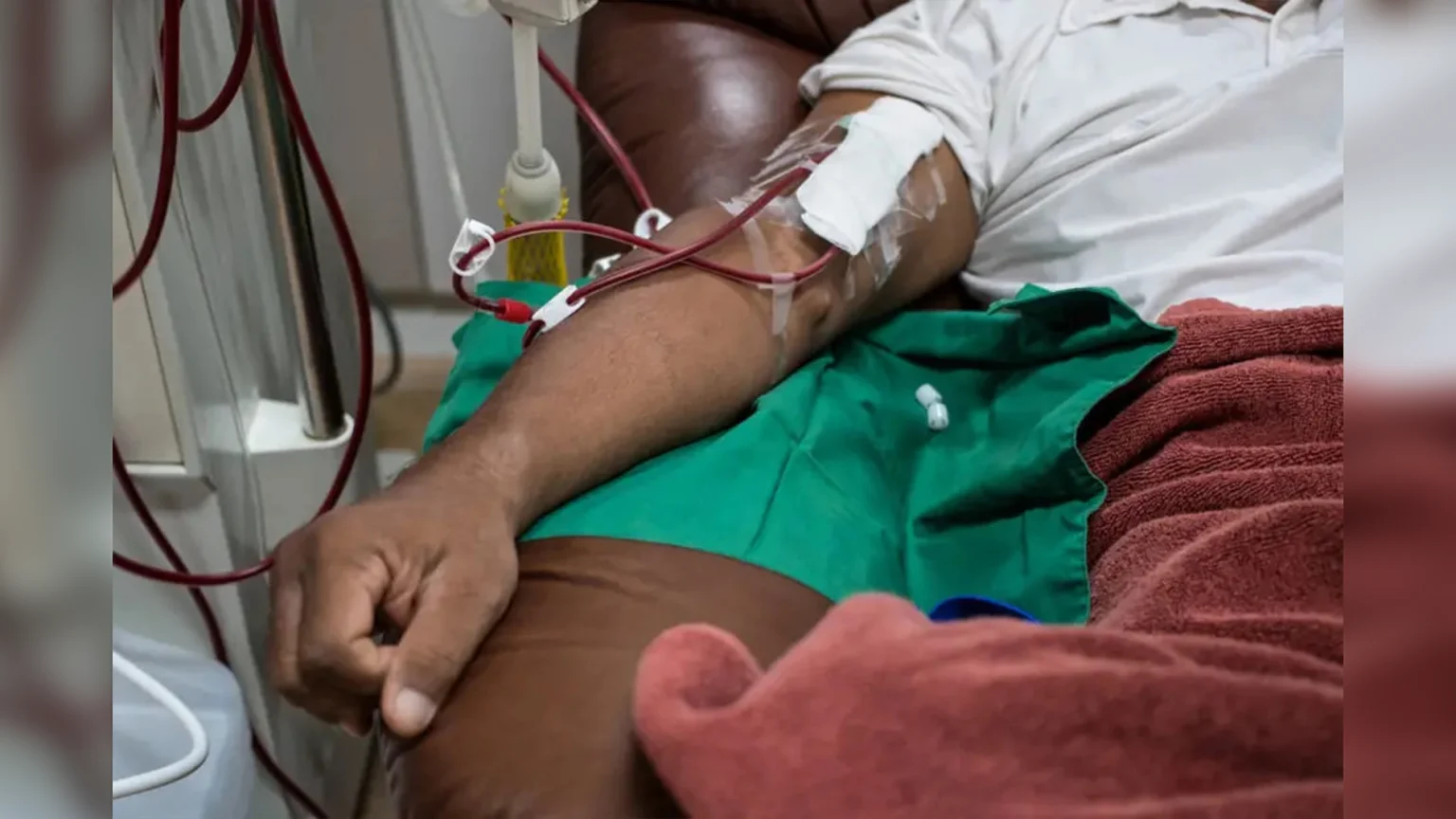
The high cost of care, which is a significant factor in determining survival rates, is taking center stage in Nigerian hospitals as nations observe World Kidney Day.
According to The Guardian, a kidney transplant can cost anywhere from N25 million to N30 million, depending on the treatment site, while dialysis treatment now costs between N50,000 and N80,000 per session.
The federal government reportedly reduced the cost of dialysis at ten locations around the country to N12,000 per session last year in consideration of the disease load.
However, caregivers stated that more has to be done to lessen the burden on Nigerians who require kidney care, most of whom are in the active age range of 20 to 50.
According to the World Health Organisation, renal illnesses are a primary cause of death globally.
More than 850 million people worldwide suffer from kidney disease, according to data from the International Society of Nephrology (ISN). This is about twice as many as those who have diabetes (422 million) and 20 times more than those who have cancer (42 million) or AIDS/HIV (36.7 million).
A growing public health concern in Nigeria, chronic kidney disease (CKD) affects an estimated 25 million people and claims 45,000 lives annually.
For many, the financial consequences are still dire. The cost of dialysis, which is sometimes necessary twice a week for those with stages three to five renal impairment, has increased from N20,000 to N80,000.
Although kidney transplantation used to cost between N7 million and N10 million, current estimates show that the process now costs close to N30 million, making life-saving treatment far out of reach for many Nigerians.
The Nephrology Association of Nigeria (NAN) reports that there are more than 200 dialysis facilities and roughly 800 working dialysis machines in Nigeria, significantly less than the 5000 needed to efficiently handle the increasing caseload.
According to Jacob Olugbenga Awobusuyi, a professor of nephrology and the most recent president of the Nephrology Association of Nigeria (NAN), kidney care in Nigeria is costly, particularly for patients with stage five kidney disease.
Dialysis sessions typically cost between N50,000 and N60,000, and patients must attend at least two or three times a week. That’s around N150,000 a week on average, and I doubt many Nigerians can afford that.
According to Awobusuyi, a transplant can cost anything from N25 million to N30 million. Additionally, the patient will require between N600,000 to N700,000 per month for the induction immunosuppressants, which are the first medications used to avoid transplant rejection.
According to Awobusuyi, the prevalence of chronic renal disease has been increasing in Nigeria, where it affects 11–12% of adults.
He clarified that while the prevalence is typically between 11 and 12 percent, it may reach 20 percent in certain populations, such as those with diabetes.
According to Awobusuyi, the main risk factors for chronic kidney disease include glomerulonephritis, diabetes, and hypertension.
But there are additional illnesses, such as issues with an enlarged prostate, HIV, hepatitis, sickle cell disease, particularly in children, congenital defects, environmental pollutants, and drug usage.
Awobusuyi said: “Nigeria needs about 5000 functional dialysis machines to effectively cater for the growing number of patients that need dialysis.”
He said that the majority of individuals don’t know they have kidney disease until it’s too late, and that attempts are being made to incorporate kidney care into basic and secondary healthcare systems in order to promote early identification.
“We must motivate them to adopt healthy behaviors. That is, scheduling routine examinations for chronic conditions including diabetes, hypertension, and general ailments in addition to renal disease.
Awobusuyi stated that while the federal government’s recently implemented dialysis subsidy is a positive move, the 10–12 government facilities are insufficient. He demanded that the scope be broadened to include private hospitals across the country.
Professor Babatunde Salako, a consultant nephrologist at the University of Ibadan’s College of Medicine, told our correspondent that while the prevalence of chronic kidney disease may not seem to have changed much in the last ten years, more comprehensive comparisons over the previous 20 to 25 years indicate that the disease has progressively increased.
He claims that the increased incidence of underlying illnesses that put people at risk for kidney impairment and lifestyle-related issues are contributing causes to the rise.
According to Salako, the yearly worldwide awareness campaign has also enhanced disease detection.
He pointed out that the annual celebration has given individuals all over the world the chance to learn about kidney health, get screened, and comprehend how the illness can be identified early.
According to the nephrologist, greater awareness has made it easier for nephrologists and other medical professionals to identify and diagnose chronic renal disease.
He continued by saying that this enhanced detection occasionally creates the illusion that the illness burden is rising quickly, but in actuality, more cases are only being found as screening and awareness grow.
Pharmaceutical companies are currently investigating drugs that may target some of these genetic factors, with several undergoing clinical trials worldwide, according to Salako, who is also the immediate past Director General of the Nigerian Institute of Medical Research (NIMR).
He clarified that because the majority of the supplies needed for dialysis and kidney transplantation are imported, the industry is extremely susceptible to changes in the naira-dollar exchange rate.
He claims that whereas dialysis treatments used to cost between N20,000 and N30,000 more than ten years ago, the typical cost in private hospitals now ranges from N50,000 to N80,000 per session.
He noted that since patients frequently need three dialysis sessions per week, many families may find the financial strain to be too much to handle.
According to Salako, the price of kidney transplantation has also skyrocketed, going from roughly N7 million to N10 million in the past to at least N30 million today.
According to him, many patients are now obliged to sell personal belongings or rely on family members in order to receive treatment due to these rising costs.
According to Salako, a large number of Nigerian patients with renal illness are between the ages of 20 and 50. Young people and adults who frequently provide for their family are included in this group.
He cautioned that the effects extend beyond individual households, emphasizing that because people afflicted are a part of the nation’s working population, the illness also has an impact on national output.
The nephrologist explained that kidney illness in younger individuals is not necessarily a recent development in Africa. He clarified that, in contrast to Europe and North America, where it primarily affects the elderly, the disease has historically tended to affect younger populations on the continent.
He claimed that deficiencies in health systems are mostly responsible for the disparity. Conditions like diabetes and hypertension frequently proceed to complications like kidney failure due to limited access to hospitals, specialists, drugs, and financial means.
Salako also noted other typical habits in the area as contributing causes, such as the use of chemicals that might include hazardous metals like mercury and the use of herbal medications whose contents are unclear.
Salako emphasized the dire lack of experts required to treat renal disease in Nigeria, going beyond the causes of the illness. He claimed that the nation’s nephrology workforce has been severely reduced by the migration of medical experts.
He revealed that the College of Medicine, Ibadan was unable to find a single nephrologist to hire during a recent recruiting drive.
Salako stated that the effects of the federal government’s directives to universities to boost enrollment in medical and other health-related programs might not be realized for the next five to six years.
In order to address the personnel shortage and establish circumstances that would motivate qualified professionals to stay in the nation, he urged for concerted measures involving the government, professional associations, and other stakeholders.
Salako recognized the efforts of the federal government to provide dialysis subsidies in public hospitals.
He clarified, however, that the subsidy does not entirely cover other operating expenses like power, water supply, and equipment maintenance, making it challenging for hospitals to maintain the lower pricing without more assistance.
To assist hospitals in maintaining subsidized rates and increasing access to dialysis services, Salako proposed creating a revolving fund or other financial support methods.
In the future, he emphasized that the biggest impact on combating kidney disease in Nigeria would come from more robust government regulations and increased access to health insurance.
He clarified that patients would be able to receive treatment without having to pay exorbitant out-of-pocket costs if dialysis and post-transplant drugs were included in health insurance plans.
Dr. Theophilus Umeizudike, a consultant transplant physician and nephrologist at the Nephrology Unit, Department of Medicine, Lagos State University Teaching Hospital, also voiced concern about the high cost of kidney care and treatment in the nation, emphasizing that the cost of dialysis can range from N45,000 to N70,000 per session, depending on where you receive care.
Dialysis costs between N400,000 to N500,000 a month if a patient spends N50,000 per session and attends two sessions a week. If you compound that by a year, it comes to almost N6 million. Dialysis is only one expense, so that’s in addition to other therapies.
“An additional N3 million or N4 million may be required due to the necessity for injections, drugs, and procedures. In a year, about N10 million will be spent. If the patient needs a transplant, which may cost up to N25 million, that is a significant expense that must be covered.
However, after the patient is on immunosuppression, which can cost anywhere from N200,000 to N400,000 a month, the expense is somewhat decreased. However, the benefit of a transplant is an improvement in quality of life following the procedure.
Control strategies
Umeizudike pointed out that the federal government has begun to subsidize dialysis, which is a crucial step in assisting patients in obtaining care. Nevertheless, he added that only roughly 0.5% of the institutions that provide dialysis are eligible for the subsidy.
According to Umeizudike, a person with chronic kidney disease is completely asymptomatic in stages 1 through 3. However, some persons may experience symptoms such as chest pain, body itching, vomiting, leg swelling, loss of appetite, and foamy urine.
In order to avoid kidney disease, he advised Nigerians to follow the eight golden rules. These include exercising frequently, staying hydrated, maintaining a balanced diet, abstaining from alcohol and tobacco, testing blood pressure to make sure the person doesn’t have hypertension, regulating blood glucose, and monitoring blood glucose elevation.
Prof. Aliyu Abdu, a consultant nephrologist at Aminu Kano Teaching Hospital and a professor of medicine at Bayero University in Kano, cautioned that a high-salt diet and excessive intake of processed foods could raise the risk of kidney disease.
According to Abdu, the kidneys are essential for controlling the body’s sodium levels, but too much sodium puts extra strain on the organs, making them work harder to keep the body’s fluid and electrolyte balance.
He claims that extra sodium is retained in the body when the kidneys are unable to properly eliminate it, which can result in poor blood pressure regulation and fluid buildup that could lead to swelling.
The nephrologist went on to say that high sodium consumption could cause progressive damage that could ultimately lead to renal failure in people whose kidneys are already damaged.
He claims that severe fluid retention, elevated blood pressure, and an increased risk of cardiovascular diseases are frequently associated with such renal failure.
About the Author