
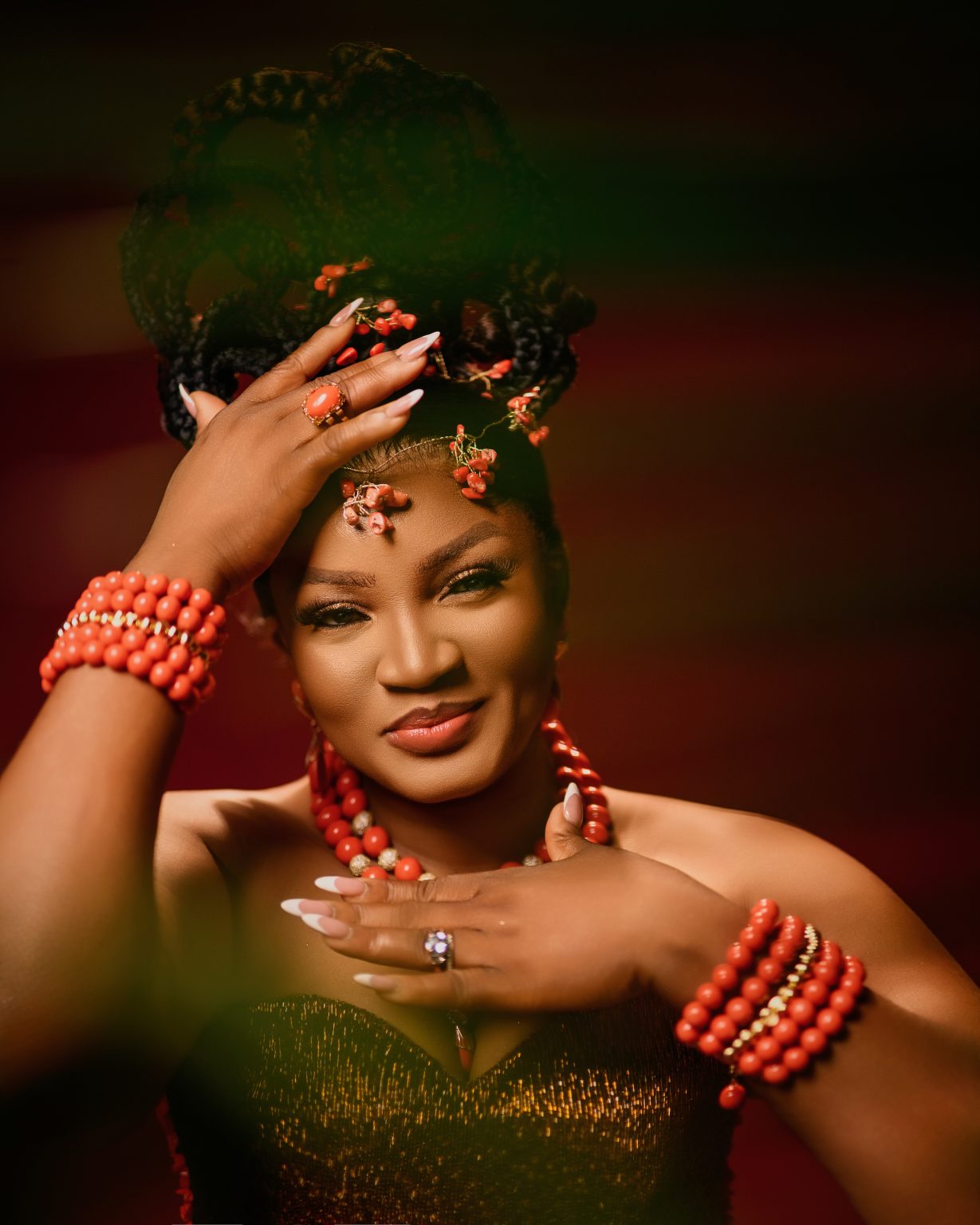
Omotola Jalade-Ekeinde has been in the public eye for 30 years, and her story is as much about survival as it is about fame. According to Guardian Life, she talks about how losing people, having faith, and getting married early molded her and why her movie “Mother’s Love” seems personal.
Omotola Jalade-Ekeinde has been one of the most well-known faces in Nollywood for more than 30 years. She is an actress, producer, singer, and humanitarian. She is part of the generation that helped shape the current film industry and spread its stories beyond Nigeria’s boundaries.
In an interview with our reporter, she talked about losing loved ones, taking on too much responsibility too soon, and what she learnt from getting married young and forging a career in the public eye.
A life defined by loss, strength, and endless change lies behind the glitz.
Now that she’s been on screen for 30 years, she said that staying in the business is a mix of discipline, timing, and a strong sense of purpose. Yes, the years have brought her recognition, but they have also brought her hard times that made her grow up quickly and learn quickly.
She also talked about how she judges success now, what she feels Nollywood still needs, and why she is still careful about the stories she chooses to tell. For Omotola, being seen is not the end goal. Meaning is.
Still hungry after 30 years on screen
Omotola said that unfinished goals, both personal and industry-wide, keep her going after three decades. She also said that inspiration is still her last filter.
“The fact that there are still things I want to do personally and as an industry keeps me going.” She remarked, “I’ve also learned that I have to find the project that really inspires me before I can commit, no matter how much I want to do things.”
When asked if she ever thought about being the face of Nollywood around the world, she made it clear that it was never by mistake. She said she had that way of thinking since she was a child and on purpose.
“LOL…maybe I can surprise you? Yes. I wanted that after my first movie, Venom of Justice. I looked into the highest level I could reach in my work and how the best people in other fields, especially Hollywood, did it. I put it down on paper. Followed it.
She went on to say that her plan was to learn about the worldwide film industry and get ready for chances that would come her way outside of Nigeria.
Nollywood in the past vs. now
The Nollywood diva said that newer performers are starting out in a drastically different world than she did in the 1990s.
She says that social media has made things more visible and accessible for her generation than they were before.
She said, “Today’s actors have the luxury of growing with social media, the freedom that comes with its many uses, and the instant visibility.”
But she warned that the same platforms might easily take performers’ attention away from their work.
“Like everything else, it has its problems as well. “It can be very vain, dishonest, and very distracting,” she said, stressing how important it is to keep your balance when dealing with online attention.
She made it through the industry and the losses that formed her.
She said that one of the most important professional choices she made was to demand contracts and unambiguous agreements in an industry that used to rely on informal deals.
She said, “It was one of the best things I learned and took in early on in my career.”
She said that choice set limits that kept her money and reputation safe.
She said, “This is why I can’t name anyone in this industry who has treated me badly, owed me money, or been unprofessional with me in 30 years.”
Behind the public picture of achievement is a personal story formed by loss and duty from a young age.
When asked what hardships impacted her point of view, Omotola talked about losing both of her parents and having to take on adult responsibilities as a teenager.
“Many,” she said. “I lost my dad when I was 12. When I was 22, I lost my mom. I started working when I was 16 to take care of my younger siblings…
She also said that she had to work on her public image while getting used to being married and a mother at a young age.
“After getting married at 18 and having a baby at 19, I had to work to make my brand desirable again.” There are a few more that I’ll spare you for now… lol.
Her thoughts show how the challenges she had in her personal life helped her build the toughness that people now connect with her job.
Reinvention, faith, and the seasons
The 48-year-old actress has worked in acting, producing, music, and business throughout her career. But she noted that she doesn’t often rush her decisions to change jobs.
“When I sense the pull and the need to. She said, “I always wait for it to happen on its own.”
She said that her religion influences the timing of her creative changes, and that’s why she took this method.
“When the time is right, you’ll know what season you’re in if you listen to the Holy Spirit.” I don’t push things or cling on to them either… “I don’t do anything until I hear from God,” she said.
She said that this point of view has helped her stay clear about when to go after fresh ideas and when to stop.
A narrative based on actual life called Mother’s Love
Her thoughts come as her new movie, Mother’s Love, is now playing in theaters throughout the country. It came out on March 6.
Omotola said that the movie’s story was very much based on real-life situations and cultural norms.
She said, “This story and movie are based on real events.” “Some of it is based on my own experiences with my mother and first daughter.”
She also said that a lot of ladies have talked about the movie’s topics.
She remarked, “I’ve also learned that a lot of women, and even families, can relate to the same problems and issues.”
In another moment, she thought back to the incident that was the hardest for her to deal with emotionally. The action, which took place at Makoko, tested both her directing and acting skills.
“The hardest scene has to be Makoko, where I was dressed down, directing and plotting the scene with my daughter, and then had to rush to get into a fancy costume on land to play my part in the same scene and be probably the most vulnerable in that scene.” “I really felt tired and vulnerable when it all hit me,” she added.
She also talked about how her move to producing and directing came about. She had been getting ready for it, but she didn’t expect the timing or speed.
“Even though I was ready for the process, I never thought it would happen the way and at the time it did.” While I was on vacation, I was told to shoot a YouTube project, which led to the wild jump into shooting a feature before I got on the aircraft and came back to the US.
That narrative sounds like readiness meeting momentum.
Omotola utilizes the movie to make a bigger point about how stories are told in different cultures, in addition to the personal ones. She thinks that movies can help people feel like they belong to a certain country, and Nigeria needs to be careful about what it shows.
What she wants to change
“What are we selling?” Mother’s Love and All movies from Redhot Concepts always exhibit off Nigerian culture through food, music, fashion, language, and custom. You will also always observe our strong spirit. “The Nigerian Winning Spirit.”
That is more than a declaration of creativity. It is a dispute about culture.
She said that Nigeria’s duty to tell stories is like what other countries have done for a long time. She thinks that American movies generally show patriotism and heroism. Indian movies have always shown certain moral values. Chinese movies promoted a certain idea of strength and smarts. South Korea currently offers culture through love, beauty, music, and travel.
She asks a direct question. What does Nigeria sell?
Culture and resilience are what Omotola needs. Food, music, clothes, language, and customs. The will to live. The spirit of winning.
That way of looking at it makes Mother’s Love more than just a family drama. It becomes part of a bigger attempt to define one’s own culture.
It also goes along with what she said before about meaning being more important than exposure. No matter how much a movie is marketed, it won’t matter if it doesn’t have any meaning. The story has to work. The culture has to feel real.
Worry around the country
Omotola’s answers went beyond just entertainment and into Nigeria’s larger societal reality. When asked what keeps her up at night, she said the legal system and human rights abuses.
“The ongoing violations of human rights and abuses without punishment.” The justice system moves slowly and people don’t trust it. She said that it’s not just about what happens. It’s also about what doesn’t happen after that.
What Nollywood still needs to do
Omotola’s long-term view of the industry also involves policy. She doesn’t say that Nollywood’s difficulties are just about skill or inventiveness. She talks about incentives and distribution.
“Filmmakers need tax breaks and more ways to get African movies out to the public.”
In a lot of ways, her demand is a plea for infrastructure.
It also fits with what she says about how competitive the world is. If Nigeria wishes to export its culture through movies, the movies need to have ways to get around. They need to be given out in the right way. They need systems that see movies as both art and a way to make money.
About the Author