
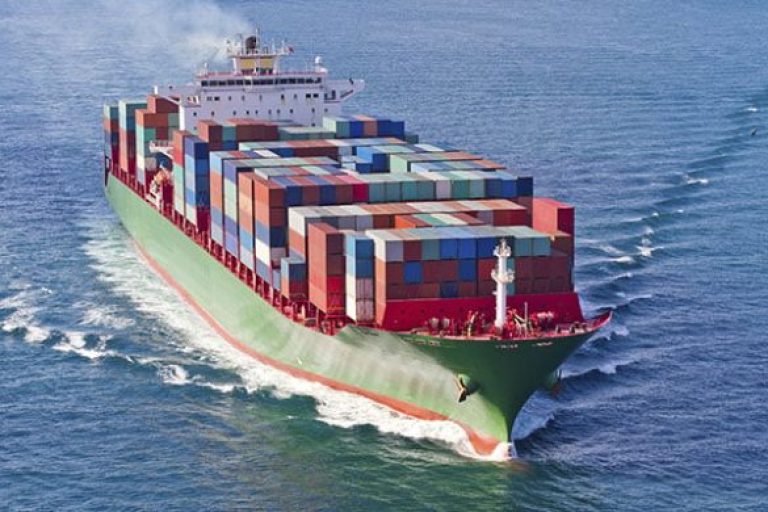
According to stakeholders, the fact that foreign-flagged ships control Nigeria’s marine area is a big problem that the federal government needs to fix right now to stop capital flight and put the country on a strong economic footing.
Daily Independent reports that the lack of government and private indigenous-owned vessels has put the country at a huge disadvantage and cost it billions of dollars in lost revenue every year, benefiting foreign countries and companies that own and operate many vessels that call at Nigerian ports.
Some analysts say that just because Nigeria isn’t one of the world’s advanced countries like the US, UK, China, Japan, Germany, Korea, and others, and is instead a third world country that didn’t have the technology to build ships, that doesn’t mean they can’t buy ships.
Because of this, they want the government to declare a state of emergency on the implementation of cabotage.
But critics have also criticized successive governments for the problems in the marine sector when it comes to buying ships.
They also said that even if the country doesn’t have the technical know-how to build and fix ships, that doesn’t stop them from buying them from foreign companies.
People who look at Nigeria say it is a country that relies on imports. Seaports bring wheat and other goods, such rice, into Nigeria. This was the case until the current embargo.
People involved have also complained that none of the ships that bring them in are owned by Nigerians.
They also said that the crews and staff on the ships that deliver cargo to Nigeria are all foreigners, which means that there is a big gap in jobs for Nigerian-trained seafarers.
Mohammed Anefi, a maritime stakeholder, remarked that “you may not see five Nigerians working inside those ships” out of every hundred ships that come to Nigeria. But they are bringing things to Nigeria. The Cabotage Act hasn’t really worked, though.
Mohammed, the head of the International Freight Forwarders Association of Nigeria (IFFA), claimed that countries that are more advanced, including the US, the UK, China, Japan, Germany, and Korea, even build and repair their own ships.
“They have technology on their side, not ours,” he remarked.
Ismail Aniemu, another maritime specialist, said that Nigeria is still having trouble catching up. He said that even though India may look like a third world country or be destitute, “India is ahead of us in the maritime space.” “This is because India has more well-known schools for training. They have more tech than Nigeria. Even though we started growing at the same time, India has passed us by.
“So, that’s what caused it. We are sluggish to adopt new technology.
Aniemu added that Nigeria needs to have strong political will to catch up with countries that are ahead of it in maritime development. He also noted that the government needs to figure out what Nigeria does better than other countries.
“The government hasn’t done enough for Nigeria. Nigeria doesn’t seem like a country that will be constructing ships in the next ten years. We are still having trouble fixing ships. We have only just begun to learn about shipbuilding and boat maintenance.
“Then, when you look at foreign control of the trade, just because you aren’t building doesn’t mean you can’t buy. You aren’t creating anything, but you can buy ships and trade with them. Nigeria relies on imports.
“The Cabotage Act hasn’t truly worked because politicians don’t want it to. Do you realize how much better it will be for us if the government says that only Nigerian-owned ships can trade in our waters? The ship is owned by Nigerians and crewed by Nigerians. There is a distinction between the owner and the crew. You can own the ship, but the people who work on it might all be from other countries.
“There should be a certain number of Nigerians working on a ship owned by a Nigerian. If a Nigerian owns a ship and at least 40% of the people who work on it are Nigerian, and they trade in our waters, you will see that the wealth will come into the country. A lot of Nigerian households would feel the prosperity, so it will be clear. “My brother is a sailor.” A country where a lot of ships are calling, but the sailors aren’t Nigerians and the ships aren’t owned by Nigeria or Nigerians. So, if you come to Apapa, where containers have blocked the road and heavy duty trucks are waiting in line, you won’t get any benefits from those trading activities. Everything is moving.
“Now the question is, how many of the ships that transported those things have Nigerian crew members? Aniemu remarked, “The answer is almost zero.”
He went on to say, “You won’t see many Nigerians working there.” You won’t see many ships owned by Nigerians. If you see one Nigerian who owns a ship, and after five or ten years of trading with it, there is no or very little succession planning. The company hasn’t gone out of business. We have seen Nigerian businesses that own ships. Most of them have fallen. “They have gone aground.”
People in the sector have also said that the true reason foreign ships are so common is that the Nigerian government doesn’t use Nigerian ships.
They said that even NNPC, a Nigerian firm that exports crude oil, doesn’t let Nigerian ships carry its goods.
Chief Osita Chukwu revealed that people from other countries are taking Nigerian crude.
Chukwu, the National Coordinator of Save Nigeria Freight Forwarders, stated, “Can you imagine how much better things would be if the ships that brought Nigeria’s crude oil to other places? If the ship is Nigerian and the personnel who work on it are Nigerian.
He said that most of the young people who should be working on Nigerian ships are now involved in militancy and other crimes at sea.
“They are pirates; they are committing some kind of maritime crime. Instead of working on boats and ships, young people from coastal areas are committing maritime crimes. These people would have been ship captains, maritime engineers, marine surveyors, port managers, and port administrators.
“They’re all busy being militant, you know. Because we didn’t make the most of our natural riches, they are busy with piracy, sea robbery, and other types of marine crime. We didn’t make the water. The water came from God. That is a natural resource. That is richness from nature. God pours oil in the water for a country that God has given water. God, because they drill for oil in your waters. God also made oceanic resources, including fish. You have everything you want in the sea space. You have no business with being poor. Chukwu said, “Sadly, our case is the opposite.”
Chief Chukwu also said that political will is the way to go.
“It’s the will of the people. The government needs to step up and fix this problem. We have talked about it many times throughout the years. The government should declare an emergency in the execution of cabotage. We want to know how many ships came to Nigeria in 2025 to trade, either delivering something or taking something away. How many of these do Nigerians own? Chukwu asked.
About the Author