
A congressman revealed yesterday that Venezuelan officials have released 379 political prisoners. This happened after the US overthrew previous leader Nicolas Maduro and the interim government adopted a new law.
The measure was passed unanimously by Venezuela’s National Assembly the day before, which gives hope that hundreds of political prisoners may soon be set free, according to AFP.
In a TV interview yesterday, Jorge Arreaza, a deputy in the National Assembly who is in charge of the amnesty process, said that the 379 detainees “must be released, granted amnesty, between tonight and tomorrow morning.”
He remarked, “The Public Prosecutor’s Office has asked the right courts to grant amnesty measures.”
People who are against the new law say that it seems to have loopholes for several crimes that the government has used to go after Maduro’s political opponents in the past.
It is clear that this law does not apply to people who are being tried for “promoting” or “facilitating… armed or forceful actions” against Venezuela’s sovereignty by people from other countries.
Interim President Delcy Rodriguez has made these claims against Maria Corina Machado, the leader of the opposition, who wants to go back to Venezuela from the United States at some time.
Members of the security forces who have been found guilty of “terrorism”-related crimes are also not allowed to join.
“Many of us know that the amnesty law doesn’t cover our relatives,” Hiowanka Avila, 39, said AFP outside the Rodeo 1 jail outside Caracas, where a lot of the convicts are former soldiers or commanders.
In 2018, her brother Henryberth Rivas, 30, was arrested for reportedly employing armed drones to try to kill Maduro.
Arreaza had said before that “the military justice system will handle” issues that are important to members of the armed services and “grant benefits where appropriate.”
– A long wait –
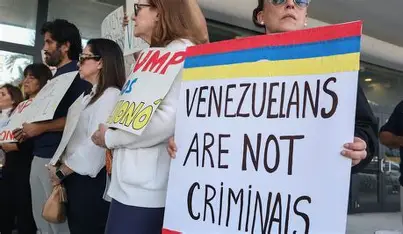
For weeks, many relatives of detainees in Venezuela have been waiting outside bars for their loved ones to be released.
Since the tragic US raid that took Maduro, the government of Interim President Delcy Rodriguez has already given hundreds of people conditional release.
Before the revelation, the NGO Foro Penal reported that about 650 people were in jail. This number has not changed since then.
Alfredo Romero, the head of Foro Penal, warned Wednesday that getting “amnesty is not automatic,” but would need to go via the courts, which many see as an arm of Maduro’s repression.
Rodriguez spoke on state television Wednesday to defend her government. She said, “We are building a more democratic, just, and free Venezuela, and everyone must help.”
– “Totally free” –
Juan Pablo Guanipa, an opposition lawmaker and ally of Machado, said he would be released from jail soon after the bill was enacted.
He had been released from prison earlier this month, but he was soon re-arrested and put under home arrest.
Guanipa stated on social media, “I am now completely free.”
He asked for the release of all other political prisoners and the repatriation of exiles.
Earlier in the day, he held a rally with supporters in Maracaibo, Venezuela’s second largest city and his hometown.
Rights groups have also criticized the law because it might be used to justify abuses by Maduro and his predecessor Hugo Chavez.
Edmundo Gonzalez Urrutia, an exiled Venezuelan opposition leader, warned on Friday that there would be “no lasting reconciliation without memory or responsibility” in his nation.
“A responsible amnesty is the change from fear to the rule of law.” Gonzalez Urrutia wrote on X that it is a promise that power will not be used without boundaries and that the law will be above force.
Gonzalez Urrutia, who lives in Spain, is largely seen as the genuine winner of the 2024 presidential elections, which were marred by fraud claims and won by Maduro.
In the past few years, hundreds, maybe thousands, of Venezuelans have been arrested for plotting, real or imagined, to overthrow the government of Maduro, who was brought to New York to stand trial on drug trafficking and other accusations.
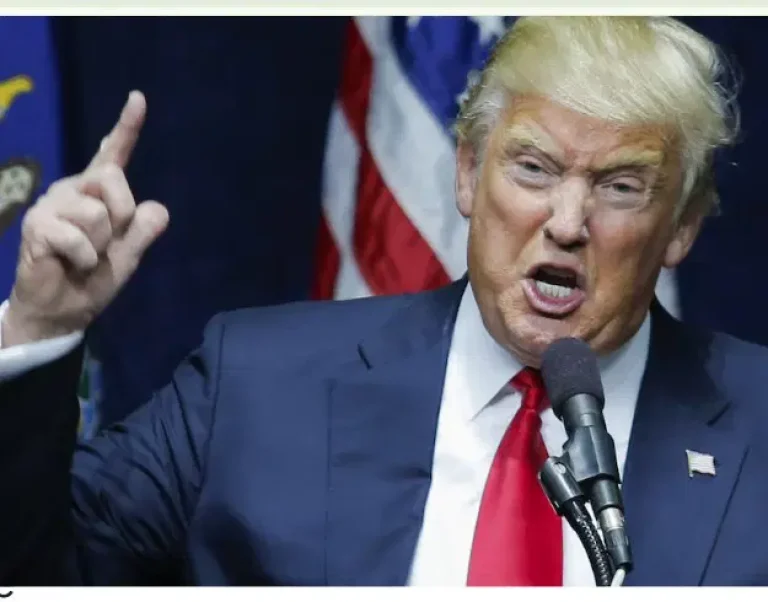
Rodriguez was Maduro’s deputy president before becoming the leader of the South American country with the approval of US President Donald Trump, as long as she followed Washington’s orders.
The US is now in charge of selling Venezuela’s oil, and Trump has promised that Washington will get a cut of the earnings.
About the Author