
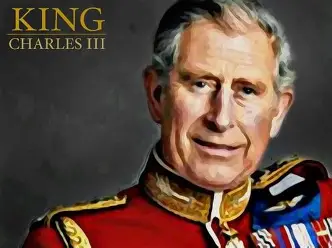
“On September 8, 2024, exactly two years after Queen Elizabeth II’s death, King Charles did something that shocked even his closest aides—he spent the entire anniversary day completely alone at Balmoral Castle in the exact room where his mother had died, refusing all visitors, meals, and phone calls for 24 hours, because according to palace insider Valentine Low who later wrote about it in The Times, Charles had told his staff ‘I need to sit with the weight of what I inherited and what I lost on the same day—you can’t rush that kind of reckoning.’
This willingness to face uncomfortable truths defines him—in 2006, he commissioned an independent audit of the Duchy of Cornwall’s historical ties to the slave trade, and when the report revealed his inherited estate had profited from plantation slavery in the 1700s, Charles didn’t bury the findings but instead established a £10 million reparations fund and personally traveled to Barbados in 2021 to apologize, telling descendants of enslaved people at an emotional gathering that ‘I cannot undo history, but I can refuse to hide from it,’ becoming the first British royal to directly acknowledge and attempt to make amends for this dark legacy.
He’s been anonymously funding guitar lessons for inner-city kids in Birmingham since 2012 through a program called ‘Strings of Hope,’ personally reviewing video submissions of students’ progress and sending handwritten encouragement notes, until 16-year-old student Aisha Patel recognized his handwriting from a school history textbook in 2023 and told her instructor, who confirmed to Birmingham Live that Charles had sponsored over 340 students, many of whom are now professional musicians who never knew their benefactor’s identity.
In 1999, when his beloved Labrador Retriever Tigger went missing during a walk at Sandringham, Charles personally searched for eight hours in freezing rain, refusing to go inside until he found the dog trapped in a drainage ditch—he carried Tigger three miles back to the house in his arms, and equerry Mark Dyer later told royal author Tina Brown that Charles sat up all night with the shivering dog wrapped in blankets, whispering ‘I’ve got you, I won’t let anything happen to you,’ revealing a tenderness he often struggled to show humans.
He’s maintained a decades-long correspondence with death row inmate Marcus Johnson in Texas since 1995, after Johnson wrote him a letter asking for book recommendations, and according to Johnson’s lawyer David Dow who discussed it in a 2022 Guardian article, Charles has sent over 400 books personally selected and annotated with margin notes, never once asking for publicity or credit, simply treating a condemned man as worthy of intellectual companionship because ‘everyone deserves to know their mind still matters.’
When his granddaughter Princess Charlotte was diagnosed with severe anxiety at age seven in 2022, Charles immediately cleared his schedule to spend two afternoons weekly taking her on ‘worry walks’ through Kensington Gardens, teaching her breathing techniques and letting her voice every fear without judgment, and according to a close family friend who spoke to People magazine, William credits his father with probably saving Charlotte from years of therapy by simply being consistently, patiently present during her crisis.
He’s been learning Indigenous Australian languages since 2018, working with linguistics professor Jakelin Troy, specifically so he could deliver a formal apology to Aboriginal communities in their own tongues during his 2024 Australia visit, and elder Aunty Beryl Van-Oploo told ABC News that hearing the King speak Wiradjuri words of contrition while weeping openly ‘broke something in me that needed breaking—he didn’t perform reconciliation, he embodied it,’ and at 76 years old, battling cancer while carrying the weight of a thousand-year-old institution into an uncertain future, Charles keeps choosing the harder path of authentic humanity over the easier path of distant majesty, keeps showing up imperfectly but relentlessly, keeps proving that crowns are just metal until worn by someone brave enough to kneel, to apologize, to remember, to feel, to serve people who will never serve him back, and maybe that’s what true royalty has always meant—not the power to command but the courage to care even when caring breaks your heart.
About the Author