
The Nigeria Export Processing Zones Authority (NEPZA) has asked that Nigeria’s Special Economic Zones Scheme be added to European value chains to help the economy grow, get richer, and become more industrialized. Martins Odey, Ph.D., Head of Corporate Communications at NEPZA, signed this statement.
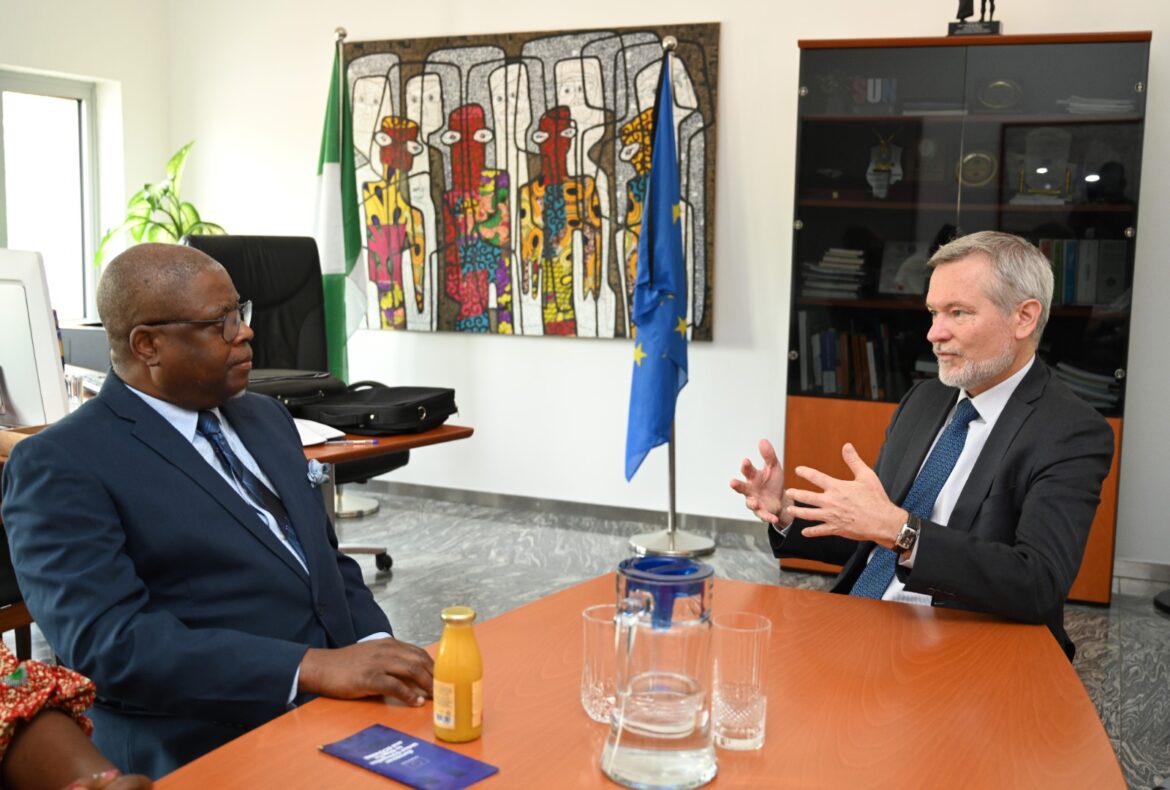
Dr. Olufemi Ogunyemi, Managing Director of the Authority, made the call on Monday during a trade and investment facilitation meeting at the European House in Abuja.
“It is an honor to speak to this important group at this important time in the history of the world economy.” Our talk today looks at how Nigeria’s Free Zones, as part of NEPZA’s strategic framework, might be useful tools for improving economic collaboration between the EU and Nigeria during a time of major structural transformation.
The European Union should use Nigeria’s Special Economic Zones more and more to strengthen and deepen our current economic collaboration as the world moves away from a predictable, rules-based system and toward one influenced by changing alliances and economic forces.
Dr. Ogunyemi added, “We understand how the EU leaders have described a vision of European independence and economic strength based on partnerships that are diverse, strong, and strategically aligned, rather than on a small number of global suppliers or geopolitical arrangements.”
Dr. Ogunyemi, who is also the Chief Executive Officer of NEPZA, stated that more EU business along Nigeria’s Special Economic Zones corridors will help protect important supply chains, minimize dependency, and promote economic activity in parts of West Africa that are growing quickly.
The head of NEPZA said that the EU’s recent effort to realign its economy showed how important it is for member states to work together on issues that affect both Europe and Africa. He also said that looking into Special Economic Zones could speed up the process of sharing economic benefits.
He said, “Even though we know that the European Union is Africa’s most important trading and investment partner, with trade in goods between the two continents reaching nearly €355 billion in 2024 and trade in services exceeding €100 billion, the fact that Africa’s raw material exports still make up most of the trade structure was a shared strategic challenge.”
Dr. Ogunyemi said, “Relying too much on primary commodities without adding real value slows down industrial growth, limits the development of human capital, and threatens the long-term sustainability of supply chains between us and the EU.” He also said that investing in the country’s economic zones could help fix these problems.
The European Union’s Heads of Delegation, Ambassadors from European countries, and Representatives from the European Commission and the European External Action Service were also there.
About the Author