
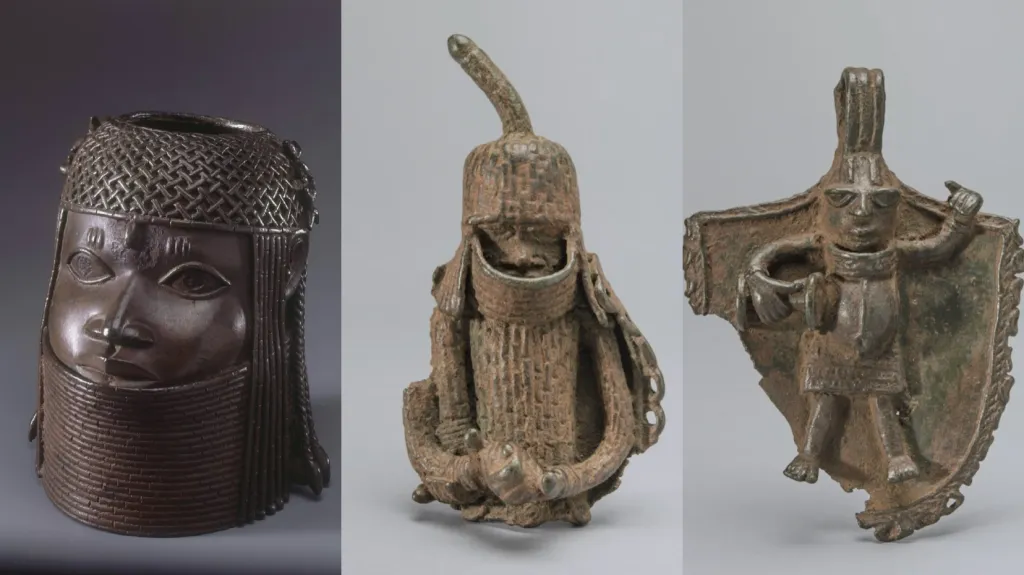
The University of Cambridge said today that it has given Nigeria’s National Commission for Museums and Monuments (NCMM) legal ownership of 116 Benin artifacts from the Museum of Archaeology and Anthropology (MAA) collections. The NCMM runs the artifacts under a management agreement with the Benin Royal Palace.
The NCMM formally asked for the repatriation of artifacts confiscated by British troops during the sacking of Benin City in 1897 in January 2022. The University Council backed the claim, and the UK Charity Commission then gave its permission.
In due time, the majority of the artifacts will be moved to a new location. A few artifacts will still be on loan and on exhibit at the Museum of Archaeology and Anthropology, where visitors, students, and scholars can see them.
The university’s choice is in line with what other museums in the UK, US, and Europe have promised to do.
British soldiers stole the 116 articles, most of which were made of brass, when they destroyed Benin City in February 1897. This was part of the “Punitive Expedition,” which was sent to settle a violent trade dispute that had happened the month before.
The MAA is one of several UK museums that have a lot of items from Benin that were taken in 1897. It has been working on long-term research and engagement projects with people from Nigeria, the Royal Court of the Benin kingdom, and Nigerian artists, academics, and students.
Since 2018, MAA curators have gone to Benin City for study and liaison visits. During these travels, they have met with the Oba, members of the Court, state and federal government authorities, and cultural representatives. In 2017, the University also hosted the Benin Dialogue Group. In 2021, it welcomed delegates from NCMM and the Royal Court to Cambridge.
Olugbile Holloway, the Director-General of Nigeria’s National Commission for Museums and Monuments, said, “This is a turning point in our talks with the Museum of Archeology and Anthropology at the University of Cambridge, and we hope that this will encourage other museums to do the same.” When cultural relics are returned to us, it’s not simply the actual object that comes back; it’s also the pride and dignity that were lost when these goods were taken in the first place. We want to congratulate the Honorable Minister of Art, Culture, Tourism, and the Creative Economy, Hannatu Musawa, for all of her help in making this possible. We also want to praise Cambridge for taking this step in the correct direction. “We can’t wait to welcome the artifacts back home soon.”
“It has been very rewarding to talk with people from the National Commission of Museums and Monuments, the Royal Court, and Nigerian scholars, students, and artists over the past ten years,” said Professor Nicholas Thomas, Director of the Museum of Archaeology and Anthropology. There has been growing support, both in the US and around the world, for returning artifacts that were taken during colonial brutality. The whole University community has strongly supported this comeback.
About the Author