
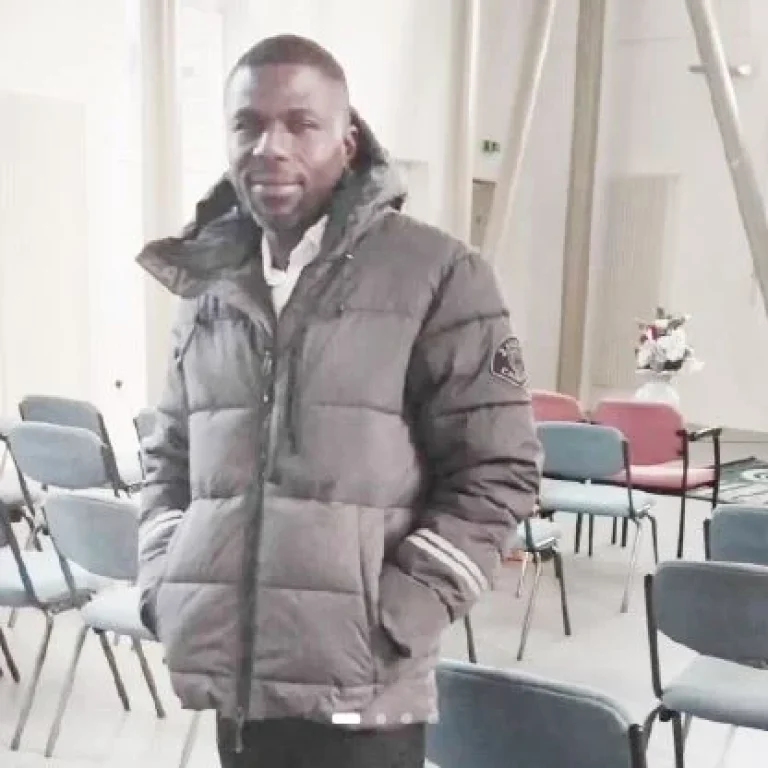
The death of Nigerian student Douglas Izevbigie in the UK has raised new worries about chronic illnesses among Nigerians living abroad. Members of the community have started a fundraising campaign to help pay for his burial.
The PUNCH claims that a GoFundMe page was set up after he died on January 21 in a UK hospital after a long fight with severe leukemia.
A woman named Sephora organized the campaign, which was circulated widely among Nigerians in the UK. She said the money would help the deceased’s sister, Kate, and their family pay for the funeral and other costs.
Sephora, who said she worked with Kate, stated that Douglas, who is 37 years old, came to the UK in 2024 as an overseas student to get his master’s degree at Sheffield Hallam University.
She said that he was diagnosed with a very aggressive kind of leukemia in the middle of his studies last year and had to go to the hospital a lot because of problems.
“Last year, in the middle of his studies, he was diagnosed with a very aggressive form of leukemia. She wrote, “He got treatment and was often in and out of the hospital because of problems.”
“Even through all of that, he kept trying to keep up with his studies, which showed amazing strength and determination.”
She also said that Douglas died suddenly after his sister found him sick and lifeless in his room.
“Sadly, Douglas died suddenly on January 21.” His sister found him sick and lifeless in his room and took him to A&E. Unfortunately, he died despite getting timely medical care, the appeal said.
Kate had just lost her mother in Nigeria and had been Douglas’ main support system during his illness, so Sephora said the loss was especially hard for her.
“This has been a huge loss for Kate, especially because she just lost her mother in Nigeria. “Kate helped Douglas the whole time he was in the UK, including paying for his trip here and being there for him while he was sick far from home,” she said.
She said that the family wanted to bury Douglas in the UK because it would be too expensive to send his body back to Nigeria.
“We are collecting money to pay for Douglas’s burial in the UK and any other unexpected bills that may come up during this time.
She said, “The family’s plan is to bury him here because the costs of sending him back to Nigeria and having a funeral there would be too high.” She asked for funds and assistance.
After hearing of his death, a number of Nigerians rushed to social media to voice their worries over what they called an increasing incidence of chronic sickness cases among Nigerians living in the UK.
Modupe Adeboye-Ayoroh commented on X, “Now this is the height of ‘too many’ Nigerians in the UK getting sick with chronic illnesses and dying soon after.” Can doctors look into this pattern and tell them what might be causing it, if it can be avoided for other people?
Another person, @EmperorJakarta, told Nigerians moving to the UK to make sure they have regular medical checkups.
The statement said, “Every Nigerian who comes to the UK should be encouraged to immediately register with a GP and get full body checks, including all organs, to make sure there aren’t any underlying problems that need to be treated or managed.”
Osamuyi, another friend, wrote, “My classmate in school” as a tribute. Douglas, your death is a big loss for us. “May God give your family the strength to get through this loss.”
Olumide Adeyemi also questioned the trend, adding, “I don’t know if it’s just me, but I’ve seen a lot of Nigerians in the UK get diagnosed with leukemia.” Is it that the sickness isn’t found in Nigeria, or is it what people eat there?
Douglas died fewer than five days after another Nigerian in the UK, Saburi Adeniji, died after suffering a serious brain stem injury.
The non-league club said on Friday morning that Adeniji, a footballer and left winger for Kings Park Rangers Football Club in Sudbury, Great Cornard, Suffolk, had died.
The club reported that he had been in intensive care and stayed alive until his family could make plans to come to the UK. Before he died, people had asked for prayers and money to help him.
The events have sparked further conversations among Nigerians living abroad regarding health awareness, getting diagnosed early, and getting medical care while living overseas.
About the Author