
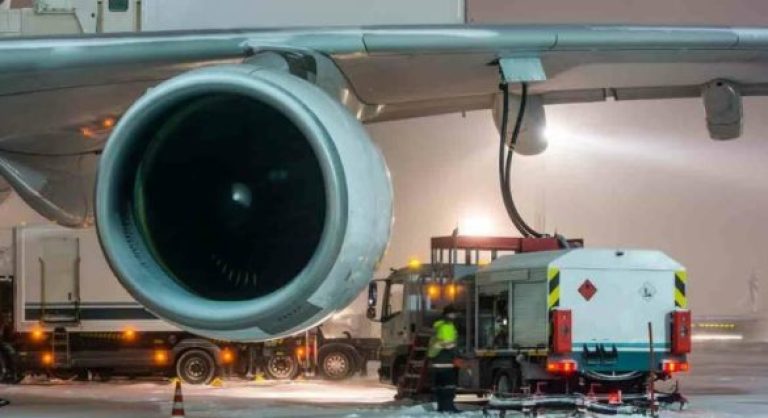
Nigeria’s aviation industry is facing a hidden but potentially deadly threat: the rise of jet fuel supplied on the black market.
According to the Daily Independent, there is a dangerous trade in low-quality aviation turbine kerosene (Jet A-1) that is routinely sold as cheaper alternatives at crowded airports with increased passenger numbers.
Experts in the field say that poor fuel quality can hurt airplane engines, raise maintenance costs, and, in the worst situations, put lives at risk.
What looks like a short-term business benefit for certain operators is actually a long-term risk to airlines, regulators, and passengers alike, which lowers trust in an industry where safety margins should never be optional.
At an aviation colloquium organized by CITA Energies in October of last year, regulators, fuel suppliers, airline operators, and energy specialists gathered to look at the state of Nigeria’s jet fuel supply chain. This was the first time the alarm was sounded in public.
During this meeting, people who had a stake in the issue talked openly about the existence of a parallel market for uncertified fuel.
They didn’t name names, but their message was clear: the black market is real, it’s becoming bigger, and the industry needs to deal with it directly or face long-term problems that are much worse than any short-term savings they think they might get.
A Place Where Cheap Things Can Get Expensive
In an exclusive interview with Dr. Thomas Ogungbangbe, Chief Executive of CITA Energies Ltd., it was learned that his worries about the apparently thriving jet fuel black market come from decades of expertise in the downstream energy business.
He says that the problem isn’t just price competition; it’s also quality compromise. He said that some operators get their goods from modular refineries that aren’t allowed to make aviation-grade fuel or recycle household kerosene and sell it as Jet A-1.
He warned, “If you think you’re getting cheaper goods, you might have to pay for them when you go for your check, even more than once.”
“Some companies sell household kerosene instead of aviation turbine kerosene because it’s cheaper for them to do so.” These modular refineries don’t even have permission to create anything for jets. Yes, the carbon chains may seem the same, but aviation fuel is all about accuracy.
He presented a clear analogy to make his point: “Let’s say you have flour.” You want to create a cake, I want to make a doughnut, and someone else wants to make bread. We have the same flour, but the end result is very different. That’s exactly what happens to fuel. It’s like preparing bread when you need cake if you use the wrong standard for flying.
He underlined that these kinds of actions let dishonest suppliers undercut honest marketers who spend a lot of money on approved imports or fuel made in a refinery, making the playing field unequal and rewarding those who don’t follow the rules.
The Temptation
Some stakeholders at the colloquium had the same worries. Airline representatives said that high operational costs, tight margins, and foreign exchange instability make cheaper gasoline look good. They did, however, warn that this is exactly what drives the illegal market.
Dr. Ogungbangbe was very clear about the moral risk involved.
“I wouldn’t work for a company that cuts corners to make more money than is normal, even though I’ve been in the business for decades.” I won’t do it because I know what it means in the long run. You might not notice it at first, but ultimately everyone will. It’s like body language turning into body odor.
He said that everyone at the colloquium agreed that awareness is the best way to protect yourself. Suppliers and regulators may help airlines make smart choices by telling them what’s going on in the market. This way, airlines won’t be tricked into buying things at prices that are too low, which hides long-term dangers.
The Dangote Refinery and the False Sense of Security
People all over the world praised the opening of the Dangote Petroleum Refinery as a major step toward Nigeria’s energy independence, particularly the supply of aviation fuel. The refinery has greatly reduced Nigeria’s dependency on imports by being able to supply not only Nigeria’s jet fuel needs but also those of West Africa.
Dr. Ogungbangbe said that having local resources doesn’t always mean that malpractice won’t happen.
He remarked, “The local refinery has shown that it can meet all of our jet fuel needs with skill, depth, capacity, ability, and dependability.”
“But each company may have its own way of running its business. We practice capitalism. If I have a relationship in Rotterdam or Hong Kong and the pricing is better for me, what’s stopping me from doing that?
This globalized trading environment, along with the fact that jet fuel transactions are mostly in dollars, makes it possible for some participants to take advantage of arbitrage possibilities, whether they are legal or not.
Why the Black Market Keeps Going
Even though the local supply has gotten better, the black market is still going strong because of several structural problems. Some marketers can’t afford to buy authorized fuel in volume, so they have to look for cheaper, illegal sources. Market fragmentation, where a lot of marketers are fighting for a small number of airlines, makes price wars worse.
Currency pressures make things considerably harder because not everyone in the industry has easy access to dollars. Dr. Ogungbangbe says that these factors, when combined, make it tempting to “bend the rules” in a market where large profits and commercial lushness make not following the rules seem like a good idea.
Standards for the whole world, but responsibilities for each country
The International Civil Aviation Organization (ICAO) and the International Air Transport Association (IATA) have long stressed that fuel quality is a key part of aviation safety that cannot be changed.
ICAO’s Annex 6 and IATA’s Guidance Material on Aircraft Fueling stress the tight rules for testing, tracking, storing, and handling gasoline. They also warn that using contaminated or off-spec fuel can cause engine flameouts, corrosion, and catastrophic failure. Both groups say that operators who are proven to be involved in gasoline quality infractions should face harsh punishments, such as having their operating licenses suspended.
These global standards are also used in Nigeria. The Nigerian Midstream and Downstream Petroleum Regulatory Authority (NMDPRA) is in charge of giving licenses, checking on, and punishing fuel producers and marketers. Dr. Ogungbangbe praised its work, saying that the regulator “is taking this issue seriously and has been handing out punishments.” They have done a great job of striving to protect workers’ rights.
The Nigerian Civil Aviation Authority (NCAA) also has a role to play. It makes sure that airports follow safety rules for aviation, such as Part 18 rules about how to store, handle, and make sure the quality of fuel. The NCAA’s job is to make sure that only authorized gasoline gets to planes, at least in official supply chains.
The Price of Ignoring
Even with these guidelines, it is still hard to enforce, especially outside of big cities. Industry experts say that better cooperation between the NMDPRA and NCAA, together with checking the finances of fuel marketers, might make it harder for black market operations to happen.
In the end, the black market for jet fuel is not simply a business or energy issue; it is also a safety issue for planes that affects the whole country and region. As Nigeria tries to become the main center for aviation in West Africa, people will be more interested than ever in how safe its fuel supply system is.
Dr. Ogungbangbe’s message is clear: We need to keep the airlines up to date on what’s going on. Awareness, rules, and ethics need to function together. In aviation, the price of compromise is just too great.
Nigeria’s aviation future hinges on choosing safe skies above black gold, and everyone needs to do so together and with conviction.
About the Author