
Witnesses who spoke before the U.S. Congress Foreign Affairs Committee said that Nigeria is in danger of becoming a significant flashpoint in a growing global problem of religious freedom, with widespread bloodshed between Christians and Muslims.
The warning comes from written testimonies released before the committee’s joint hearing, which is taking place today (Wednesday). Witnesses said that repeated killings, displacement, and insecurity are signs of a growing religious conflict in Nigeria, according to The PUNCH.
The House Subcommittee on Africa and the Subcommittee on the Western Hemisphere will hold the hearing together to look into what US politicians call growing dangers to religious freedom around the world. It is called “Defending Religious Freedom Around the World.”
The committee’s website posted written testimonies from important witnesses before the session. These are likely to be read aloud when the hearing begins.
Sam Brownback, the former US Ambassador-at-Large for International Religious Freedom; Mark Walker, the Principal Advisor for Global Religious Freedom at the US State Department; Grace Drexel, the daughter of detained Chinese pastor Ezra Jin; and Dr. Stephen Schneck, the former chair of the US Commission on International Religious Freedom, are all set to testify.
Brownback stated in his prepared speech, “Radical, militant Islam continues its efforts to purify the MENA region and beyond.”
Syria and Nigeria are two of the most important places for them to try to gain power by eliminating all other religions, even other Muslims.
“The people of faith who are being persecuted are America’s best friends when it comes to spreading freedom around the world.” He said, “We should see and treat them as such.”
The former ambassador said that religious freedom is a major fault line in world politics. He warned that authoritarian and totalitarian governments are seeing faith communities as threats to their control over the state.
Brownback added in his prepared speech, “Religious freedom is now one of our main weapons against the dark alliance that has come together against us.”
Brownback called Nigeria a key flashpoint in the world and said it was “the deadliest place on the planet to be a Christian.”
He said that the violence patterns across the country show that the religious problem is becoming worse and will have effects outside of Nigeria.
He added, “There are early warning signs of a Muslim-on-Christian war brewing across Africa,” and Nigeria is at the center of that danger.
The former ambassador also said that foreign involvement in Nigeria’s security situation is worrying. He said that backing from nations like “China, Russia, Turkey, and Saudi Arabia” might make things worse if it is not closely watched.
Brownback warned that if people didn’t respond quickly, the unrest may get worse and lead to mass killings like those in Iraq.
Schneck said in his own prepared testimony that freedom of religion or belief is in a “historic crisis” around the world because of rising authoritarianism, religious nationalism, and state failure.
“Freedom of religion or belief is in trouble in the modern world.” “Persecution is on the rise around the world, whether you look at it in terms of culture, institutions, and laws, or just the sheer number of incidents,” Schneck wrote in his own words and not on behalf of the commission.
The former chair of the USIRF said that Nigeria, Syria, and Sudan are all places where weak government and rampant violence have made life unsafe for religious groups.
“Right now, Nigeria, Syria, and Sudan are examples of places where these kinds of situations endanger freedom of religion or belief.
“Both Nigeria and Syria are going through a lot of social instability and
Their governments have not been able to stop rampant violence against religious communities.
He wrote, “Both have what were once called Entities of Particular Concern operating within their borders.”
The former USIRF chairman said that these kinds of places let armed groups, rebels, and criminal networks use religious identity to their advantage, which leads to killings, relocation, and long-term instability.
He also said that the US government hasn’t done a good job under the International Religious Freedom Act, the 1998 law that sets US policy in this area. He said that Washington hasn’t followed through on its promises.
“Based on the International Religious Freedom Act, the US isn’t doing enough.”
The former chairman of USIRF observed, “We have talked a lot but done very little that is consistent and effective.”
Schneck was especially worried about how long it was taking for the US State Department’s International Religious Freedom reports to come out and how there were no new designations of Countries of Particular Concern.
The State Department still hasn’t named any Countries of Particular Concern, Special Watch List, or Entities of Particular Concern. President Biden’s designations for 2023 were supposed to cease at the end of 2025.
“Apparently, Nigeria is the only country in the world that is currently designated as a Country of Particular Concern because President Trump gave it that name. There are no designated Special Watch List countries or Entities of Particular Concern.” He said, “This is very worrying at a time when China and Iran are doing more and more to hurt people of faith.”
He also said that religious freedom campaigning shouldn’t be limited to the persecution of Christians, noting that all faiths and beliefs are protected by international law.
Schneck said, “International religious freedom, as defined by human rights law, is universal.” “Selective advocacy hurts both effectiveness and legitimacy.”
The former head of USIRF said, “The administration has relied on big events (like a one-time Tomahawk strike on Nigeria) and social media statements instead of long-term, country-specific plans.”
“Violations of religious freedom are deeply rooted in legal systems, security practices, and social norms. To fix them, we need to work together over time, coordinate with many countries, and be careful with diplomacy.” It looks like early efforts put more value on visibility than on longevity.
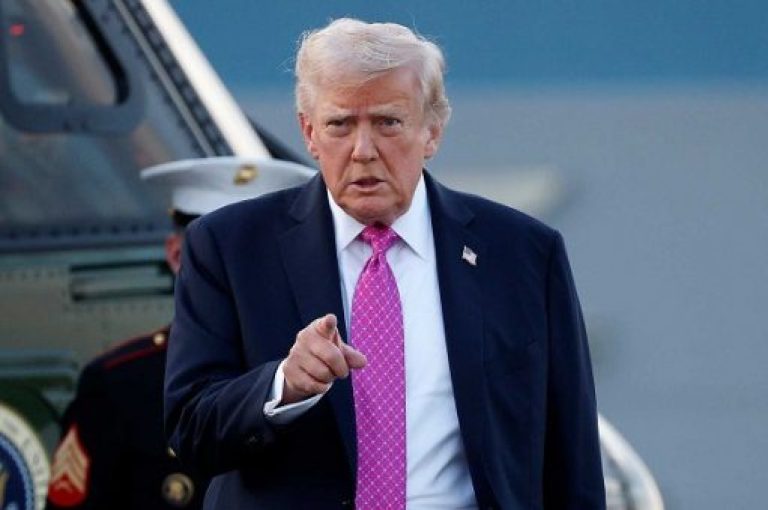
Last year, US President Donald Trump named Nigeria a Country of Particular Concern again because of reports of religious freedom violations. He also threatened that the US would send troops to Nigeria.
On Christmas Day, the US government then struck terrorist hideouts in Sokoto.
The federal administration, on the other hand, rejected accusations of widespread persecution of Christians, saying that insecurity affects people of all religions.
On November 20, 2025, US Secretary of War Pete Hegseth met with National Security Adviser Nuhu Ribadu at the Pentagon to talk about how to work together to deal with the problem.
Ribadu said in December that he had hosted a group of US lawmakers in Abuja as part of ongoing talks between the two countries over security.
The NSA said that the conference was mostly about “counter-terrorism cooperation, regional stability,” and how to “strengthen the strategic security partnership between Nigeria and the United States.”
There was a plenary session of the Nigeria–US Joint Working Group last month to talk about Nigeria’s classification as a CPC.
About the Author