
The resumption of operations at the world’s largest nuclear power plant in Japan was halted today, with the operator stating it is uncertain when the issue will be resolved.
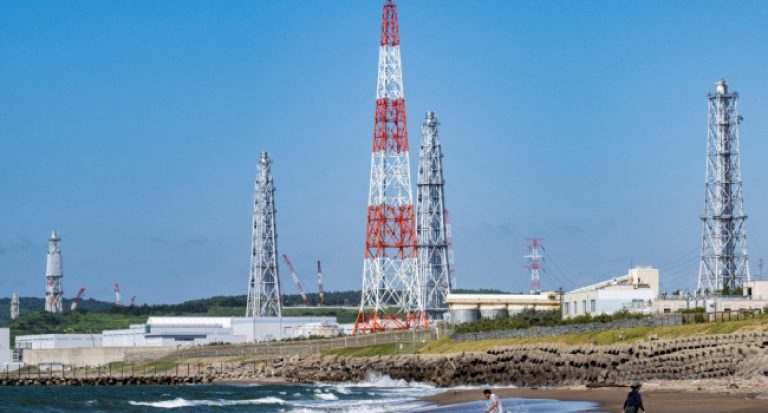
The Kashiwazaki-Kariwa facility in Niigata Prefecture, which had been inactive since the 2011 Fukushima accident, commenced operations to restart on Wednesday following the final approval from the nuclear regulatory authority, according to AFP.
Nonetheless, the operator, Tokyo Electric Power Company (TEPCO), announced on Thursday that “an alarm from the monitoring system… activated during the reactor startup procedures,” resulting in the suspension of operations.
“We do not anticipate a resolution within one or two days.” Site superintendent Takeyuki Inagaki stated at a news conference, “The duration is currently indeterminate.”
“We will currently concentrate entirely on determining the cause of the incident,” he stated.
The alarm that activated prompted TEPCO to “examine the defective electrical apparatus,” spokesperson Takashi Kobayashi informed our correspondent.
He stated, “Once it became evident that the process would require time, we opted to reinsert the control rods systematically,” adding that the reactor “is stable and poses no radioactive threat externally.”
Control rods are devices utilized to regulate the nuclear chain reaction within the reactor core; they can be increased by partial withdrawal or decelerated or halted entirely by deeper insertion.
The restart, originally planned for Tuesday, was postponed due to a technical issue concerning the removal of the rods that was identified last weekend; this problem was fixed on Sunday, as reported by TEPCO.
Kashiwazaki-Kariwa is the largest nuclear power facility globally by theoretical capacity, although only one of its seven reactors has been reactivated.
The facility was decommissioned when Japan ceased nuclear power operations following a catastrophic earthquake and tsunami that caused three reactors at the Fukushima nuclear plant to meltdown in 2011.
Nevertheless, resource-deficient Japan seeks to reinstate nuclear energy to diminish its dependence on fossil fuels, attain carbon neutrality by 2050, and satisfy increasing energy demands from artificial intelligence.
Kashiwazaki-Kariwa is the inaugural TEPCO-operated unit to recommence operations since 2011. The business also manages the beleaguered Fukushima Daiichi facility, which is currently undergoing decommissioning.
Public sentiment in Niigata is significantly polarized: Approximately 60 percent of locals are against the restart, while 37 percent are in favor, as per a survey done in September.
“Tokyo’s electricity is generated in Kashiwazaki; therefore, why should the local populace be endangered?” “That is illogical,” stated Yumiko Abe, a 73-year-old resident, to our correspondent this week during a demonstration outside the facility.
Earlier this month, seven organizations opposing the restart submitted a petition signed by almost 40,000 individuals to TEPCO and Japan’s Nuclear Regulation Authority, asserting that the plant is located on an active seismic fault zone and highlighting that it had a significant earthquake in 2007.
About the Author