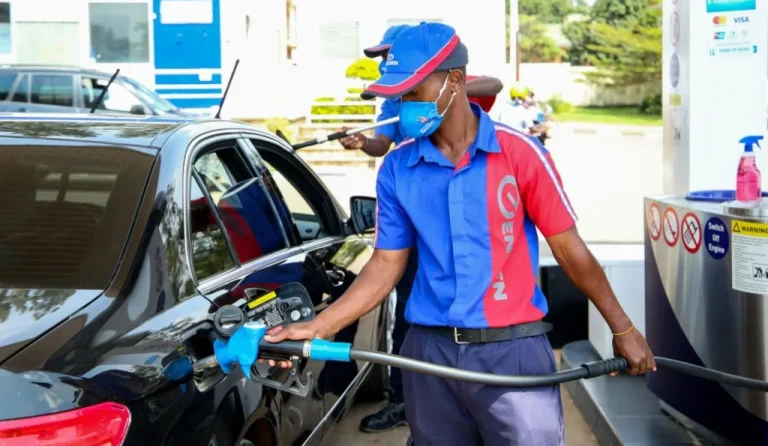

The ex-depot price of Premium Motor Spirit (petrol) has increased to as much as N800 per litre due to private petroleum depots located around Lagos and other important fuel trade hubs.
information gathered from petroleum prices.According to Sunday PUNCH, yesterday’s data revealed that the average price of gasoline at private depots rose significantly in just 48 hours, reducing marketers’ profit margins and sparking new worries about an impending jump in retail pump prices across the country.
PMS was sold for N703 per litre on Friday, up from N702.50 on Wednesday, December 31, 2025, at Lagos’ Dangote depot, which regularly has the lowest gas prices.
Dangote had a slight increase, but other private depots saw more significant changes.
Petrol prices increased by N74 per litre in just two days, from N726 per litre at Shellplux and AIPEC earlier in the week to N800 per litre at Eterna and Integrated depots on Friday.
Similarly, gasoline prices at Aiteo and Lister depots increased from the N750–N760 range noted on Wednesday to N780 per liter.
In Warri, one of the nation’s major centers for petroleum logistics, the effect was particularly noticeable.
According to the report, prices increased to as much as N805 per litre on Friday, despite Matrix Energy and other large depots selling gasoline for N800 per litre on Wednesday.
Tighter supply chains and increased transportation costs caused the Warri market to react more quickly, particularly as marketers positioned volumes ahead of expected scarcity.
Dangote Petroleum Refinery lowered the ex-depot price of gasoline from N828 to N699 per liter last December.
The refinery issued 20 price adjustments for gasoline this year, the most recent of which went into effect on December 11, 2025.
Market participants attributed the price spike to the Dangote Refinery’s closure of its gasoline division, which had just emerged as a significant domestic PMS supplier and had assisted in stabilizing prices when fuel subsidies were eliminated.
The petroleum price’s chief executive officer commented.The most recent surge, according to Jeremiah Olatide, was a deliberate move by importers looking to make up for losses they suffered in December.
He clarified that the drastic price cut by the Dangote Refinery, which supplied gasoline for roughly N699 per litre, severely hurt importers and forced many private companies to sell below their landing costs.
Olatide claimed that importers were purposefully raising prices in order to recover losses following the Dangote Refinery’s sharp price cut in December.
He continued by saying that because of the ongoing renovation at the Dangote Refinery, marketers were already accounting for the possibility of a supply shortage in January, which they fear could momentarily restrict domestic supply.
He said, “Importers are speculating that the refinery’s plant upgrade may result in supply constraints in January, and they see this as an opportunity to make up for December losses.”
He claims that certain depot operators are purposefully keeping quantities in storage so they may sell them when there is a supply interruption and at prices higher than their landing expenses.
According to Olatide, “they are keeping products in tank, hoping to sell above their landing cost as soon as there is a supply glitch.”
He did, however, warn that the plan might not last long since the Dangote Refinery might react forcefully if supply returns to normal.
“We’ll see how the new pricing works out, but the refinery will probably fight back,” he continued.
Private depot owners have started repricing available stock due to Dangote’s temporary supply reduction, citing replacement prices, foreign exchange volatility, and uncertainty around import timetables.
The price of petroleum.The article also pointed out that the naira continued to decline on the parallel market, trading at N1,495/$ on Friday compared to N1,475/$ on Wednesday, while Brent crude ended at $60.20 per barrel on Friday. These developments further put pressure on fuel prices.
increases in depot prices usually precede increases at gas stations, and industry observers caution that if the current trend continues, retail fuel prices might surpass N700 per litre in a number of cities.
Petrol marketers claimed that unstable exchange rates, logistics expenses, and financial difficulties had reduced profits, making it hard to absorb depot price hikes without changing pump prices.
Petrol prices in Nigeria have been set by market forces, such as crude pricing, exchange rates, logistics, and supply availability, since the downstream petroleum sector was fully deregulated.
Through domestic refining, the Dangote Refinery, which can process 650,000 barrels per day, has increased expectations of price stability. However, given that imports are still expensive, the temporary shutdown of its gasoline unit has highlighted the brittleness of supply dynamics.
About the Author