

The National Space Research and Development Agency (NASRDA) has highlighted new worries about Nigeria’s security problems getting worse. They say that terrorist groups in the country have moved from regular mobile networks to satellite-based communication systems.
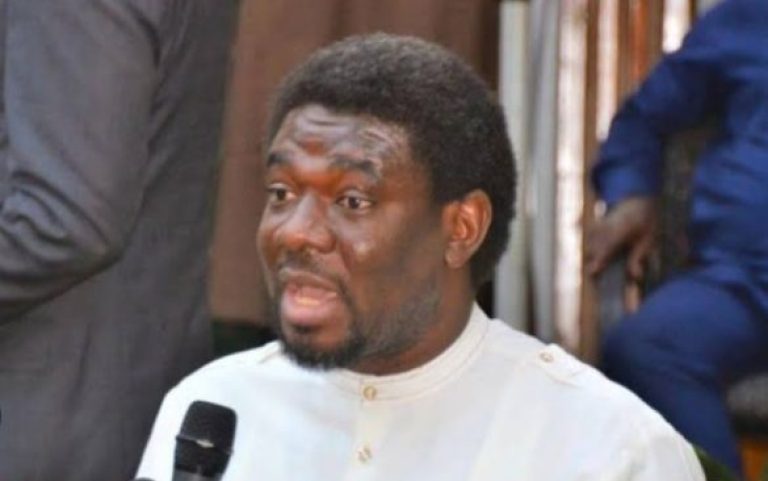
Dr. Matthew Adepoju, the Director General of NASRDA, said this on Channels Television yesterday night.
He said that shutting down cell networks during security operations no longer stops terrorists from doing their jobs since criminal groups now use more advanced satellite channels.
“It breaks my heart when state governments cut off communication on our cell phones because most of them aren’t really using mobile networks to talk to each other. They are getting via the satellite platform. Adepoju claimed, “The terrorists are using satellites to talk to each other.”
He said that a lot of Nigerians don’t grasp what the country’s current satellites can do. He said that they are meant for imagery, not real-time video monitoring.
“People sometimes don’t understand what satellites should do and what they can do. The one the military has and the one we sent up are both imagers. “They don’t record videos, and they go all over the world,” he claimed.
Adepoju said that Nigeria’s current satellites—NigeriaSat-1, NigeriaSat-X, and NigeriaSat-2—take an average of three days to return to the same place, which makes it hard to respond quickly to security threats that move quickly.
He stated that a new group of satellites that President Bola Tinubu approved would cut the time it takes to revisit to four to six hours, depending on where they are in orbit.
He also said that the agency aims to keep adding to the fleet with four or five more satellites so that it can monitor things almost in real time.
“If you want to cover the whole world, we need to send a lot of them into space. One is leaving, and another is arriving. He remarked, “That’s why we chose the constellation of the four that the president has approved for us.”
The NASRDA DG also said that the agency has secured a deal with a U.S.-based technical partner that runs around 300 satellites that can provide advanced signal analytics to improve Nigeria’s intelligence capabilities.
The platform is still not available, though, because the money needed to start the cooperation has not yet been released.
Adepoju said that Nigeria needs to spend a lot of money on security systems that are based on research and keep making new satellites to fill in the holes in monitoring.
His statements come months after the Federal Executive Council approved the launch of four new satellites—three for observing Earth and one for radar—to help the country better keep an eye on crime.
Chief Uche Nnaji, the Minister of Innovation, Science, and Technology, claimed that the new radar satellite would take pictures “day, night, during rain, every time of the day,” which would help the military in places like the Sambisa Forest.
Adepoju also denied that Nigeria had lost one of its satellites, saying, “We never lost the satellite,” and explained that it was safely decommissioned after having power problems because of a broken solar panel.
He said that Nigeria’s first astronaut is still in the works, even though there are funding problems. He said this is happening through a cooperation with the Space Exploration and Research Agency (SERA) and that the selection process is already underway.
About the Author