
The federal government hasn’t said anything about a 2020 legal brief that Prof. Joash Amupitan, the head of the Independent National Electoral Commission (INEC), is said to have written. In it, he said that the Boko Haram insurgency and attacks by Fulani herdsmen were part of a coordinated anti-Christian campaign that needed international help.
As of press time, calls and messages to the Minister of Information and National Orientation, Mohammed Idris, asking for the government’s opinion on Amupitan’s legal brief had not been answered, according to Daily Trust.
This is true even though Saharareporters reported the problem on Friday and Amupitan has not yet responded. Our reporter tried to call him numerous times on his cell phone but couldn’t get through. He didn’t answer a text message that was sent to him either. You couldn’t get in touch with his Chief Press Secretary, Dayo Oketola, either.
But sources close to the INEC chairman say he was too busy with the Anambra governorship election that took place over the weekend.
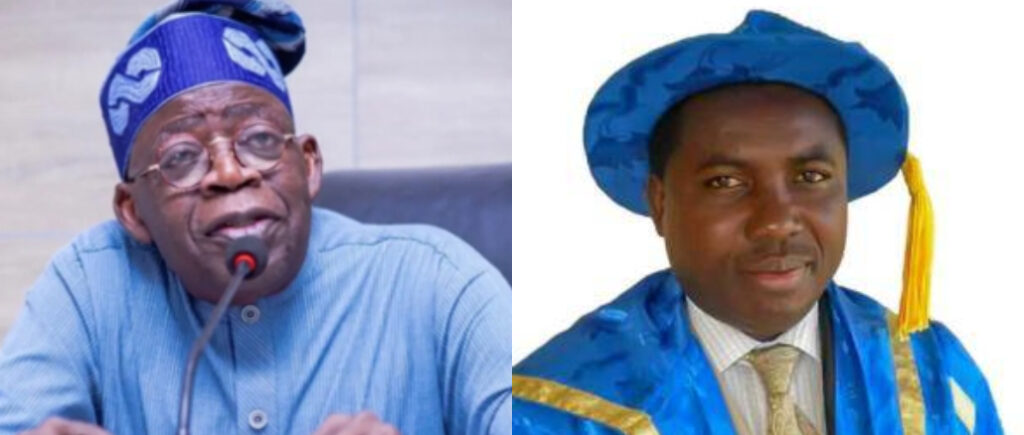
President Bola Ahmed Tinubu swore in Amupitan as chairman of INEC on October 23, after the Senate confirmed him.
The International Committee on Nigeria (ICON) and the International Organisation on Peace-building & Social Justice (PSJ) published a book in 2020 called “Nigeria’s Silent Slaughter: Genocide in Nigeria and the Implications for the International Community.” He was one of the people who wrote for it.
The report talked about the supposed systematic killings of Christians in Nigeria and asked for help from other countries.
The title of Amupitan’s 80-page chapter was “Legal Brief: Genocide in Nigeria.”
When asked if the Senate knew about Amupitan’s claim of Christian genocide before confirming his nomination, Yemi Adaramodu, the Senate’s spokesman, said that the upper house did not know about it.
“I’ve never seen it. We don’t know what it is, and neither does the Senate.
“We’ve never seen anything before. You might be the only one who knows about it. He said, “This is something we don’t know, something we don’t know.”
Over the weekend, our correspondent got a copy of the legal brief from the publisher’s website. It said that the number and pattern of killings and displacements in Nigeria met the definition of genocide under international law and that the federal government was complicit by not protecting the affected communities and making sure justice was done for the victims.
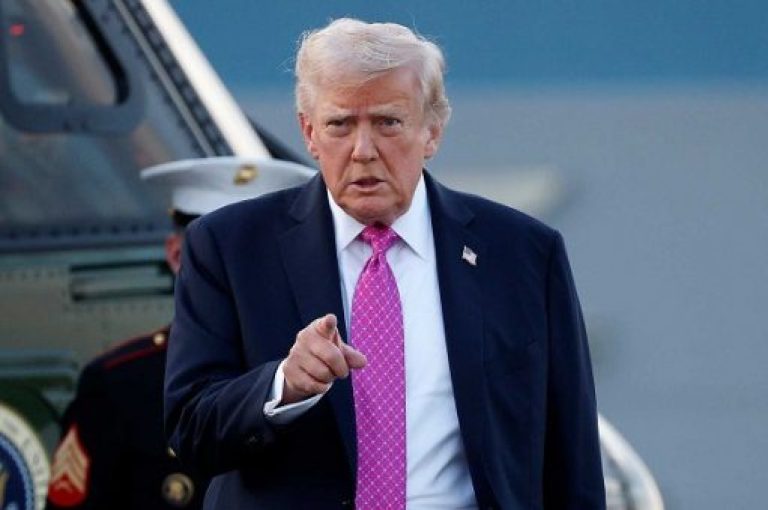
Last week, the federal government dismissed similar claims when President Donald Trump re-designated Nigeria as a Country of Particular Concern (CPC) and threatened military action. This was linked to a supposed Christian genocide.
The Nigerian government had said that the security problem affected all religious groups and was not aimed at Christians.
The Supreme Council for Sharia in Nigeria (SCSN) has called for Amupitan to be removed because his 2020 viewpoint is very different from the government’s long-held position.
Amupitan’s stance and suggestions on “genocide”
Amupitan, who was then a professor at the University of Jos in Plateau State, wrote in the article that “it is a well-known fact that crimes against humanity, war crimes, and genocide are happening in Nigeria.”
The Nigerian government, international investigators, and rapporteurs have not used the word “genocide” to describe the ongoing carnage in Nigeria. Is this on purpose or an accident? ”
He went on to say that the “alleged involvement of the state and non-state actors in the commission of crimes under international law in Nigeria has complicated an already complex situation.” Because of this, the situation calls for an immediate intervention from a neutral and unbiased third party, namely the UN and its main bodies, the military and economic superpowers, and international organizations of intergovernmental nature at the regional or sub-regional level.
“In a globalized world, international law acts as a binding cord; state sovereignty is diminished to serve the collective interests of the global community, solidified through a blend of consent, consensus, and compelling norms.”
He said that “Boko Haram sect is a desire for the Islamisation of Nigeria.” The Fulani ethnic terrorists have also used violence against Christians, just like the Boko Haram insurgents have.
“The Fulani want to make all of Nigeria Muslim, thus they have always used the tools of the State, which the colonialists gave them on purpose, to further their cause. During the military dictatorship, states and LGAs were created and borders were arranged in a way that benefits the Hausa-Fulani ethnic community both economically and politically. The military government made sure that the Hausa-Fulani group got most of the important strategic jobs. They also made it easier for them to get promoted in the public sector, notably in the military, police, and customs. The strategy worked well for them since the other ethnic groups didn’t know that they wanted to make Nigeria a Muslim country. By the time some of the other ethnic groups started to understand the plan, it was too late to stop it. Islamic fanatics have taken over the military, police, customs, and the full public service, putting them in charge of the last part of the plan.
Amupitan had told the U.S. in his legal filing : The Department of State sent the case to the Criminal Division of the Department of Justice.
He had also asked the UN Security Council, its relevant bodies, and the major world powers to, among other things, tell the parties to the Genocide Convention to sue Nigeria in the International Court of Justice (ICJ) for not stopping and punishing genocide as required by Articles 8 and 9 of the Convention. He also asked the UN, the African Union (AU), or ECOWAS forces to consider military intervention as a last resort, as stated in Article 42 of the UN Charter.
The Sharia Council wants to look into Amupitan’s appointment again.
Over the weekend, the Supreme Council for Shari’ah in Nigeria (SCSN) asked President Tinubu to look over Amupitan’s nomination.
Nafiu Baba-Ahmad, the council’s Secretary-General, said in a statement that the document was a “toxic legal brief” that made “highly provocative, distorted, and bigoted” claims about the nature of conflicts in Northern Nigeria and “maligning the historical legacy of Sheikh Uthman bn Fodio’s jihad.”
The SCSN said it was “unfortunate and disturbing” that someone who is currently in charge of protecting Nigeria’s democratic integrity may have earlier had such divisive and sectarian beliefs.
The council concluded, “If Prof. Amupitan really wrote the document, his comments are not only unprofessional for a person of learning, but they are also very harmful to the unity, peace, and stability of our country.”
It called Amupitan’s supposed study of “Christian genocide” and his description of violence in the north as an extension of the 19th-century jihad headed by Sheikh Uthman bn Fodio incorrect and deceptive.
The statement claimed, “Nothing could be further from the truth.”
“If we ignore the emotional distortions and look at the facts objectively, we can see that the violence in Northern Nigeria is complicated and has many sides.” Violent radicals, banditry, and communal disputes that are caused by neglect, poverty, and social injustice have hurt both Muslims and Christians a lot.
The council said that Muslims had experienced more deaths in the impacted areas, and it added that it “defies logic and decorum to reduce these tragedies to a one-sided narrative of Christian persecution.”
It also criticized attempts to connect the region’s current instability to Sheikh Uthman bn Fodio’s jihad, calling such statements “a malicious distortion of history and a deliberate misrepresentation of one of West Africa’s most respected reform movements.”
The council went on to say, “The jihad of Sheikh Uthman was not a war of hatred or extermination but a spiritual, moral, and social reform movement aimed at restoring justice, knowledge, and good governance.”
The SCSN noted that the INEC chairman’s job requires the greatest levels of impartiality, neutrality, and inclusion, which it said were not in line with the feelings expressed in the alleged brief.
It said, “Prof. Amupitan has shown a deep-seated bias in the content of that document, which makes it very hard to believe that he can hold free and fair elections in a nation with many religions and ethnic groups.”
The council also said it was worried that someone like that could have gotten security clearance and been vetted before being given such a sensitive job. They called it “either a grave lapse in due diligence or a reckless approval that undermines public trust in the system.”
So, it asked President Tinubu to “critically review the appointment of Prof Amupitan as INEC chairman to protect the credibility of the country’s electoral process.”
“The integrity of Nigeria’s elections cannot be trusted to someone whose record shows open hostility toward one of the country’s largest faith communities,” the statement went on.
The SCSN asked both Muslims and Christians in Nigeria to reject stories that divide them and instead work together to fight problems like poverty, corruption, insecurity, and injustice.
Amupitan’s legal brief doesn’t hurt his new job as Senior Advocates of Nigeria (SANs).
Our correspondent talked to lawyers who indicated that Amupitan’s legal brief does not hurt his current job as chairman of the INEC.
In a phone call with our reporter, Uyo-based lawyer Nwoko Uwemedimo (SAN) said that the situation does not call for resignation or firing, and that the government’s position and the chairman’s former opinion are two separate matters.
“The government shouldn’t fire him.” That is his belief if he feels strongly about what he said before. The government doesn’t deny that people are being killed; it just doesn’t agree that such killings are genocide against Christians. The government recognizes that there is terrorism and danger, but they say that the violence hurts both Christians and Muslims. He said, “The problem is that people keep killing each other. That’s the real problem.”
Uwemedimo said that the INEC chairman’s job does not have anything to do with what he said in the past, thus it is not reasonable to say that there is a conflict of interest.
“I don’t think he needs to quit his job because of it.” He doesn’t have to worry about that moral weight because of the job he has. It would be a different story if he were named National Security Adviser, which deals directly with terrorism and national security. “But as chairman of INEC, his duties are completely different,” he said.
He went on to say that there is no denying that people are being killed in Nigeria, and that both the government and society need to face this fact head-on.
Uwemedimo also said that Nigerian government and society seem to have become numb to violence.
“Our leaders no longer feel horror at the death of people. Death doesn’t scare us anymore because we’ve buried so many people. In a normal community, the death of even one individual should be seen as a national tragedy. But in Nigeria, we tread on blood and keep going.
“I wouldn’t change my mind if I were him. It would be wrong for the government to attack him for telling the truth about the deaths in our country. He continued, “Debating his resignation is like chasing shadows and ignoring the substance.”
Josiah Adebayo, Head of Chambers at Akin Akinsanya (SAN) in Ilorin, Kwara State, said, “I don’t think it is a conflict of interest or will affect his job.” You can’t change the system if you’re not a part of it. “You can’t just stand outside and keep criticizing; you have to be a part of the system to make real change,” he stated.
He said that Nigeria’s political and social climate often makes ethnic and religious feelings stronger in public debate, which might make it harder to judge the abilities of public leaders fairly.
He stressed that other groups, like Muslims and traditional worshippers, have also been affected by insecurity, and that everyone in society should speak out about their worries.
“The government didn’t dispute that Christians are being killed. The administration said that it’s not just Christians. He said, “So, there isn’t really a conflict there.”
Adebayo responded to calls for the chairman’s dismissal by saying that the law guarantees the independence of the Independent National Electoral Commission (INEC) and its leaders.
He made it clear that the president can’t just fire the chairman without going through the proper channels.
“The Senate has already approved him. The president can’t just fire him; he has to follow the same steps that got him confirmed. He could sue the government and ask for damages if they do that. But I don’t think the administration will go that far. It should instead work on making the country safer. He said, “Everything else will fall into place once security is restored.”
Akin Onigbinde (SAN) indicated that he hadn’t read the ruling in question and couldn’t say much about it, but he did say that there is a clear institutional framework for appointing people to important national positions.
“This includes checking and confirming by the National Assembly and other appropriate entities. Any worries about suitability should have been dealt with throughout that procedure. There is a way to choose persons for office.
“The nomination goes via the right Senate committees and then the National Council of State. He replied, “You can’t blame him if he was properly confirmed through those institutional gates, which are there to make sure due diligence.”
“Amupitan’s claim of genocide shows that he is honest.”
Mumini Jimoh (SAN), the former Kwara State Director of Public Prosecution (DPP), had a different opinion.
He said that Nigerians change their viewpoints based on their own situations at different periods.
He claimed that the head of the INEC might have taken such stance without understanding that he would eventually be part of the current government.
He said it was sad for him to hold that opinion because he said there has never been genocide against Christians.
“He must have been breaking the law when he said it, if he really wrote it, but he had the right to his own viewpoint. In Zamfara, thousands of Muslims are killed every day, and the same is true in numerous northern states, such as Kwara North. No one who is thinking clearly can get to such a judgment without being narrow-minded.
“But if he had any decency, he would have turned down this job in a government he said was committing genocide.” He said, “Our elites change their minds like diets.”
He added that the whole thing now comes down to the issue of honesty.
“This is where the issue of integrity comes in.” To me, saying things that aren’t true and writing articles or making statements that aren’t based on anything because of supposed parochial interest shows that you don’t have integrity. You shouldn’t be in charge of an organization like INEC. He said, “This just means that anyone like that can write results that aren’t valid.”
“If he really wrote that legal brief, he should quit.”
Salman Jawondo (SAN), a former Attorney General and Commissioner for Justice in Kwara State, also told our reporter that the 2020 legal brief debate has made things hard for both the INEC chairman and the federal government.
“If he really wrote the report, then means that his job is against the administration he is presently working for. Jawondo remarked, “So, instead of being fired, I think it would be better for him to resign.”
He said that Prof. Amupitan, who was not in the government when the report was created, might have been influenced by the group that paid for the work.
Jawondo, on the other hand, said that the report’s assertions were not true and that the Nigerian government has not carried out any organized genocide against Christians.
He told public personalities not to make broad or unproven claims, warning that these kinds of statements could cause problems if those people eventually work in important government jobs.
“The process of appointing people in Nigeria generally doesn’t get enough attention. He continued, “We’ve had other officials whose credentials or past actions weren’t fully checked, like the former minister of technology and Mrs. Kemi Adeosun.”
“These kinds of things can make the government look bad and hurt public trust.” To avoid similar problems in the future, it is important to carefully check candidates, respect honesty in appointments, and plan ahead. But this isn’t just about President Tinubu. He went on to say that future presidents should learn from this and make sure that they do rigorous background checks on appointees, especially those being considered for sensitive positions.
About the Author