

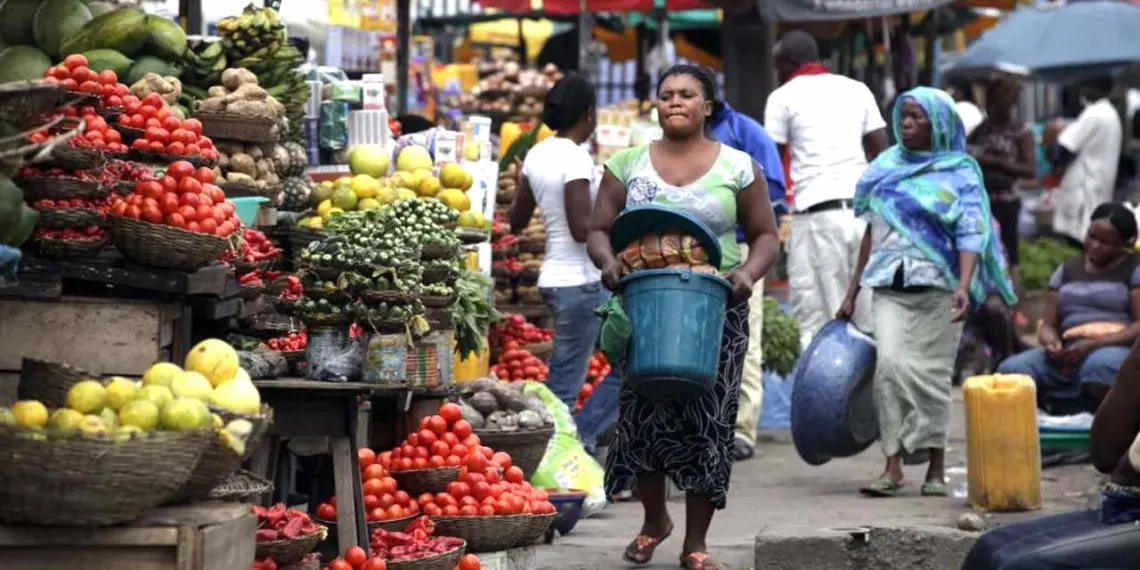
Unbelievable findings surfaced during a Senate investigation, startling the nation. Fruits were left to ripen overnight with calcium carbide, beef was cooked to tenderness with paracetamol, cereals were kept with sniper pesticide, and cassava was bathed in bleach or detergent.
According to The Guardian, yesterday the Senate took action in response to what it called a “public health emergency” by proposing new legislation that would make it more difficult to use harmful chemicals in food processing or production. Those found guilty would face harsher penalties.
The resolution was passed after the Joint Senate Committees on Health (Secondary and Tertiary) and Agricultural Services, Production and Rural Development adopted a damning report that exposed illicit, harmful, and extensively practiced activities in Nigeria’s food supply chain.
An angry lawmaker remarked, “What Nigerians are eating daily is slow poison” during the debate.
“Survival is at stake, not consumer rights.”
A disturbing pattern of chemical misuse in food processing was uncovered during an inquiry session of the Senate that took place on July 17, 2025.
Raw calcium carbide, a welding chemical, was discovered to be used by fruit vendors to hasten the ripening process, which released toxic gases like phosphine and arsenic.
It was said that in order to tenderize tough beef, meat dealers would boil it with paracetamol tablets.
To protect their stored grains against insects, grain merchants would use Sniper (Dichlorvos). The tubers were immersed in detergent or hypo bleach by cassava processors.
To make their peppers and palm oil look more red, vendors would use Sudan IV dye, a forbidden colorant that has been associated to cancer.
Furthermore, some slaughterhouse butchers would burn tyres to remove fur, which would then coat the meat with harmful chemicals. A waxing chemical called Morpholine, which the EU has banned due to its potential to cause harm to the liver and kidneys, was even applied to some of the fruits sold in supermarkets.
Cancer, kidney and liver illnesses, and foodborne infections including cholera and Lassa fever have been directly linked to these compounds, according to the Senate report.
According to the politicians, the repercussions are enormous.
Over 14,000 instances of cholera and 378 deaths were recorded in Nigeria in 2025; 119 individuals died of Lassa fever infections that were linked to food.
Approximately one million people in Nigeria get sick from eating contaminated food every year, which costs the country over $3.6 billion in lost productivity and medical bills, according to the World Health Organization (WHO).
“These are not statistics,” said a senator. “Children and mothers are losing their lives as a result of consuming food that is contaminated with harmful chemicals.”
In retaliation, the Senate decided to tighten punishments for food fraud by revising some statutes, such as Criminal Code Sections 243–245.
Lawmakers have also ordered the following agencies: NiCFOST, the Federal Competition and Consumer Protection Commission, the Nigeria Agricultural Quarantine Services (NAQS), and the Federal Ministry of Agriculture and Food Security to initiate enforcement drives and awareness campaigns across the country without delay.
They cautioned that millions of Nigerians would continue to be at risk of chronic poisoning and sickness due to contaminated food unless immediate measures were taken.
A national health emergency has been declared by the Senate.
From the field to the table, the food that Nigerians eat must be protected.
As the food safety problem in Nigeria continues to worsen, the Senate’s resolution is a significant step toward a legislative solution. But politicians conceded that legislation were not enough on their own and that public awareness and vigorous enforcement were also necessary.
The committees emphasized the importance of federal and state authorities working together to educate communities, schools, and markets on the consequences of unethical sellers.
During plenary, a senator said it bluntly: “Food is life — but in Nigeria today, food has become death served fresh.”
About the Author