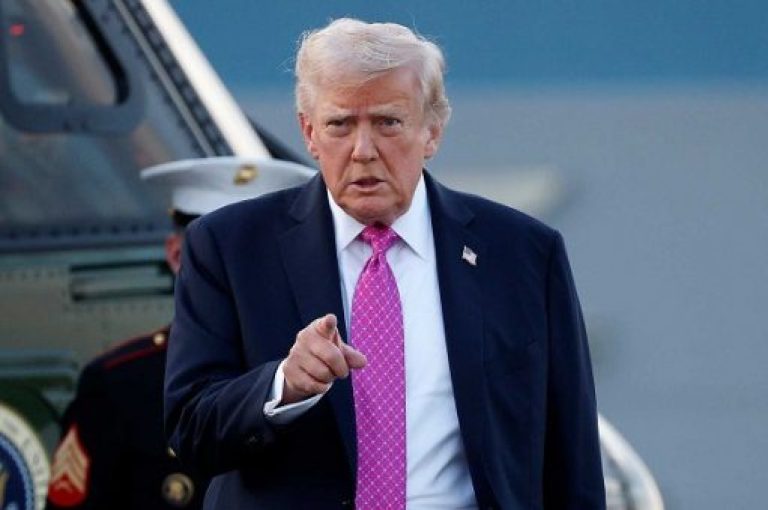

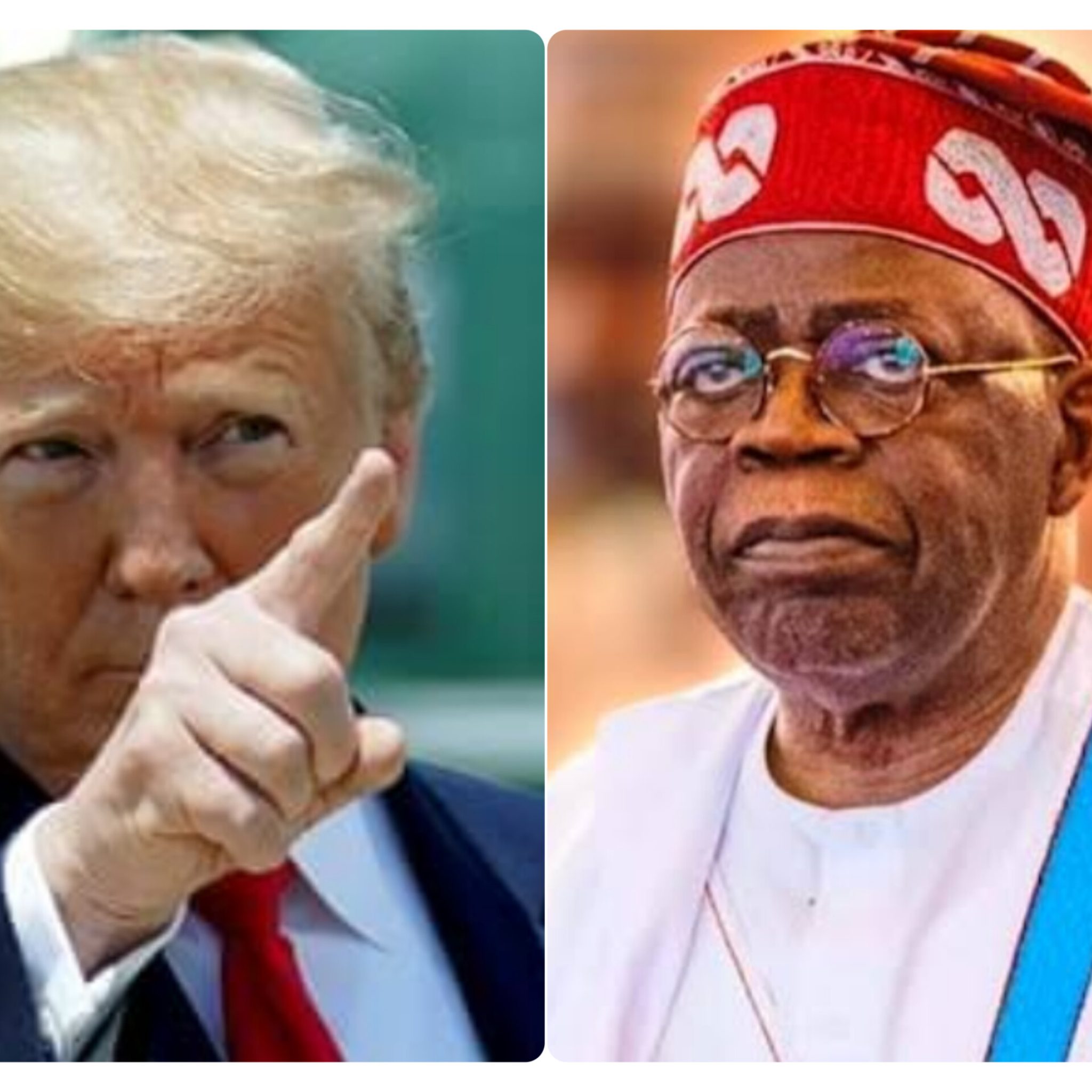
In a statement made on Saturday, U.S. President Donald Trump warned that the Nigerian government must take immediate steps to end the persecution of Christians or face the possibility of “fast” military action.
In a post on Truth Social, Trump said that the United States government will promptly cut off all aid and support to Nigeria, the most populous nation in Africa and a major oil producer.
To get your day started right, subscribe to the Reuters Daily Briefing email. Put your name down here.
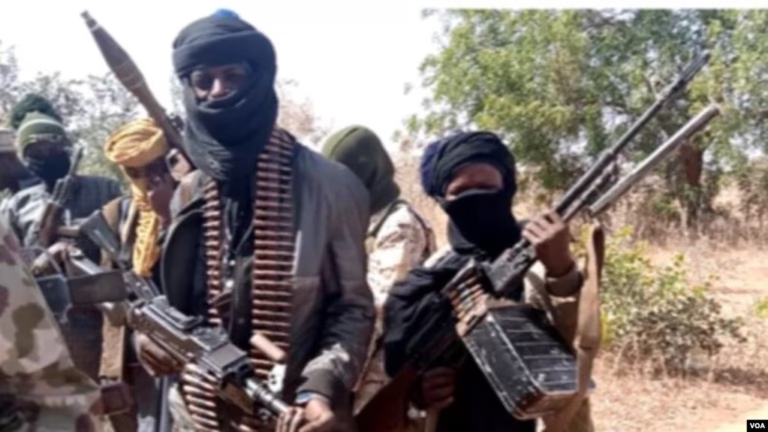
Trump claimed that the United States would invade Nigeria “‘guns-a-blazing,’ to totally eradicate the Islamic Terrorists who are perpetrating these terrible atrocities,” but he offered no details regarding the persecution of Christians in the country.
Trump slammed Nigeria as a “disgraced country” and urged the authorities to take swift action. “If we attack, it will be fast, vicious, and sweet, just like the terrorist thugs attack our CHERISHED Christians!” said he.
As soon as Trump threatened military action, Abuja did not respond. There was also no clear word from the White House on when the United States might launch a military intervention.
U.S. Defense Secretary Pete Hegseth took to social media to respond to Trump’s warning, even though the Pentagon had previously directed Reuters to the White House.
“The Department of War is preparing for action,” Hegseth wrote on X. “Either the Nigerian Government protects Christians, or we will kill the Islamic Terrorists who are committing these horrible atrocities.”
The United States has accused Nigeria of violating religious freedom, and the country was re-added to the “Countries of Particular Concern” list the day before Trump made his statement on the country. Pakistan, North Korea, China, Myanmar, and Russia are among the other countries on the list.
On Saturday, President Bola Ahmed Tinubu of Nigeria rebutted accusations of religious intolerance and defended Nigeria’s actions to safeguard religious freedom before Trump made his attack warning.
“The characterization of Nigeria as religiously intolerant does not reflect our national reality, nor does it take into consideration the consistent and sincere efforts of the government to safeguard freedom of religion and beliefs for all Nigerians,” Tinubu wrote in a statement, pointing to “constitutional guarantees to protect citizens of all faiths.”
In a separate statement, the Nigerian Foreign Ministry expressed its determination to continue combating violent extremism. The ministry also expressed its hope that Washington will continue to be a close ally, vowing to defend all people regardless of their color, faith, or religion. Just like the United States, Nigeria must embrace its variety as a source of strength.
When over a thousand American soldiers left Niger last year, it drastically reduced the United States’ military presence in West Africa. Although the United States occasionally sends small groups of troops to the area for exercises, Djibouti, an East African country, is home to more than five thousand American service members and is vital to American activities in the region.
During his first term in office, Trump placed Nigeria on a “concern list.”
While in office, Trump had previously voiced concerns about Nigeria. Joe Biden, his Democrat successor, took it off the list of U.S. State Department priorities in 2021.
Trump made the vague claim on Friday that radical Islamists were killing “thousands of Christians” in Nigeria without providing any evidence.
While the 200+ ethnic groups that make up Nigeria’s Christian, Muslim, and traditional population have generally lived peacefully together for quite some time, there have been periodic outbreaks of violence that have been worsened by ethnic tensions or disputes over limited resources.
Another insurgency that has tormented northeast Nigeria over the last fifteen years and murdered tens of thousands of people is Boko Haram, an extreme Islamist armed group. According to human rights experts, Muslims have made up the majority of Boko Haram’s victims.
Republican House Appropriations Committee Chair Tom Cole and other lawmakers in the United States applauded Trump’s action on Friday, referring to what they described as “the alarming and ongoing persecution of Christians across the country.”
Programs for Nigerian communities hit by extremist violence and international initiatives to protect religious freedom were both bolstered in the committee’s proposed national security spending bill for fiscal year 2026.
Although penalties or waivers could be implemented in reaction to Trump’s re-designation of Nigeria as a country of concern, this is by no means guaranteed.
According to a copy on the website of the Hudson Institute think tank, a number of religious groups wrote to Trump last month urging him to accept the re-designation.
In Nigeria, Christians are confronted with a grave danger. Christians are losing their lives in the thousands. Trump said in his tweet, “Radical Islamists are responsible for this mass slaughter,” although he did not elaborate. Additionally, he requested that the House Appropriations Committee conduct an investigation.
Report culled from Reuters, by Andrea Shalal, Doina Chiacu, Susan Heavey, and Idrees Ali in Washington; the editing was done by MacDonald Dzirutwe, Andrea Ricci, Sergio Non, and Lincoln Feast. Ismail Shakil was in Ottawa, and Camillus Eboh was in Abuja.
About the Author