
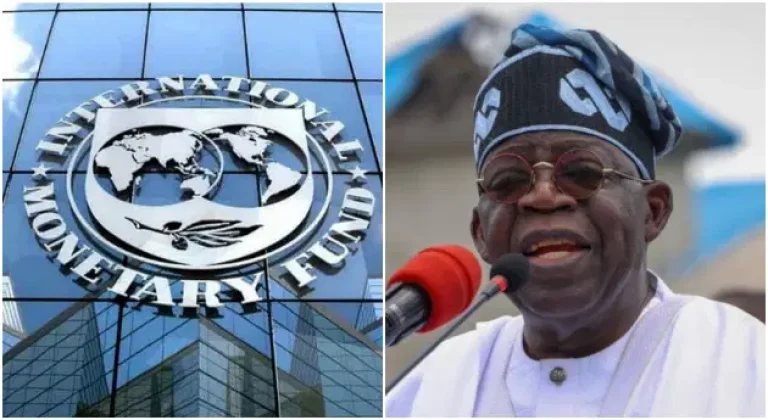
The International Monetary Fund says that Nigeria is not one of Africa’s fastest-growing economies. Instead, countries like Benin Republic, Côte d’Ivoire, Ethiopia, Rwanda, and Uganda are still leading the continent’s growth in the world.
The PUNCH says that the IMF says that these five countries are now among the fastest-growing economies in the world. This is because of ongoing policy changes, better fiscal management, and investments in infrastructure and industry.
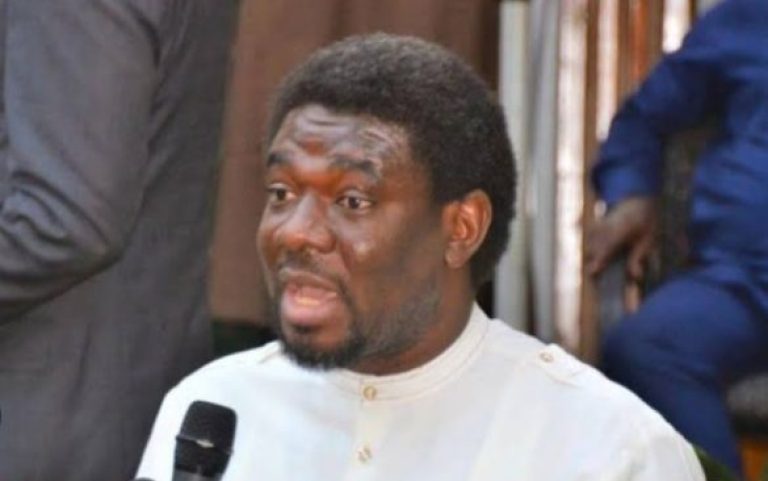
Abebe Selassie, the Director of the IMF’s African Department, said this during a press conference yesterday that our correspondent was present for the introduction of Sub-Saharan Africa’s most recent Regional Economic Outlook.
He added that Benin, Côte d’Ivoire, Ethiopia, Rwanda, and Uganda have some of the best economies in the world, and that their robust growth is due to fiscal reforms and macroeconomic stability.
The Director also said that overall growth in Sub-Saharan Africa is forecast to level off at 4.1 percent in 2025, with a small increase expected in 2026, thanks to macroeconomic stabilization and reform initiatives in important economies.
Selassie stated, “Six months ago, our evaluation showed that the region was working hard and that growth had been better than expected last year.”
“But we also noticed that global priorities were changing quickly and that outside conditions were become more unstable, with weaker demand, lower commodity prices, and tighter financial markets. “These global headwinds are still testing the region’s recovery and strength today.
We now think that Sub-Saharan Africa’s economy would grow at a constant rate of 4.1% this year, with a small increase projected in 2026.
We think this shows that the biggest economies in the region are still making progress in stabilizing their macroeconomies and making reforms.
“It is important to note that Benin, Côte d’Ivoire, Ethiopia, Rwanda, and Uganda are some of the fastest-growing economies in the world.”
The IMF has raised its growth prediction for Nigeria, saying that the economy will grow by 3.9 percent in 2025 thanks to stronger oil production, more investor confidence, and a more supportive fiscal policy.
The new numbers show a 0.5 percentage point rise from the prior forecast and show that people are once again hopeful about the country’s economic future in the medium term.
The IMF raised its prediction for Nigeria’s economic growth in 2025 to 3.4 percent in July. This is 0.4 percentage points higher than the 3.0 percent prediction it made in its April 2025 World Economic Outlook.
Last month, the National Bureau of Statistics also said that the real Gross Domestic Product expanded by 4.23% year-over-year in the second quarter of 2025.
The number is a big improvement over the 3.48 percent growth seen in the same period in 2024. This is due to moderate increases from higher oil production, a recovery in important non-oil sectors, and lower inflationary pressures.
The IMF’s decision, on the other hand, shows that growth is still below its potential. The government is being told to make structural reforms more thorough, improve the supply of electricity, keep inflation in check, and increase non-oil revenue by diversifying industries and improving tax collection.
“We still have a lot of countries that use a lot of resources and are in conflict that are having a lot of trouble, and their per capita incomes are only going up a little bit.” The outside world is still hard to deal with, global economy is faltering, and the cost of goods are going up and down. It’s interesting that oil prices are going down when the prices of copper, coffee, and gold are all rather high.
The fund was worried about Nigeria and other Sub-Saharan African countries being more financially vulnerable. It warned that governments’ increased reliance on borrowing from domestic banks makes financial stability more at risk.
Selassie said that many governments have to rely on domestic banks for money because external financing is running out. This makes the “sovereign-bank nexus” even stronger. The IMF estimates that in about half of the cases, domestic financial institutions now hold public debt, which makes the banking sector more unstable.
He said that as it gets harder for African governments to get money from outside sources, they have turned to domestic lenders to keep public spending going. He called this a “double-edged sword” that could hurt banks’ balance sheets and make the link between public debt and financial sector risks even stronger.
“It’s been great to see how strong the region has been. But this will keep being tested in the next few months. Rising debt service costs, which are crowding out development spending, a shift toward domestic financing that has deepened the sovereign bank nexus, inflation that has eased at the regional level but is still in double digits in many countries in the region, and external buffers that are under pressure and need to be rebuilt are all pressure points.
“In this context, we perceive two main policy goals. The first is getting money from within the country. This is very important for our country’s growth, and there is a lot of potential to be tapped here. The reforms that need to be made include modernizing tax systems through digitalization, cutting down on wasteful tax spending, and strengthening enforcement through targeted compliance strategies.
“And significantly, these initiatives must go beyond just making technological changes. To make sure that these changes work and are fair, it will be important to enhance public trust in tax institutions, improve their ability to do their jobs, and carefully examine the effects of the changes, particularly how they affect different groups of people.
Of course, the IMF is still committed to helping the region. Since 2020, we have given out around $69 billion, with about $4 billion going out this year alone. We are still doing a lot to build capacity, and nations in the region are among of the biggest users of technical assistance.
Selassie said that in countries with a lot of debt and high interest rates, stress could affect banks’ balance sheets. He asked governments to make sure that public financing paths lower the risk of adverse spillover over time by strengthening regulatory monitoring and capital buffers.
“On the topic of how vulnerable domestic banks are to rising amounts of public debt. So, once again, this is something we’ve been talking about for a long time. Right now, we think that about half of the entire public debt is owned by institutions in the country. Over the years, this has grown. It’s a double-edged sword, as always.
“Over the years, access to outside financing has gotten worse. Our countries and governments have had to rely on domestic banks to keep spending levels up and economies going.”
“That has helped us stay strong, but now we see a situation where there are a lot of weaknesses. In particular, in countries where public debt is very high, the risk of distress is higher. We are seeing some pressures on bank balance sheets, or there could be potential pressures on bank balance sheets.”
The director said, “So again, it varies from country to country how vulnerable they are, but it is an area of some concern in those countries where public debt is high, where interest rates are high, and we are working with governments to make sure that there is a strong regulatory framework, strong capitalisation plans for banks, and of course first and foremost, the first line of defense, making sure that public finances are on a healthy trajectory to limit their spillovers.”
He went on to say that inflation is still high in some nations, even though the regional average is going down. And external buffers, like foreign reserves, are under a lot of stress and need to be filled up quickly.
Selassie said that the region’s recovery is in danger because of problems outside of it, such as decreased global demand, unstable commodity prices, and tighter global financial conditions.
He said that oil prices are going down, but metals like copper, coffee, and gold are still high.
The IMF said that tariff hikes from the U.S. and the end of preferential trade access under AGOA hurt economic prospects, even though some countries, like Kenya and Angola, have been able to access international credit markets again.
The steep drop in foreign aid that is about to happen will make things even harder for low-income and unstable states, making their finances less flexible.
The IMF set two main policy goals to make the economy more resilient: “Domestic revenue mobilization, by modernizing tax systems (especially through digitalization), cutting down on wasteful tax spending, and making sure people follow the rules.”
However, Selassie stressed that these kinds of changes must also create public trust, institutional capacity, and include assessments of how they would affect different groups.
He remarked, “Managing debt; making things clearer, strengthening public financial management, making full debt data available, and improving budget oversight.” He said that these steps would help lower the cost of borrowing and open up new ways to get money.
The IMF researcher then turned his focus to Nigeria and said that the drop in inflation is in keeping with the continued tightening of monetary policy and a more flexible exchange rate system. But he said that inflation is still high because of a “level shift,” which means that prices have settled at higher levels. He said that policy discipline must stay strong in order to reach goals.
“So, to begin with inflation in Nigeria, we see that it has been falling in line with the tightening of policies that have been put in place in recent years, especially in terms of monetary policy. This is also due to the effect of the exchange rate adjustment that happened over the last year or so and more, which has come through the system.” We are happy with this since it fits with the policy calibration, but I think there is still a long way to go to reach the government’s goal.
“Of course, many countries in the region have a lot of public debt. We think that roughly 20 countries are currently at a high danger of debt trouble. This includes around 14 countries that are very likely to get into debt difficulty and six that are already in it.
The IMF said that increasing growth is the key to making debt payments affordable. It also said that not all countries suffer the same problems, thus they require different policy frameworks.
Selassie also talked about illegal money flows and advised governments to find the sources of these problems (such trade mis-invoicing, capital outflows, and tax evasion) and make changes to fix them.
“Finally, when it comes to illegal money flows, I think that the things we think of as illegal money flows are different from each other. Some of it is merely normal trade, such when money leaves a country.
“Some have to do with people trying to get around the tax system.” Some flows are absolutely unlawful, such those that have to do with corruption or other flows. So I think the best method to deal with this is to find out where the flows are coming from and make changes to fix them.
“So, once more, many of the reforms that countries are making should help with many of the problems we are seeing with illegal money flows.”
Finally, he said that even if it is getting easier to get into the market, borrowing is still quite expensive. When governments borrow money from outside sources, they should be careful and always base their decisions on a solid medium-term fiscal plan.
The IMF praised the region’s strength and continued reform efforts, stating that progress in fiscal consolidation, exchange rate flexibility, and monetary tightening in large economies like Nigeria has helped stabilize GDP and relieve inflationary pressures.
“First of all, the effects of the higher tariffs that have been put in place in the U.S. haven’t been as bad as we thought they would be back in April. So the world economy has held up.
“And it’s important to note that we haven’t seen other countries, you know, follow suit and raise tariffs. That’s good news. Second, you know, this is what I mean: countries who rely on big exports to the U.S. and are limited in their ability to do so will have a harder time trading with the U.S. In those countries, some thought will be needed about how to change these flows and discover new strategies to deal with this problem.
One of the most interesting aspects about trade in Africa is that we are trading more and more manufactured commodities and items with more value added. We send natural resources to other countries when we trade with them. So dealing with each other is truly a great advantage, and encouraging commerce within Africa is a big plus as well. I think this is a chance to work in those kinds of sectors, he said in conclusion.
At the same time, the International Monetary Fund has praised Nigeria’s ongoing reforms to its fiscal and monetary policies, saying that the country’s policy trajectory is “broadly positive” because inflation is dropping and foreign currency transparency is getting better.
During the 2025 IMF/World Bank Annual Meetings in Washington, DC, officials from the IMF’s Fiscal Affairs Department and Monetary and Capital Markets Department spoke on the Fiscal Monitor and Global Financial Stability Report.
The IMF added that Nigeria’s fiscal stance is currently neutral, which means that the government’s spending and taxes are balanced in a way that helps control inflation without slowing economic development.
Davide Furceri, head of the IMF’s Fiscal Affairs Department, said, “Right now, we are projecting a neutral fiscal stance for Nigeria.”
“We believe that this neutral fiscal policy stance will also help monetary policies lower inflation.”
Furceri applauded the Nigerian government’s recent improvements, especially in how they handle taxes and how they spend money. He said that these changes have made the tax system simpler, made it easier for entrepreneurs to do business, and cut down on unnecessary spending.
He went on to say, “Nigeria has done a lot in the past few years.” “Many of the laws that have been passed have tried to make tax codes easier to understand, cut down on tax spending, and make things easier for businesses and low-income families.” These rules are a step in the right direction.
He said that Nigeria might make faster economic progress by improving the efficiency and composition of public spending, notably by putting more money into social security to make low-income populations less vulnerable.
Tobias Adrian, the IMF’s Director of Monetary and Capital Markets, said that Nigeria’s recent changes to its currency rate and tighter monetary policy had made its policies more credible and its external buffers stronger.
Adrian added, “Exchange rates are important buffers that help the domestic economy deal with shocks.” “A falling exchange rate isn’t always a bad thing; it might even be a good thing to bring things back into balance.” We have seen a lot of initiatives in Nigeria to make policy frameworks stronger, such on the monetary policy side.
He also said that the IMF usually supports more flexible exchange rates for countries like Nigeria’s because they help buffer the effects of shocks from outside the country and bring the foreign exchange market back into equilibrium.
Jason Wu, the IMF’s Assistant Director, noted that Nigeria’s economy had gotten much better over the past year, thanks to more revenues and better management of its foreign exchange reserves.
Wu stated, “Nigeria’s ability to collect taxes has gotten better, and there is more openness about FX reserve positions.” “All of this has helped bring down inflation, which went from over 30% last year to 23% this year, and also enhanced the positions of our foreign exchange reserves. So it looks like things are going in the right direction.
The IMF, on the other hand, said that even while these are good things, Sub-Saharan Africa still has to deal with problems from outside the region, such the possibility of another round of capital flow volatility that might hurt economies with weak fundamentals.
Wu said, “Even though growth has been strong and capital flows are starting up again, the previous cycles of growth and decline could happen again.”
“When that happens, it could make some of these economies more vulnerable, especially when foreign investments go down.”
He advised African nations to tighten their debt management, fiscal discipline, and structural changes to make them less vulnerable to shocks from outside.
Wu continued, “Countries need to keep making their fiscal and monetary policies better, but they also need to make more structural policies, like collecting taxes, managing debt, and hopefully getting help from the international community.”
About the Author