
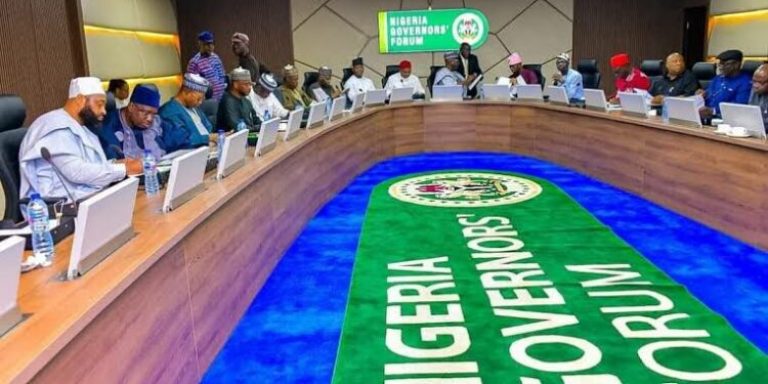
The Socio-Economic Rights and Accountability Project (SERAP) has asked Nigeria’s 36 governors and the Minister of the Federal Capital Territory, Nyesom Wike, seven days to urgently make public how they have spent the estimated N14 trillion fuel subsidy savings earned through FAAC allocations.
The organization also asked that they share information about all the projects that were funded, including their locations and details, as well as updates on their progress and completion reports, if they are available, according to Daily Independent.
SERAP told them to give further information about their intentions for how they would spend the money they intend to save on fuel subsidies from FAAC allocations, including information about any projects they had planned.
They also told them to “publicly invite the Independent Corrupt Practices and other related offences Commission (ICPC) and the Economic and Financial Crimes Commission (EFCC) to track and monitor the spending of the fuel subsidy savings collected by you, to make sure that the money is not going into private pockets.”
Since mid-2023, the 36 governors and the FCT minister have reportedly taken trillions of naira from FAAC allocations as savings for gasoline subsidies. But the extra money hasn’t made it easier for poor and vulnerable Nigerians to get essential public services like good healthcare and education.
In Freedom of Information requests dated October 4, 2025, and signed by SERAP deputy director Kolawole Oluwadare, the group said, “There is a legitimate public interest for governors and the FCT minister to urgently explain how they have spent the money they have so far collected from the subsidy savings.”
SERAP added, “The money saved by doing rid of the fuel subsidy should only be used to help the poor and vulnerable Nigerians who are suffering the most from the change. Being open about how the money is spent will help these Nigerians avoid the morally wrong outcome of double jeopardy.
The FoI requests also say, “There is a big chance of mismanagement or diversion of funds linked to the states and FCT getting more money from the FAAC.”
“The facts of how the money collected by numerous states and the FCT from fuel subsidy savings has been spent have generally been kept secret.
“Millions of poor and weak Nigerians have not benefited from the trillions of naira that the governors and FCT minister have collected as a result of the subsidy savings.” Nigerians are still dealing with a deepening poverty crisis.
“Several states, including yours, are reportedly using public money, which may include savings from fuel subsidies, to pay for unnecessary trips, buy fancy and bulletproof cars, and generally pay for politicians’ extravagant lifestyles.”
“There are still reports of pervasive poverty, lack of development, and lack of access to public goods and services in many states.
“Not being clear about how you spend the savings from the gasoline subsidy would continue to hurt the basic interests of the people and the public good. Transparency would make sure that public money doesn’t end up in private hands.
“We would appreciate it if the suggested steps were completed within seven days of receiving and/or publishing this letter. If we don’t hear from you by then, SERAP will take the necessary legal steps to make your state and the FCT comply with our request in the public interest.
“Letting Nigerians see how the money your state collects as fuel savings is spent will let them check it and hold you accountable for how you spend public money.
It is possible that the states and FCT did not manage the money they got from the subsidy savings in a clear and accountable way.
“Nigerians have the right to know how their states and FCT are using the money they saved by getting rid of the fuel subsidy. This is part of their right to know.
Fighting the widespread corruption in how the money is spent would reduce poverty, make it easier for Nigerians to get essential public services, and help your states do their jobs better and more efficiently.
The Federation Account Allocation Committee (FAAC) gave out N28.78 trillion in 2024 from the abolition of the petrol subsidy to the three levels of government. This was a 79 percent increase from the year before.
“State governments’ budgets went up by 45.5 percent to N5.22 trillion.” Reports say that monthly payments in 2025 had gone over N1.6 trillion.
“However, even if your state and the FCT have been given more public money, millions of poor and socially and economically disadvantaged Nigerians have not benefited from the savings.
Many states are said to owe governmental officials’ salaries and pensions. Several states are still borrowing money to pay their workers. Millions of Nigerians who live in your state and the FCT still can’t get basic public services.
“Numerous years of accusations regarding corruption and mismanagement in the allocation of public funds by various states, coupled with the entrenched impunity of offenders, have eroded public trust and confidence in governments at all tiers.”
“Section 15(5) of the Nigerian constitution 1999 (as amended) says that all public institutions must stop all corrupt practices and abuse of power. Section 16(2) of the Nigerian constitution further says that “the material resources of the nation are harnessed and distributed as best as possible to serve the common good.”
“Section 13 of the Nigerian constitution makes it clear that public institutions, including your state, must follow, observe, and apply the rules in Chapter 2 of the constitution.
“Under the UN Convention against Corruption, Nigeria has made legally binding promises to make sure that public resources are managed in a way that is accountable. The Convention’s Articles 5 and 9 also make it your state’s and the FCT’s job to make sure that public affairs and public money are handled properly.
The Nigerian constitution, the Freedom of Information Act, and the country’s responsibility to fight corruption and protect human rights are all based on the idea that people should be able to find out what their government is doing.
The constitutional concept of democracy also supports Nigerians’ right to know how the money collected from the withdrawal of the fuel subsidy is being used.
The right of citizens to know encourages openness, transparency, and accountability, which are all important for the country’s democratic order.
For representative democracy to work well, people need to be able to look at, talk about, and help make decisions about the government, such as how to spend the money your state and FCT save from subsidies.
About the Author