

Ahmadu Bello University (ABU) in Zaria has raised the alarm over its soaring energy costs, saying that it spends almost ₦4 billion a year on power to keep the school running.
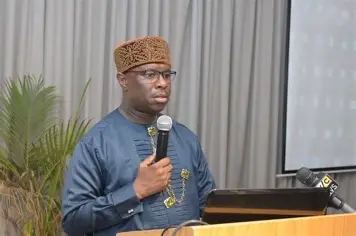
During a news conference at the Senate Building on Saturday to celebrate the university’s 63rd anniversary, Vice Chancellor Professor Adamu Ahmed called the situation “crippling and unsustainable.”
He said that the high cost of electricity was having a big effect on academic work and research, according to the Sunday Guardian.
Ahmed said that the institution has started ambitious projects to become energy self-sufficient. These projects encourage staff and students to come up with new ideas and look for collaborations to find long-term power solutions.
He said that the federal government had given the school ₦1 billion through TETFund last year and approved a 10-megawatt renewable energy project to help it.
Ahmed stated, “We’ve also talked to our alumni, especially the SBS Class of 1975, who are already working on a solar-powered project for one of our CBT centers.”
“We are in charge of our own future and want to keep getting help from outside.”
The Vice Chancellor said again that ABU’s original vision was to be a bridge of unity and growth, created by the late Premier of Northern Nigeria, Sir Ahmadu Bello, to teach Nigerians of all ethnicities and religions.
He said that instability and poverty had slowed growth in the North and promised that ABU will step up its research and advocacy work in areas including security, agriculture, and policy change.
Ahmed said that the university had started talking to northern state governments about working together to solve problems like unemployment, food shortages, and insecurity. He stressed that ABU’s agricultural institutions, such as the Institute for Agricultural Research (IAR), NAPRI, and the Faculty of Veterinary Medicine, are in a good position to help the economy recover.
He also pushed for non-violent ways to deal with insecurity, putting more emphasis on communication, community involvement, and establishing peace than on violence.
He stated, “We have the resources, the research, and the connections.” “ABU is ready to take the lead in finding long-term solutions.”
Ahmed added that when he thought about ABU’s journey, he saw that the university has developed from four faculties and 426 students when it opened in 1962 to 18 faculties, 110 departments, seven institutes, four colleges, and 17 research centers. This makes it the largest university system in sub-Saharan Africa.
He said that ABU was named the Best Public University in Nigeria by Times Higher Education in 2025, won JAMB’s award for internationalization and diversity, and is one of only three Nigerian universities to be listed in the QS 2025 World University Rankings.
The VC also said that ABU has received three World Bank Centres of Excellence grants worth more than $15 million and a €5 million Horizon grant for an AI initiative that is making microscopes to find neglected parasitic illnesses.
Ahmed also said that the university’s researchers had filed more than 30 patents in renewable energy, pharmaceuticals, and crude oil refining technologies. This shows how important ABU’s research is around the world.
Even though he had done a lot of good things, he said that lack of money, brain drain, and crumbling infrastructure are still big problems.
He indicated that ABU would keep putting money into digital learning, making money from research, and helping new businesses get off the ground to make people more self-sufficient.
Ahmed called on the school’s alumni, saying they were ABU’s “greatest strength,” and asked them to contribute back through endowments, gifts, and development collaborations.
He remarked, “I ask our alumni to step up.”
“The Sardauna gave you a chance; now it’s time to give back.” You have the money, the skills, and the right connections to make sure that this wonderful university will be around for a long time.
About the Author