
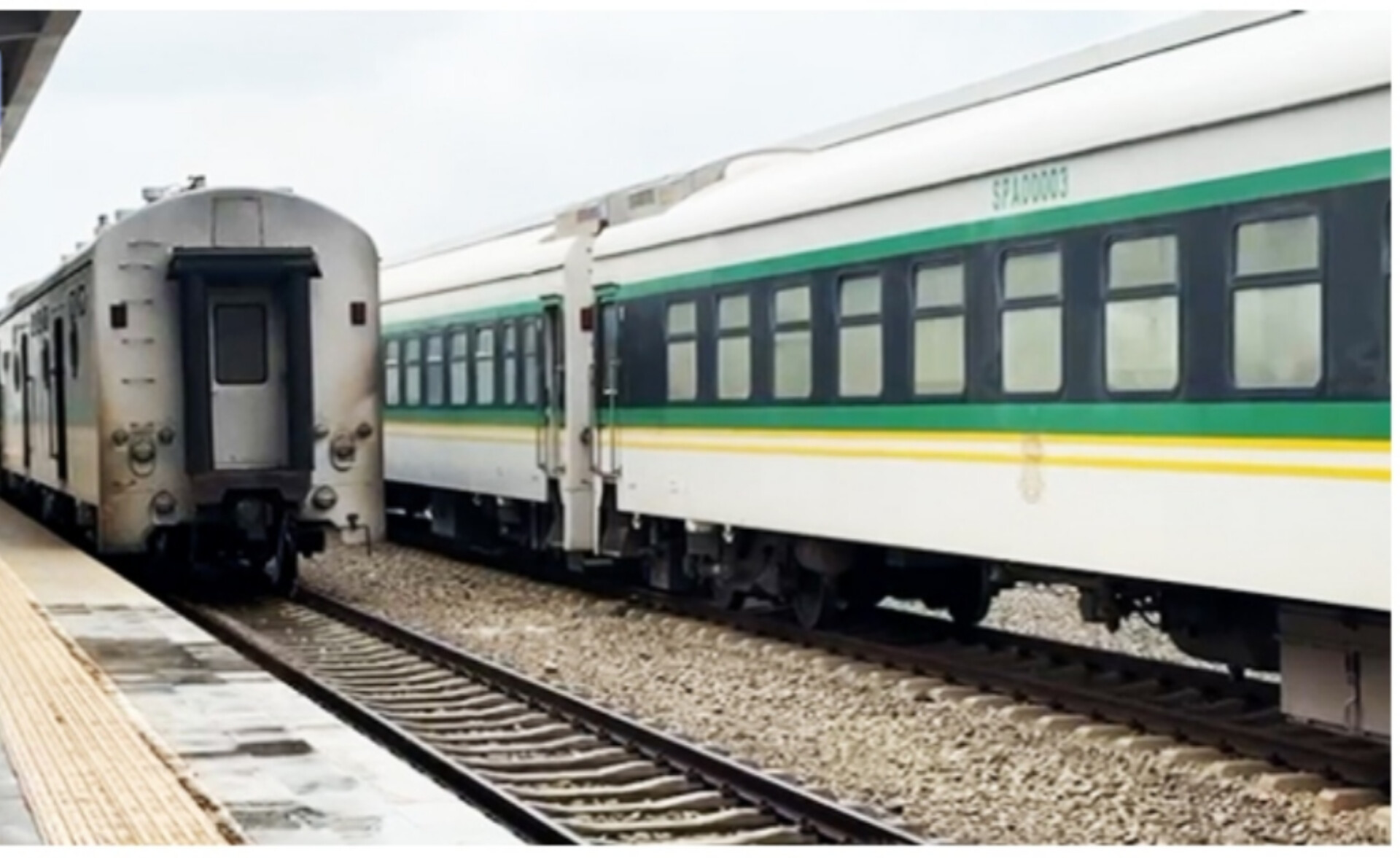
The Abuja–Kaduna passenger train service will start up again this week, according to the Nigerian Railway Corporation (NRC).
The NRC said in a statement yesterday from its Chief Public Relations Officer, Callistus Unyimadu, that this comes after the repair and safety checks on the concerned stretch of track at Asham were finished.
The operator, on the other hand, claimed that more information on the official start date and schedule would be sent out in the next several days.
It said that the company had worked hard to make sure that both the infrastructure and rolling stock were brought back up to the highest safety standards in line with worldwide best practices after the service was temporarily stopped when it derailed on August 26, 2025.
The NRC said that as part of its promise to keep passengers safe, it has given back money to 512 of the 583 people who were on the train that was affected.
“We’re still working to reach and process refunds for the other passengers so that no one is left out.”
“The NRC thanks our valued passengers for their patience and understanding and wants the public to know that their safety, comfort, and pleasure are still our top priorities.
It went on to say, “We also thank the Federal Ministry of Transportation, security agencies, the media, and all other stakeholders for their help during this time of recovery.”
The train left Abuja for Kaduna at about 11 a.m. and derailed along the Kaduna corridor soon after.
A passenger on the train said the scene was chaotic, with people rushing to get to safety.
After the incident, the NRC stopped all train service on the Abuja-Kaduna route until further notice.
Kayode Opeifa, the Managing Director of the NRC, said in an interview on Channels Television’s The Morning Brief on August 27 that he was completely to blame for what happened.
Opeifa also revealed that four of the passengers on the Abuja-Kaduna train were seriously hurt.
The Nigerian Safety examination Bureau (NSIB) reported on September 24 that its examination into the disaster showed that bad maintenance and a broken track switch were major causes of the catastrophe.
The first reports say that some of the sleepers at the station that had been broken in a prior event were just patched up instead of being fixed properly.
Investigators also found that the automatic switch at the station’s crossing point wasn’t working at the time of the catastrophe. This was the second derailment at the same station in 13 months.
Because of this, the switch had to be turned on and off by hand and held in place with a point clip, which was later found to be broken. This made the track alignment less stable, which caused the train to go off the rails.
The audit also said that workers for the Nigerian Railway Corporation (NRC) had only received initial training and no official refresher courses, which raised more questions about safety standards and readiness.
At the time of the incident, it was said that operational and maintenance tools, such as spare parts from the Original Equipment Manufacturer (OEM), were mostly hard to get to.
About the Author