

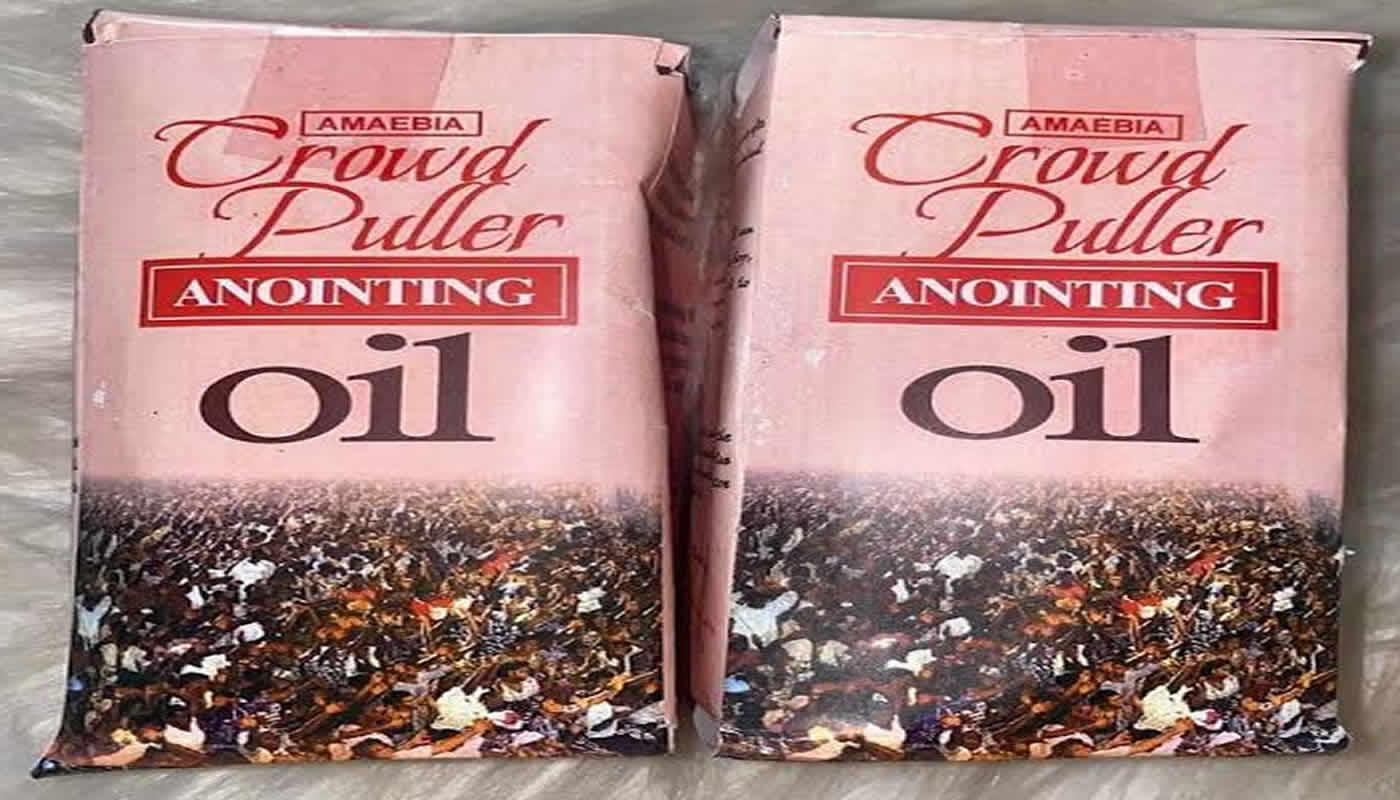
Some Nigerian company owners are turning to traditional spiritual practices like aworo, a ceremony that is thought to have magnetic qualities to draw people to their stores and stalls, according to Saturday PUNCH. This is because their profits are going down and their customer bases are getting smaller.
Gabriel Obaniyi was sleeping on a wooden seat in his tiny shop in Dugbe, Ibadan, the Oyo State capital, when his phone rang.
It was the middle of 2024, a time when traders generally made a lot of deals, but for him, the weeks dragged on without the usual flow of ready buyers.
The 34-year-old was really excited to talk to the caller after touching his eyelids. On the telephone was a customer who had just come back from Lagos and said they would stop by shortly.
For Obaniyi, even this modest promise gave him a little bit of optimism in an otherwise dark time.
Obaniyi owned a clothing store that sold a variety of men’s clothes. Since the middle of last year, his business had been going down, and he had a lot fewer customers than his competitors in the market.
The father of two, who was clearly upset, told his close buddy Muyiwa about what had happened to him. Muyiwa sold electronics near his shop and seemed to be doing better than him.
Obaniyi informed our reporter, “He (Muyiwa) promised to help me get something that would help my sales.”
“He didn’t say what it was, but his father is a traditionalist, so they made him a native soap and said they would make me the same thing.”
Reports say that Muyiwa gave Obaniyi the miraculous soap just a few weeks after this encounter. He was told to bathe with it, among other things.
“After implementing the instructions Muyiwa’s father gave me through his son, I started to make more sales for a while. But things got worse after a while. At that point, another buddy introduced me to a traditionalist who gave me a spiritual object called aworo (crowd puller) and advised me to hang it at the entrance of my store.
“I had to go buy a picture of Jesus and hang it above the door of my store to hide the aworo they gave me.” It worked when I first got it, but I should definitely go and renew it like I was told.
Our correspondent inquired how much it would cost him to renew it, and he said it would cost between N20,000 and N40,000, depending on how effective the charm was thought to be.
Crowd-pullers with a magical touch
Aworo is a Yoruba name for a spiritual or magical material, usually in the form of soap or powder, that is used to draw crowds and help enterprises, especially in Nigeria and other regions of West Africa.
In a country where Christianity is the main religion in the South and Islam is the main religion in the North, and where there are just a few indigenous religions, many people still believe that spiritual forces can affect the material world.
Many business owners in Nigeria have turned to miraculous remedies to enhance their fortunes because of the problems small and medium-sized businesses are facing.
Unlike commercial techniques that have been tried and demonstrated to work, the mystical beliefs that support aworo are generally based on personal experience, are not proven, and are full of coincidences.
Our correspondent found that practitioners frequently make aworo with lime, oils, certain scents, and herbs to bring in people and make money for stores, restaurants, bars, and other businesses.
The main goal of the charm is to bring in a lot of consumers to a business, like a market stall or a supermarket, by using a purported spiritual magnetic force.
People think that making aworo and other “crowd pullers” will boost sales and make more money for the business by bringing more people into the places where they are used.
Some treatments use black or white local soap as their foundation, while others include herbs like tomato and jatropha leaves, white handkerchiefs, salt, and spiritual oils.
Aworo is more than just an ordinary object when it is mixed with prayers or incantations. People believe that it can channel supernatural energies to bring good luck to a user’s business.
Many of the ingredients, including the one given to Obaniyi, are either bought as ready-made formulas from traditional healers or found in spiritual shops. People often use them to take a bath in the morning before they open their store.
It was also learned that some of these magical things are kept in containers inside businesses, while others are buried near the entrance to these businesses.
Some business owners say they mix aworo with sound practices like keeping strong relationships with customers, even though it is said to work best when the user has clear intentions and spiritual focus.
Businesses that are having a hard time
According to reports from Moniepoint and PwC, small and medium-sized businesses make up a large part of Nigeria’s economy. They account for roughly 48 to 50 percent of the country’s Gross Domestic Product and hire about 84 percent of the country’s workers.
These enterprises, on the other hand, have problems including not having enough infrastructure, not being able to get loans easily, having high operating costs, and not having enough trained workers.
The Lagos Chamber of Commerce and Industry recently said that Nigeria’s GDP growth rate was only modest in the first two quarters of this year, but inflation is still high, mostly because of rising food prices, energy costs, currency depreciation, and problems with logistics.
The LCCI said that inflation could drop to 26% by the end of the year, and that gains in oil production could assist the foreign exchange market stabilize.
Vendors take over social media
Many aworo sellers now freely sell their packaged magical things on social media, where millions of Nigerians are active users. These items are supposed to be delivered to their consumers by dispatch riders.
Our reporter found that TikTok, Facebook, and Instagram have the most aworo sellers. However, there were also a lot of videos showing how to make these “crowd-pulling” charms at home.
It was noted that some of the suggested strategies take into account the social psychology of the target audience and make their appeal more relevant to small business owners by using basic beliefs in magic and spiritual symbols.
Our reporter saw aworo pricing that ranged from N20,000 to N85,000. They were marketed as powder, solutions, and ingredients put in a gourd that was painted white.
A Facebook user who called herself a spiritualist said, “Aworo (crowd puller/business booster) will pull hundreds of customers to your business place.”
She also said that anybody who buy her aworo, which will be buried at the business, will have the spiritual ability to bring a lot of guests to their hotels, stores, churches, pubs, and restaurants.
The way aworo is marketed on TikTok to curious and desperate customers seems to be more lively, polished, and aimed at a younger demographic.
“Get some honey, salt, sugar, and a scented water called Miss Paris perfume.” Use it to clean your store, and then combine the scented water with water in a container that holds roughly five liters.
“Pour this outside your store every morning.” “Do this, and you will testify,” a prophetess named Oyerinde said in one of the videos she released on TikTok.
A TikTok user named Kingbun, who has 85,000 followers, told his viewers that the spiritual preparation he talked about might be utilized to miraculously bring a lot of people to schools, supermarkets, and small and medium-sized companies.
“You will need locust beans, bitter melon seeds, native egg, and original honey.” Put these things together and put them into the bitter melon. Then cover it with honey. He replied, “Then tie it up with black and white thread so that no part of the bitter melon is visible. Put it in a hole you have dug at the entrance of your shop, supermarket, or compound.”
Another TikTok user, Patience, said that her spiritual labor to magically draw crowds doesn’t have any bad effects because she uses only natural materials.
She told her viewers to strain the water they used to make rice and combine it with old cinnamon.
“Bring it to a busy place, or get some sand from the market and add it to it.” When you want to go outside in the morning, throw it into your bath water and use it with whichever soap you like. “Trust me, you will have testimonies,” Patience said.
A Facebook account run by a practitioner named Ifayemi told company owners to obtain a pigeon, hold it by its legs, and elevate it in the air to get material blessings from different angles.
He told them to burn the deceased pigeon and hang its ashes in a gourd at the front of their office door. He also described a complicated process that included cutting open the bird’s chest and pouring two cups of white beans inside its body.
“Put one original gin inside before you hang it up.” Every week, you need to check it, but first you have to stand on a chair. He wrote, “When the gin is gone, fill it up with more gin, and you will see the work of Almighty God.”
Tools that didn’t work
Solomon Uzor, a fashion designer from Lagos, talked about his experience with a “crowd puller” water that he bought from a spiritual shop.
“I paid about N60,000 for it. They told me to sprinkle it throughout my store because it was spiritually prepared water that would bring in consumers. To be honest, nothing happened. I just spent money on a falsehood. A lot of what these people say online is not true.
“If they really have the power to draw a crowd, they should try it on themselves first and let everyone see the magic work, but they won’t.” “Some of them use these things to trick desperate clients who think that one spiritual power can make them rich in a country where government policies, power supply, and the state of the economy decide a lot of things,” Uzor informed our reporter.
A chef named Steve also talked about his experience. He stated he was sold an aworo to get more customers, but then he lost money for no clear reason.
“The object didn’t bring me good luck; it brought me bad luck because I didn’t see how it worked at all.” “I threw it away in anger,” he remembered.
Niyi Ifadare, a traditionalist from Ogun State, told our correspondent that most company owners who utilize aworo don’t tell anyone about it since they see it as a well-guarded business secret.
He went on to say that aworo is available in numerous forms, but its effectiveness could be lost in some situations.
“If a woman is on her period or a man has just completed having sex and touches a spiritual object before it is buried or put up, it can lose its power.
“Another reason could be because the place where you bury the aworo is home to wicked powers that work between the physical and spiritual worlds. They may use their eyes to take away the aworo’s power. In certain situations, it won’t work. It always works, unless it needs to be recharged, in which case you will know the signals, Ifadare said.
The babalawo went on to say that it might be used at a store so that customers wouldn’t go to other stores that offer the same things.
“You might not see the aworo if you go to that kind of store and look around.” Some are put in the POP ceiling, near the door. It depends on how you want it; some could be buried before the floor is tiled.
Ifadare said, “There is also a type of aworo that is put in water and sprinkled over a range of about four houses or shops on the right and left sides of the business site at dawn, before people come out of their houses.”
“We confuse superstition with strategy”
Livingstone Usoro, a consciousness theorist, said that small and medium-sized business owners that deploy mystical “crowd pullers” are “unfit to compete with the modern world.”
“We’re like kids holding onto toys while other people build machines.” Aworo and its relatives are not real; they are just ideas. If these charms had worked, people would never have stolen the idols that blessed them and put them in European museums. Their quiet in the face of plunder showed how weak they were, leaving the black guy without protection.
“Instead of dealing with this failure, we keep romanticizing these ideas and calling them culture or uniqueness. In truth, they reveal a culture that has not progressed beyond mysticism. Europe used to believe in witches and mermaids, but those ideas are no longer popular.
“We still believe that businesses and even churches do well because of magical help. That very illusion set the stage for our servitude, providing the white man the reason to “civilize” us and leaving behind the legacy of slavery, conquest, and centuries of colonization. “Usoro informed our reporter, “We still haven’t learned.”
He was sad that many Africans had decided to stay “conquered people” since their thoughts were still chained.
“That’s why no African company is at the top of the Fortune 500. Not because of a curse, but because we confuse superstition with strategy and miracles with method. A nation that venerates charms rather than fostering knowledge, ability, and innovation will perpetually submit to those who do.
“Our poverty is not just material; it is also mental. How can companies flourish while their employees are stuck in this way of thinking? We will keep romanticizing our stagnation until we stop believing in superstitions and start believing in knowledge.
“Mysticism is not culture; it is a cage.” “And as long as we polish those chains and call them heritage, progress will remain impossible,” Usoro said. “A people who choose illusions over reason have already chosen defeat.”
What economists think
Segun Aderounmu, an economist who spoke with our correspondent, said that some company owners rely on aworo and other “crowd-pulling” spiritual shortcuts as a way to survive in the tough Nigerian economy.
“Is it truly their fault, though? When your store is vacant and the rent, gas, and other expenditures are going up, you may start to feel desperate and think that supernatural help is possible.
“But from an economic point of view, no appeal can change the basics. Inflation is at 21.88 percent. Even though it has gone down a little from previous months, the prices of basic items, petrol, and electricity are still making it harder for Nigerians to buy things.
Aderounmu said, “Add in other things like an unreliable power supply, pressure on the exchange rate, and rising logistics costs, and it’s clear that these are the real barriers to business, not hidden forces.”
The analyst went on to say that while it should be recognized that the economy is having a hard time, he pointed out several problems that local firms are ignoring.
“Many small and medium-sized businesses don’t have a good way to keep track of their sales or inventories, so they hire a trusted “sales girl” who can easily steal supplies or cash.
“A dishonest employee or poor record-keeping can bring a business down faster than any economic downturn. And what if you had to seek outside help when the problems within your company were getting worse?”
Aderounmu said, “In the end, businesses need resilience to deal with the tough economy, and sustainable growth comes from building structures that can deal with the realities of the economy, not just relying on promises of supernatural help.”
Another economist, Seun Wusu, said something similar: a lot of what people call “crowd-pulling” magic is really business methods that have been shown to work.
“If you look into any business where people say there is a charm working for them, you’ll see that it’s a mix of community involvement, a unique selling point, a pricing strategy, better customer service, and personalization at work.”
“While it is true that Nigerian businesses have problems like unstable power, not being able to get to important services, political instability, and corruption, we must also realize that our people’s thinking is too focused on supernatural ideas. We immediately blame spirits or magic for whatever we don’t understand.
Artificial intelligence is the “magic” that many firms around the world are using. AI is giving businesses smart business strategies and better ways to do things. People can’t just sprinkle water inside their establishments to make sure people come in anymore since the world is too digital.
Wusu said, “Nigerian business owners should look into technological and sociological tools that can be used to improve customer service and help their businesses succeed.”
About the Author