
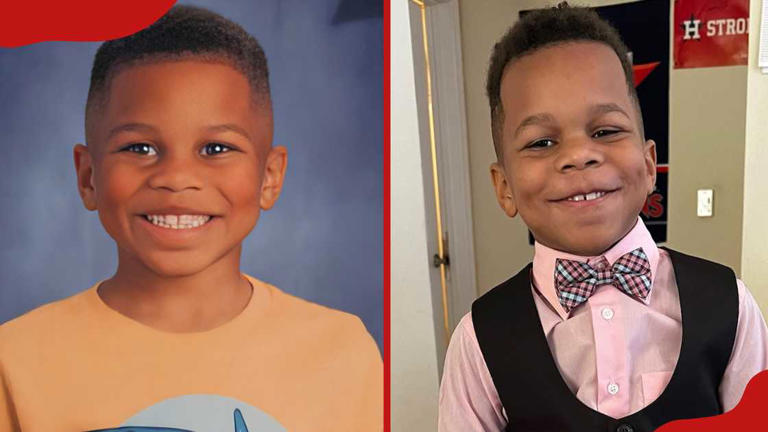
- Troy Koehler was only seven, with a smile that lit up his classroom and a love for books that inspired even his teacher
- However, the little boy’s body was found dead in a washing machine, with the main suspect being his adoptive father
- What happened inside that home still breaks hearts, orchestrated by the man who was supposed to protect him
Harris County – Nearly three years after the tragic discovery of seven-year-old Troy Koehler’s body inside a washing machine at his family’s home, justice has been served.
This is after his adoptive father, 45-year-old Jermaine Thomas, was sentenced to 50 years in prison for the young boy’s murder.
Troy, a vibrant and beloved child who would have entered fifth grade this year, was found dead on July 28, 2022.
His death stunned the local community and sparked a thorough investigation led by the Harris County District Attorney’s Office.
The sentencing brings closure to a case that has haunted many, especially those who knew and loved the young boy.
“Troy, you touched so many lives in your short time here,” the DA’s Office wrote in a statement. “May those who love you find peace. Justice served.”
Troy’s story gripped the hearts of many, not only because of the circumstances of his death but because of the light he brought into the world.
Why was Troy Koehler killed?
It all started when Troy’s adopted father, Thomas, reported him missing after claiming he returned home just before midnight and found his front door unlocked.
When officers arrived at the home, they did a brief interview with his parents, only to find his fully clothed but lifeless body inside the washing machine in the garage.
It emerged that before his death, Troy was threatened with being put inside an oven, after he allegedly ate some of his adoptive mother, Tiffany Thomas’s, oatmeal cream pies.
Teachers mourn Troy Koehler
His teachers described him as a beacon of joy, always eager to help and share the stories he read with classmates.
Among the voices in court was Sheryl Reed, Troy’s former first-grade teacher, whose emotional victim impact statement left a lasting impression on all present.
“Now, we will never know what he could have become,” Reed said, her voice trembling. “His future, his dreams, his life were stolen by someone who was supposed to love, protect, and nurture him.”
Reed recalled Troy’s love of reading and his habit of rushing to the classroom library the moment he finished his assignments.
She added that Troy wasn’t just leading his classmates; he led her, too, to become a better teacher, a better mentor, and a better person.
“Today a reader, tomorrow a leader,” she said, a phrase that captured his boundless enthusiasm for learning.“
The sentence brings a measure of justice, though it cannot undo the immense loss.
About the Author