

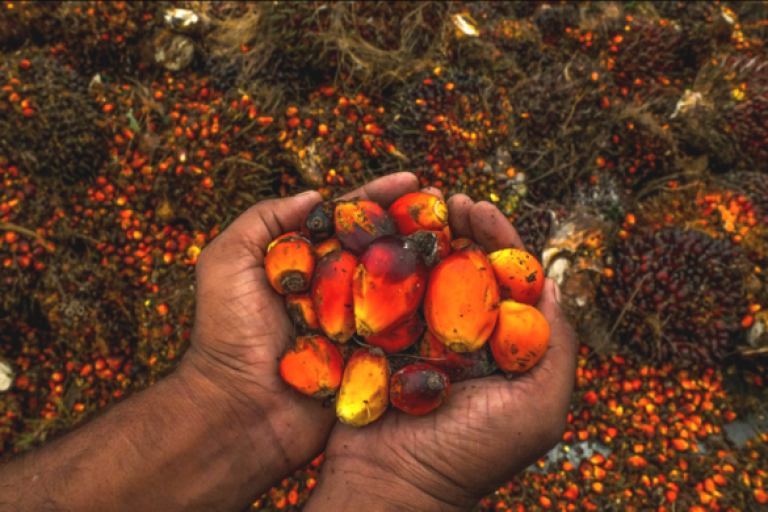
The price of palm oil in Nigeria is reaching record highs, and stakeholders say the reasons are far more complex than seasonal trends.
At the heart of the issue are foreign policy shifts in Indonesia, soaring global demand, a weakening naira, and chronic underinvestment in Nigeria’s domestic production, reports Daily Independent.
Experts say the Southeast Asian country’s new palm oil export restrictions, coupled with its growing domestic demand for palm oil as a renewable energy source are tightening global supply and driving up prices.
As Nigeria remains a net importer of palm oil, the effects are hitting local consumers hard.
Alphonsus Inyang, National President of the National Palm Produce Association of Nigeria (NPPAN), told our correspondent that Indonesia’s recent energy-focused policy reforms are making it increasingly difficult and expensive for Nigeria to access palm oil from the world’s largest producer.
“Indonesia has now implemented a new policy of B35, referring to a mandate that diesel in Indonesia must contain 35% palm oil. By 2026, that figure will rise to B40, and by 2030, they plan to hit B50.”
This shift, according to him, means that up to half of Indonesia’s palm oil production will be consumed domestically to meet energy needs, leaving less for export.
To further restrict outflows, he said that Indonesia has imposed increased export levies on palm oil, discouraging foreign sales in favour of local industrial use, stressing that these policies are reshaping the global palm oil market with Nigeria among the hardest hit.
“Palm oil contributes 36% to Indonesia’s energy usage. They are using palm oil to power vehicles and machines with biogas generated from waste. So they are keeping more of what they produce.”
Inyang also pointed out that Nigeria, which currently produces just 1.4 million tons of palm oil annually, a distant fifth behind Indonesia’s 50 million tons and Malaysia’s 20 million remains heavily dependent on imports to meet rising local demand.
“Palm oil is still very expensive. Even during the traditional harvest season, between March and May, when we used to enjoy cheaper prices, that is no longer the case, those years are gone,” Inyang said.
Also, Henry Olatujoye, a seasoned player in Nigeria’s palm oil value chain and a former NPPAN president, in his view believes that the Indonesia factor is just one piece of the puzzle and not the biggest.
“First, the population growth in Nigeria has greatly increased demand, while supply remains limited. Second, the foreign exchange crisis has made it hard for industries to access dollars to import palm oil. So they have shifted their demand to local sources, which are already under pressure.
“Foreign exchange is too expensive. You can’t just go to the CBN and say you want dollars to import palm oil,” Olatujoye noted.
He said that as imports drop, domestic producers are unable to meet rising industrial and household needs which now pushes prices up even further.
“That shift is putting further strain on Nigeria’s fragile domestic supply chain. Palm oil is no longer just a cooking ingredient; it is used across industries from pharmaceuticals to butter, margarine, noodles, soaps, and biscuits. As industrial use increases, so the demand increases.
“There is also the third issue, global prices have gone up due to high demand from countries like China and India. This makes it unprofitable for Nigerian importers to bring palm oil into the country. We’re net importers and net consumers.”
Corroborating Olatujoye, Inyang pointed out that the growing use of palm oil in Nigeria’s industrial and food processing sectors further compounds the challenge.
“From instant noodles to margarine and detergents, palm oil is a key ingredient across many product lines.
“Thirty years ago, we had only one brand of noodles in Nigeria. Now there are over 30 brands, all requiring palm oil. Even butter is 90% palm oil. As industrialisation increases, the need for palm oil will only grow.”
Inyang stressed that Nigeria’s production remains stifled by policy neglect, insecurity, and lack of investment in tree crop development.
“Nigeria is the home of oil palm. But we are producing only 1.5% of the global basket. That’s not good for us.”
Olatujoye, however, believes Nigeria’s domestic output has likely surpassed two million tons annually, but that poor data and lack of coordination across the sector are major issues.
“The numbers we see online are not correct. Our production has improved, but we can’t tell where the oil is.”
He explained that Nigeria remains a major consumer of crude palm oil (CPO), especially in its unrefined form, unlike countries like India that consume mainly refined oil.
“We eat it directly, so any pressure on the supply immediately reflects in retail prices,” Olatujoye said.
The experts agreed that without bold structural reforms, Nigeria will continue to suffer from soaring palm oil costs.
One key recommendation is the creation of a Tree Crop Development Commission or a dedicated Palm Oil Development Council, to provide regulatory oversight, pool industry stakeholders, and stimulate investment across the value chain.
They noted that the model has worked for countries like Ghana, Indonesia, and Malaysia.
About the Author