
Despite repeated promises, Nigeria continues to flare vast quantities of natural gas, losing billions in revenue and contributing to climate change. Our correspondents explore why this harmful practice persists, examine the steps needed to finally eliminate it, and detail the immense economic and environmental benefits of a more sustainable approach, reports Sunday Independent.
Nigeria, a nation blessed with abundant natural resources, finds itself grappling with a paradox: it ranks among the top five countries globally with the highest levels of gas flaring, according to the World Bank’s 2024 Global Gas Flaring Tracker report.
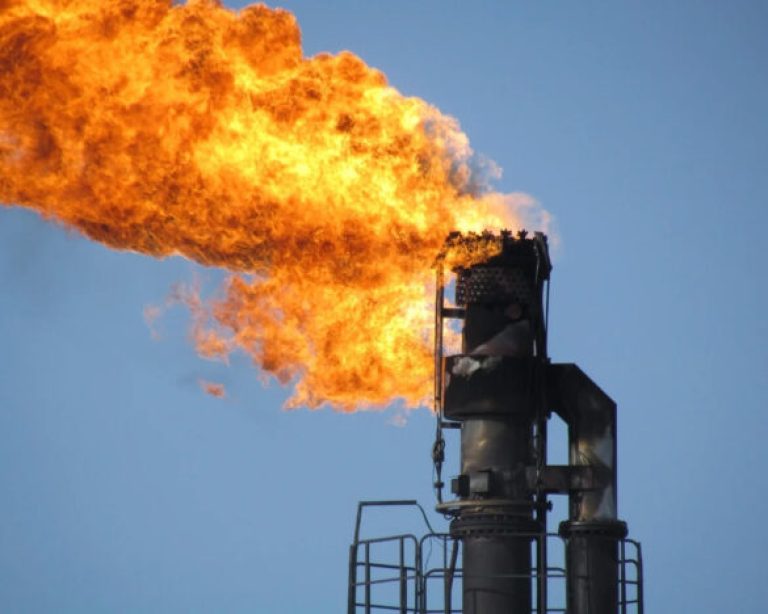
Gas flaring in Nigeria, the practice of burning off natural gas associated with oil extraction, has devastating consequences across multiple facets of life and the environment. The consequences are enormous and include environmental degradation through pollution. This is arguably the most immediate and visible consequence.
Health-wise it releases a cocktail of pollutants into the atmosphere, including Soot (Particulate Matter): Black carbon from incomplete combustion contributes to respiratory problems and reduces visibility.
The release of sulfur dioxide and nitrogen oxides leads to acid rain, which damages ecosystems, corrodes buildings, and pollutes water sources.
The heat and pollutants from flares contaminate the surrounding soil, impacting its fertility and ability to support agriculture. This can lead to reduced crop yields and food insecurity. The heavy metals present in flared gas can also leach into the soil, posing long-term contamination risks.
Runoff from flare sites can contaminate surface and groundwater sources with pollutants and heavy metals, affecting drinking water quality and aquatic life. The intense heat from flares can also damage or destroy nearby vegetation, contributing to deforestation and habitat loss. The pollution negatively impacts wildlife populations.
Gas flaring represents a significant waste of a valuable energy resource. The flared gas could have been used for power generation, industrial processes, or exported as liquefied natural gas (LNG), generating revenue for the government and creating jobs. The Nigerian government loses billions of dollars in potential revenue each year due to gas flaring. This money could be used to fund infrastructure development, education, and healthcare.
Contribution to Global Warming
As mentioned previously, the release of greenhouse gases, particularly methane and carbon dioxide, from gas flaring contributes to global warming and climate change. Nigeria is among the top 10 gas flaring countries globally, making it a significant contributor to this problem.
This harmful practice, the burning off of excess natural gas during oil production, sees an estimated 4.6 billion cubic meters (bcm) of gas go up in flames annually, representing a staggering loss of approximately $63 billion in energy and contributing significantly to climate change.
This places Nigeria alongside Venezuela, Algeria, Libya, and Mexico as nations responsible for over 75% of global gas flaring, despite producing less than half of the world’s oil.
While the global community strives for a sustainable future, Nigeria continues to burn away its wealth, poisoning its environment, and jeopardising the health and livelihoods of its citizens. It’s an exposition of the harrowing conditions faced by communities residing near gas flares, which examines the government’s past efforts to curb this practice, explores the feasibility of eliminating flaring, and analyses the immense losses Nigeria incurs due to this wasteful and destructive activity.
For communities in the Niger Delta, the reality of living near gas flares is a daily struggle against a relentless assault on their health, environment, and livelihoods. The towering flames, visible day and night, cast an eerie glow across the landscape, a constant reminder of the toxic cocktail of chemicals released into the atmosphere.
“By gassing our community environment 24/7 over the years with noxious gases that are carcinogenic, it has been decades of poisoning the air and environment; by extension, our people,” laments Comrade Morris Alagoa, Deputy Executive Director of the Environmental Defenders Network (EDEN).
The health impacts are devastating. Residents report a range of ailments, from respiratory problems and skin irritations to increased rates of cancer and birth defects. The constant exposure to pollutants contaminates drinking water, damages crops, and disrupts the delicate ecosystem, further impacting the communities’ ability to sustain themselves.
The Paramount ruler of Okolobiri, Engr. Judah Sukuruowei confirms the disruption and health risks, saying “Recently we have been experiencing serious vibration; because of the gas flare at neighbouring Obunagha community…we believe and we know that there are some inferior [building] materials… The gas flaring is affecting the buildings in the environment; even our water. We don’t have good water to drink. Our people rely on our river water.
“There is no public portable water. So, even our water in the river is not good enough for drinking again. The roofing sheets (zinc) and our water are affected. “Health-wise, we are affected; as we are inhaling the noxious gases, it is affecting our health. The rate of death has increased in our environment too; even very young children are dying unexpected deaths. It is the gas flaring that is affecting the environment; seriously.
“So, please the government should do something about it. The volume of the gas flaring is getting higher, which is affecting our environment.”
Adding to this, Bright Shadrack Esyine, an indigene of Okolobiri community and PhD student describes the environmental impact of gas flaring as it leads to increased vibration in his community.
“Recently, we have had a very intense and increased gas flaring resulting in disturbing noise and vibrations to the extent that it is causing walls cracking and destruction of roofs of buildings.
“Also, if you look at the immediate environment close to the gas flare, you discover that the vegetation there is like they set fire to it; it is burning. It is like this is deliberate.’’
He further added that these greenhouse gases are known to cause cancer and other ailments.
“As you can see, people just die abruptly because we don’t have the necessary equipment and facilities to check the cause of death.
“The noise and vibration from the flares are also a constant source of distress, disrupting sleep and causing structural damage to homes. The Solar Street light provided by NDDC recently goes off in the night; because of the brightness from the flare at night. Different illnesses and low agricultural yield were all attributed to the sailing unusually high gas flaring in the environment,” Alagoa explains, highlighting the multifaceted impact of the flaring.
The lack of basic amenities, such as potable water, further compounds the communities’ woes. As Alagoa poignantly states, “Most of our communities are without potable water and importing sachet water from the cities,” highlighting the stark contrast between Nigeria’s oil wealth and the abject poverty faced by those living in its shadow.
The issue of gas flaring in Nigeria is not new. The government has made numerous pledges over the years to eliminate this harmful practice, setting and repeatedly shifting deadlines. The Associated Gas Re-injection Act of 1979 made gas flaring illegal, yet it persists decades later.
“The Associated Gas Re-injection Act makes gas flaring illegal and that is why oil companies are paying fines for the crime. Gas flaring is illegal in Nigeria; it is a criminal act,” Alagoa emphasises.
However, the fines imposed on oil companies are often seen as a mere cost of doing business, a paltry sum compared to the profits generated from oil production. This lenient approach has emboldened companies to continue flaring, knowing that the financial penalties are minimal.
“Unfortunately, the federal government that arrogated everything about crude oil and gas unto itself by placing it in the exclusive legislative list; has been comfortable with mere paltry fines from the polluters,” Alagoa laments.
While the government has promoted gas utilisation projects, such as increased domestic gas usage and pipeline construction, these initiatives have yet to significantly reduce the volume of gas flared in the Niger Delta. The repeated failure to meet deadlines has eroded public trust and fueled skepticism about the government’s commitment to addressing the issue.
“It is no secret that the goal post has been shifted again and again, to stop gas flaring,” Alagoa notes.
“The Civil Society has tried to push for this wasteful and environmentally dangerous act to stop, but because it appears there is regulatory capture in the oil industry and the country cannot withstand stopping oil production for even one week, this has continued like a political game.”
Despite the daunting challenges, experts agree that eliminating gas flaring in Nigeria is not an insurmountable task. The key lies in a combination of strong political will, robust regulatory enforcement, and strategic financial investment.
Zubin Bamji, GFMR Partnership Manager at the World Bank asserts that “The solutions exist…Governments and operators must make flaring reduction a priority…With the right policies in place, we can turn wasted gas into an engine for economic development.”
First and foremost, the government must demonstrate a genuine commitment to ending gas flaring by enforcing existing laws and imposing stricter penalties on companies that violate them. The fines should be high enough to serve as a real deterrent, forcing companies to invest in infrastructure to capture and utilise associated gas rather than simply paying to pollute.
Furthermore, the
government needs to create a conducive environment for investment in gas infrastructure, offering incentives for companies to develop gas processing plants, pipelines, and other facilities. This will not only help to reduce flaring but also create new economic opportunities and jobs.
Comrade Morris Alagoa insists that “stopping gas flaring is not rocket science; it has been stopped in some other countries. And, it is in alignment with this possibility and knowledge that the Associated Gas Re-injection Act of 1979 came into being, especially the routine gas flaring of 24/7. To take care of certain emergencies and prevent industrial injuries, gas may be vented as the specific case may demand but not continuous 24/7 flaring as has sailed for decades in the Niger Delta.’’
Nigeria can learn from the experiences of other countries that have successfully reduced gas flaring, such as Brazil, Colombia, Egypt, Indonesia, and Kazakhstan, all of which are committed to the World Bank’s Zero Routine Flaring by 2030 (ZRF) initiative. These nations have demonstrated that with the right policies and investments, significant progress can be made.
The economic losses associated with gas flaring in Nigeria are immense. According to the World Bank, the $63 billion worth of gas flared annually represents a missed opportunity to generate revenue, create jobs, and fuel economic growth. This wasted gas could be used to power homes and industries, produce fertilizers, and create valuable petrochemical products.
“For me, Nigeria is behaving like the prodigal son, very wasteful because of the crude oil and gas resources which other private outfits explore for and exploit and sharing with a government that could be described as unpatriotic and insensitive to the developmental needs and need to be prudent,” Alagoa laments.
Moreover, gas flaring contributes significantly to climate change, releasing millions of tonnes of CO₂ and methane into the atmosphere. This exacerbates global warming and undermines Nigeria’s efforts to meet its commitments under the Paris Agreement.
The environmental consequences of gas flaring are equally devastating, polluting the air, water, and soil, and harming human health. The Niger Delta, already ravaged by oil spills and other forms of pollution, bears the brunt of this environmental destruction.
“Not only has the country decided to waste the finite resources by flaring; flaring also poisons the environment and people. This is a double barrel effect; wasting and harming physically,” Alagoa emphasises.
The low life expectancy in the Niger Delta, significantly lower than other regions in Nigeria, is a stark reminder of the human cost of gas flaring.
“This, coupled with other sources of oil industry induced pollution; is responsible for the low life expectancy in the Niger Delta, lower than other regions in the country… Experts put life expectancy in Niger Delta at 40/41 while it is 50/51 in other regions; a whole 10% difference,” Alagoa reveals.
Nigeria stands at a crossroads. It can continue down the path of waste and destruction, or it can choose a different course, one that prioritises the health and well-being of its citizens and the sustainable development of its resources.
The solution lies in asserting the political will to address this issue head-on, implementing stricter regulations, investing in gas infrastructure, and holding oil companies accountable for their actions.
The fines from gas flaring should be used to fund development projects in the Niger Delta, providing clean water, healthcare, and education to the communities that have suffered the most from this practice.
Ending gas flaring is not just an environmental imperative; it is an economic opportunity and a moral obligation. By harnessing its gas resources, Nigeria can power its economy, create jobs, and improve the lives of its citizens.
As Alagoa stresses, “By putting an end to gas flaring, Nigeria would save the environment and also earn foreign exchange from coordinated sales.”
The time for action is now. Nigeria must break free from the shackles of the past and embrace a sustainable future, where its natural resources are used to benefit all its people, not just a select few. Only then can Nigeria truly realise its potential and become a global leader.
Gas flaring in Nigeria is a multifaceted problem with far-reaching consequences. It harms the environment, damages human health, causes economic losses, fuels social conflict, and contributes to climate change. Addressing this issue requires a concerted effort from the government, oil companies, and local communities to enforce regulations, invest in infrastructure for gas utilisation, and promote sustainable development.
About the Author